For nearly three decades, the Higher Education Loans Board (Helb) has struggled to ensure that thousands of Kenyan students – beneficiaries of taxpayer-funded higher education – honour their repayment commitments once they join the workforce.
The board faces a monumental challenge: thousands of former students are not repaying loans, with outstanding debts totalling a staggering Sh46 billion.
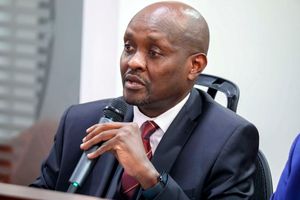
This massive debt is crippling Helb’s ability to fund new learners. According to Chief Executive Officer Geoffrey Monari, the agency’s hands are tied when it comes to enforcement.
Mr Monari explained that the board lacks legal authority to arrest defaulters, because the law treats the debt as a civil matter, not a criminal one.
“We have a challenge, but we keep pushing defaulters to repay. We have 380,000 students who are not repaying, holding Sh46 billion. We cannot arrest them; the law does not allow us. Our loan is a civil issue, not criminal,” Mr Monari told Sunday Nation in Diani.
Unlike theft or fraud cases, Helb cannot use police powers for recovery. The debt remains a private contractual dispute between the agency and individual borrowers.
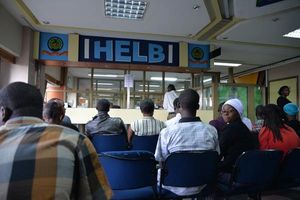
Students apply for Helb loans in Nairobi.
Photo credit: File | Nation Media Group
Without arrests, Helb relies on administrative and persuasive measures such as public appeals and listing defaulters with Credit Reference Bureaus (CRBs).
“The agency repeatedly urges defaulters to repay. We also work with CRBs to list defaulters and with debt collectors, who follow up at the students’ cost,” said Mr Monari.
CRB listing severely limits defaulters’ ability to access credit from banks and other financial institutions.
While Helb pursues recovery, borrowers argue that Kenya’s tough job market has made repayment nearly impossible, trapping thousands between financial obligation and economic stagnation.
Reuben (not his real name), a casual labourer listed on CRB, said financial hardship after university made repayment impossible.
“I went to the Technical University of Mombasa for a four-year degree. Helb gave me Sh150,000. After graduation, I was jobless for years. When I finally found casual work, I couldn’t even sustain myself, let alone repay the loan. When I tried to borrow from my SACCO, I found my name on CRB. The debt had doubled to Sh300,000,” he said.
At 32, Reuben negotiated a repayment plan with Helb. “I am currently paying around Sh3,000 monthly. HELB helped me, but I wonder why the loan doubled,” he added.
Charles Opili, a 2010 Maseno University graduate, is also frustrated by loan doubling. He said he borrowed Sh190,000, which ballooned to nearly Sh400,000.
Mr Opili claims private debt collectors have threatened defaulters and that Helb imposes excessive interest and fines. During a 2023 amnesty, he attempted to clear the loan with Sh230,000.
“However, I was slapped with a Sh690,000 debt, later reduced to Sh400,000. I was shocked and left it. My main issue is the high interest. Helb can see who isn’t earning; why impose heavy penalties?” he asked.
He questioned whether Helb has become a shylock, noting that many Kenyans barely survive and are unsure how to repay these debts.
The broker and computer accessories seller said he wishes he had never taken the loan. Fifteen years later, he is resigned to defaulting.
“What does Helb do to students who die before clearing loans? The government isn’t fair to fresh graduates. We aren’t defaulting by choice but by circumstance. I’ve made peace with my predicament,” he added.
While the agency seeks funds to educate the next generation, many argue that Kenya’s job market realities make repayment impossible.
The recovery narrative has long labelled many as “defaulters,” but thousands are caught between contractual obligation and economic hardship. For many, the debt clock starts ticking before a sustainable job materialises.
Jane, a 30-year-old graduate turned online trader, typifies the struggle. “The job market isn’t what we were promised. Helb wants Sh5,000 monthly, but I barely earn Sh15,000,” she said.
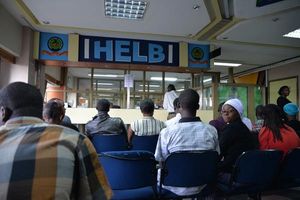
Higher Education Loans Board applicants at the agency's offices in Nairobi.
Photo credit: File | Nation Media Group
Others share this plight. Kevin, an engineering graduate, said, “I’m not running from debt, but my earnings go first to rent and food. HEelb needs better payment moratoriums until our businesses grow.”
In 2024, President Ruto openly shared his experience with the student loan scheme, linking past and present generations.
“I went to university in 1987 as a fresher and had a loan like you. I paid Sh55,000, with 2 per cent interest, so I paid Sh69,000,” he said.
He emphasised that stable employment triggered repayment. “I paid when I got my first salaried job as an MP. The loan isn’t new; it sustains the model.”
Dr Ruto secured Eldoret North parliamentary seat in 1997. Starting his degree in 1987 and graduating around 1990, his loan repayment began seven years later, enabled by his salaried position.
This history confirms the revolving fund concept – repayment ensures future funding — and highlights that even today’s president benefited from, and repaid, the same system struggling with a Sh46 billion default crisis.
Helb was established in 1995 but inherited all liabilities, including loans dating back to 1974.
Mr Monari said Helb has funded over 650,000 university and TVET students with Sh30 billion — covering tuition and upkeep.
“That’s why there is calm in higher learning institutions,” he said.
Loan funding began in 1952 when Kenyans left title deeds to study abroad. Those deeds are still held by HELB.
“Some have never picked their deeds. People were generous enough to leave deeds for neighbours seeking studies abroad,” explained Mr Monari, noting that universities did not exist in Kenya at the time.
The second funding cycle began in 1974–75, with growth until 1995–96.
“The board was established in 1995, inheriting all liabilities and assets, including the President’s,” said Mr Monari. He warned against spreading fake news on social media. Mr Monari confirmed the President benefited from and fully repaid the loan between 1990 and 2005.
“That was the third cycle when HELB was formed,” said the CEO.
The fourth cycle around 2016–17 introduced the Differentiated Unit Cost (DUC), where the government covers 80 per cent and households 20 per cent.
“But through Helb, or if you don’t need a loan, you pay direct. We faced challenges with this model. The new one is an adjustment — a student-centred model considering needs, household income, and programme costs,” said Mr Monari.
Implemented by various agencies, Helb gives loans to TVET and university students, while UF provides scholarships.
The current fifth model, introduced by President Ruto on 31 May 2023, started in September for first-year students to stabilise universities’ finances. This came as universities owed over Sh60 billion.
Now, students apply for both scholarships and loans, unlike before.
Previously, universities requested funds directly and were funded based on budgets.
East Africa University Vice Chancellor Dr Christopher Mutembei called Helb crucial for student access.
“Ninety per cent of our students benefit from HELB. It’s integral to private universities, which no longer receive government funding. HELB is better than the old government sponsorship, which wasn’t assured,” he said.
Last week, Helb became embroiled in controversy over loan interests and penalties ballooning beyond principal amounts, following a High Court ruling binding the agency to the in duplum rule — a principle limiting interest to not exceed the original principal.