Egerton University has 30 days to issue academic transcripts and degree certificates to former engineering students who completed remedial courses to meet the Engineers Board of Kenya (EBK) requirements.
Led by Ian Nyaga and Henry Mulyungi, the 224 former students returned to court after the university failed to issue replacement documents confirming completion of the EBK-approved courses.
They argued that Egerton University had essentially failed to fully implement the August 12, 2024 judgment and sought to have the university and its former Vice-Chancellor, Prof Isaac Kibwage, committed for contempt.
“Whilst dismissing the application for contempt, I direct that the 1st respondent (Egerton University) issue the Petitioners with copies of transcripts and degree certificates that confirm that they have undertaken courses as approved by the 3rd respondent (EBK) within 30 days,” said Justice Patricia Nyaundi in the November 5 ruling.
In its August 2024 ruling, the High Court directed the university to offer eight remedial courses to the more than 200 graduates within three months.
The engineering graduates from three programmes graduated in 2019, only to discover that they were ineligible for professional practice due to curriculum deficiencies in Egerton's engineering programmes.
In response, the graduates petitioned Parliament in 2022 to intervene in their case, and it was recommended that they return to class for remedial instruction.
Despite the directive, the university failed to act by the expected September 2022 start date, prompting the students to move to court in May 2023, seeking to suspend engineering programmes at the institution.
In its August 2024 ruling, the court ordered the university to facilitate and fund remedial courses for three engineering programmes: Bachelor of Science in Water and Environmental Engineering (WEEN), Mechanical and Manufacturing Engineering, and Instrumentation and Control Engineering.
In April 2025, Egerton University, in compliance with the court order, invited the candidates to register for the remedial classes, which officially commenced in September the same year.
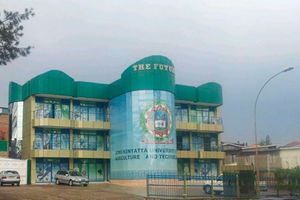
Egerton University.
Photo credit: File | Nation Media Group
In the latest suit, the university maintained in its defence that it had complied with the judgment by facilitating the remedial training and meeting the associated costs.
The university told the court that it had invited 307 former students to enrol for the remedial courses in April 2025, with 264 successfully completing the programme.
Their results were subsequently approved through the university's academic structures, including the Dean's Committee and Senate.
The institution further said it forwarded the names and results of the 264 successful candidates to EBK on December 17, 2025, to facilitate their registration as graduate engineers.
It argued that professional registration was the statutory responsibility of EBK and not the university, adding that the regulator was still evaluating the remedial programmes and processing the necessary information.
However, the petitioners contended that issuing academic transcripts and degree certificates was exclusively the university's responsibility and could not be left to the regulator.
In determining the application, the court observed that the August 2024 judgment had expressly directed Egerton to facilitate the remedial courses but had not specifically ordered it to issue replacement degree certificates.
The judge consequently dismissed the application for contempt, finding that the university had complied with the express requirement to facilitate the remedial training.
However, the court faulted the institution for failing to demonstrate that it had provided the graduates with transcripts and certificates confirming that they had completed programmes approved by EBK.
The judge observed that the university's argument that professional registration fell outside its mandate did not address the central issue of the academic documentation graduates needed to demonstrate compliance with the regulator's requirements.
The court noted that although issuing the certificates was not expressly provided for in the original orders, the requirement flowed directly from the judgment.