The first term following the transition of 1.1 million Grade 9 learners to senior school has exposed mounting challenges for teachers and administrators, as students under the Competency-Based Education (CBE) system struggle to settle on career pathways.
Just months into Grade 10, many learners are frequently changing subject combinations—opting for sciences one week and shifting to humanities or arts the next—creating instability in classrooms and raising fresh questions about the structure and implementation of the new curriculum.
Principals say the indecision is widespread and disruptive. Speaking candidly during their annual conference in Mombasa, school heads described difficulties in planning lessons, allocating teachers and maintaining consistency in learning.
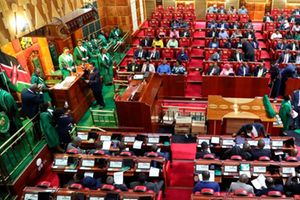
Principals follow proceedings during the 48th Kenya Secondary Schools Heads Association Annual National Conference in Mombasa on June 24, 2025.
Photo credit: Kevin Odit | Nation Media Group
One chief principal from a national school in Murang’a revealed that managing 1,000 Grade 10 learners has become increasingly complex due to constant changes in subject choices.
“Today they are in science classes, tomorrow they drop for humanities or arts. We are watching closely as we wait for guidance from the Kenya National Examinations Council (Knec),” he said.
A principal from Makueni echoed the concern, noting that many learners arrive in senior school without clear direction and continue experimenting with pathways weeks into the term.
At the centre of the debate is whether the current placement and guidance mechanisms under CBE are sufficient.
Kenya Secondary School Heads Association (Kessha) chairperson Willie Kuria argues that learners are transitioning to senior school without adequate preparation, leaving them uncertain about subject combinations and career trajectories.
He contends that the problem stems from the positioning of Grade 9 within junior school, where, he says, learners do not receive enough structured mentorship to make informed decisions.
Kessha is now proposing a significant policy shift: that Grade 9 be domiciled in senior secondary schools rather than junior schools. Under this proposal, Grades 7 and 8 would remain in primary school as a foundational stage, while Grade 9 would be moved to secondary institutions to allow earlier exposure to specialised facilities and guidance. Kuria argues that senior schools are better equipped—with laboratories, libraries and experienced teachers—to nurture learners and guide them based on their academic strengths and interests.
He also proposes that placement assessments be conducted at Grade 8, rather than the current Grade 9 evaluation, to facilitate a smoother and more informed transition into senior school.
According to him, this would allow teachers to begin mentoring learners earlier, ensuring that by the time they enter Grade 10, their pathway choices are more stable and aligned with their abilities.
He further criticised the current structure, noting that, inclusive of pre-primary, learners spend up to 11 years in the same primary environment—a duration he described as excessively long and limiting exposure to new learning settings.
Beyond pedagogy, Kessha frames the proposal as a practical solution to infrastructural challenges. Many secondary schools, Kuria notes, already have underutilised facilities that could accommodate Grade 9 learners, while numerous primary schools—particularly in rural and peri-urban areas—lack adequate infrastructure to support junior secondary education. Relocating Grade 9, he argues, would ease congestion in primary schools, optimise existing resources and improve access to quality education, especially in science, technology, engineering and mathematics (STEM) subjects.
However, the proposal has drawn sharp opposition from primary school leaders. Kenya Primary School Headteachers Association (Kepsha) chairperson Fuad Ali has dismissed calls to move Grade 9, warning that such a shift would effectively roll back the gains of the CBE system and signal a return to the 8-4-4 structure that Kenya is phasing out
He emphasised that the current framework—two years of pre-primary, six years of primary, three years of junior school and three years of senior school—was the product of extensive consultaations and policy reforms. Altering it now, he argued, would require a major legal and policy overhaul.
Kenya Primary School Heads Association chairperson Fuad Ali.
Photo credit: File | Nation Media Group
Ali maintains that the challenges being experienced are part of a natural transition phase and can be addressed without restructuring the system. He advocates for strengthening career guidance within junior schools by deploying trained counsellors and equipping teachers with the skills needed to support learners in making informed decisions. In his view, revisiting the structure at this stage would not only be costly but could also disrupt progress already made in implementing CBE.
He further defended the current cohort of learners, arguing that they are performing well academically and in co-curricular activities compared to students under the 8-4-4 system. For him, the focus should be on improving implementation, not redesigning the system. “The country cannot go back; the train has already left the station,” he said, urging stakeholders to concentrate on refining existing structures rather than reopening settled policy questions.
As the debate intensifies, it underscores the broader challenge of guiding adolescents through complex career decisions in an evolving education system. Teachers, principals and parents are grappling with how to balance flexibility—one of CBE’s defining features—with the need for stability and clarity in learning pathways.