Prof Munavu’s last major assignment was when he chaired the Presidential Working Party on Education Reforms (PWPER) and helped craft a raft of changes to the Competency-Based Education (CBE) and education, in general.
The Nation interviewed him when he was in Mombasa for a high-level meeting with vice chancellors from public and private universities to deliberate on the rollout of CBE in institutions of higher learning, ahead of its implementation in 2029.
The forum sought to assess institutional preparedness, curriculum alignment, infrastructure, staffing, and programme design as Kenya prepares for the first cohort of CBE learners to transition to universities.
Prof Munavu defended the controversial decision to domicile junior school in primary schools, despite the Kenya Institute of Curriculum Development (KICD) curriculum framework initially positioning junior school under secondary education.
Asked whether the decision was driven by political convenience rather than professional advice, Prof Munavu said the taskforce carefully considered the issue and concluded that domiciling junior school in primary schools was the most practical option.
“We felt it was necessary for junior school to be domiciled in primary school because of the learners’ age. It was more realistic for them to remain close to their parents, while also engaging in community service and learning their culture. To us, that was extremely important,” said Prof Munavu.
However, he noted that the PWPER had recommended a clear implementation matrix anchored in the Ministry of Education to guide the transition.
“This is the team that made the final recommendations on where to domicile junior school. What we now need to do is examine the documents, interrogate the decisions we made and ask ourselves what we have done right and what we need to improve,” he said.
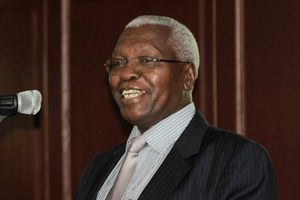
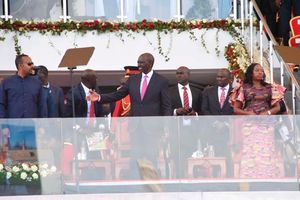
Prof Raphael Munavu, Chairperson of the Presidential Working Party on Education Reforms speaks during the presentation of the report by the Presidential Working Party on Education Reform at State House, Nairobi, on August 1, 2023.
Photo credit: File | Nation
However, Prof Munavu said the decision to place junior school in primary schools should not be treated as final or beyond review, and called for continuous monitoring and evaluation.
“That is what we are doing now. We are going through the process of monitoring and evaluation, and from there we can make final decisions,” said the former PWPER chairperson.
On calls by the Kenya Union of Post-Primary Education Teachers (Kuppet) for junior school autonomy, Prof Munavu said he does not support the proposal, warning that autonomy should not be granted based on primary school teachers' academic qualifications. Junior school teachers argue that the heads of institutions do not have degrees, hence they are not supposed to be in charge of junior schools.
“It does not mean that if you have a PhD, then that gives you the capacity and qualifications to run a university. It is about experience and competencies. We need to be very careful when talking about autonomy,” he said.
He argued that Kenya must place greater value on foundational learning rather than administrative structures, saying the quality of junior and primary education should take precedence over autonomy debates.
“We need to ensure we have a proper foundation in our education system, and that means quality junior school and quality primary education, not autonomy,” he said.
Prof Munavu also challenged Kenya’s academic reward structure, arguing that classroom teachers, lecturers and researchers should be better recognised and rewarded for their direct contribution to learning outcomes.
“In Kenya, people with PhDs and vice chancellors are the highest-paid academicians. But in countries like the US, it is the teacher, the lecturer and the researcher who are valued because of what they deliver,” he said.
He urged the government to focus on teacher preparedness, saying the success of CBE depends largely on the quality and readiness of teachers.
“What we should have done, and what we still need to do, is ensure teachers are fully prepared. Do they understand the system? Do they understand what needs to change, including how they teach?” he asked.
Prof Munavu said the strength of CBE lies not just in curriculum design, but in its ability to shape learners’ identity, values and sense of belonging.
“What makes you Kenyan? What is your identity? What is your culture? What makes you unique as a Kenyan? These are the fundamentals our education system must teach,” he said.
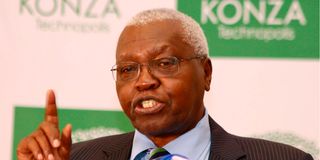
Prof Raphael Munavu.
Photo credit: File
He said Kenya must use education to instil national values, cultural identity and social responsibility in learners, warning that these aspects are often overlooked in public debates on curriculum reform.
“There are things we do not know because we do not pass them on to our young people,” he said.
Prof Munavu cited countries such as Ghana and Nigeria, where respect for elders and social values remain deeply embedded in education and society, contrasting that with Kenya’s increasing focus on individual rights without equal emphasis on responsibility and values.
He cautioned against dismissing Kenya’s education reforms as a failure, insisting that the country benchmarked widely and adopted lessons from global systems.
“No, it was not badly implemented. We benchmarked, we learnt from others, and that was useful. But we must also build a system that reflects who we are as Kenyans,” he said.
Nearly a decade into CBE, Prof Munavu said he was proud of the new system, though he cautioned that its full success can only be judged once the first cohort enters university in 2029.
“This means we measure things by outcomes. So far, it is difficult to make a final judgment because the system is not complete. We should wait and see what happens in 2029 when universities admit the first CBE cohort,” he said.
Still, he said Kenya is moving in the right direction and should focus on preparing universities, TVET institutions and other higher learning institutions for the transition.
“There is still a lot that needs to be done before CBE is rolled out in higher education, but Kenya is heading in the right direction,” he said.
Prof Munavu said the strength of CBE lies in its responsiveness and flexibility, noting that education systems globally continue to evolve.
“We were under the British A-level system, then 8-4-4, and now CBE. Is this the end of the story? No. Look at New Zealand and Australia, they are also changing their systems,” he said.
He called for a national study to gather learners’ views on CBE, arguing that too much attention has been paid to parents, teachers and policymakers while the voices of learners themselves remain underexplored.
“We tend to think about parents, teachers and neighbours. But what about the learners? Their views, their opinions, their feelings? Are they assessing their teachers? When I speak to students, what surprises me is how confident and happy they are with CBE,” said the professor of chemistry.
Beyond policy, Prof Munavu reflected on his lifelong journey in education, describing it as a calling that began in 1952 when he joined Misyani School in Machakos County under the Kenya African Primary Education system.
He later studied at Tala Boys, joined Mang’u High School in 1962, and went on to pursue studies in the United States, where he earned his master’s and PhD degrees before returning to Kenya in 1976 to teach chemistry at the University of Nairobi.
“During my interview, I said I would return to Kenya to teach. They said, ‘This is the man we want.’ To me, education has always been a passion,” he said.
Prof Munavu went on to serve as Dean of Science at the University of Nairobi, helped establish Laikipia University, served at Egerton University, started South Eastern Kenya University, and later became Vice Chancellor of Moi University.
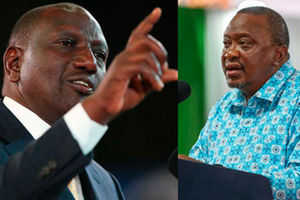
He also chaired the Kenya National Examinations Council (KNEC) for 10 years and served on several national education reform bodies. Among the many students he taught, he said, were President William Ruto, KNEC chief executive officer David Njengere, and several current vice chancellors, including Prof Laila Abubakar of Technical University of Mombasa.
“President Ruto was my student when I was Dean at Chiromo. Many of the vice chancellors you see today were my students too,” he said.
Prof Munavu said when he was called upon to chair the PWPER, he did not hesitate.
“I have served in education all my life. When I was called to serve, I was ready,” he said.
His final message was a call for greater national investment in education, teacher quality, research and public-private partnerships.
“Let us invest in education. Let us discuss education seriously. Let us prepare quality teachers for our young people. Let us involve the private sector and invest in research for the benefit of our country,” he said.