A student's attempt to overturn a decision by Jomo Kenyatta University of Agriculture and Technology (JKUAT) to expel her and revoke her Master of Science degree in Procurement and Logistics has failed after the High Court upheld the university's disciplinary process.
The High Court upheld a decision by the university after finding that the disciplinary process met the requirements of fairness and due process.
The court dismissed a judicial review application seeking to overturn resolutions of the university's examinations disciplinary committee that revoked the student's Master's degree and expelled her from the institution. The committee came to the decision following investigations into the student’s undergraduate degree allegedly issued by JKUAT. The probe found that the certificate was not genuine.
The student had argued that the university violated the rules of natural justice by acting as "prosecutor, judge, jury and executioner" in the disciplinary process.
She also claimed that she had not been granted a hearing before the decisions were made and that the university had retrospectively applied examination rules that were not in force when she completed her undergraduate studies.
She further sought orders quashing the disciplinary decisions, prohibiting the university from enforcing them and compelling it to restore her master's degree and allow her to graduate with an undergraduate degree based on examinations completed and fees paid.
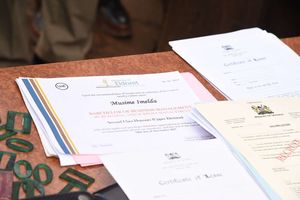
A verification of a student's bachelor's degree revealed that the certificate was a forgery.
Photo credit: Pool
However, the university opposed the application, telling the court that investigations into the student's credentials began after the Public Service Commission requested verification of her bachelor's degree certificate.
According to the university, verification established that the bachelor's degree certificate presented by the student was a forgery, and that the institution had not issued it.
The university maintained that disciplinary proceedings were subsequently initiated, during which the student was accorded a hearing before a decision was reached to withdraw her admission to the master's programme and expel her. The disciplinary appeals committee later upheld the decision.
Although the institution acknowledged that the student had completed the required course units for the undergraduate programme, it argued that she had not paid the necessary fees and therefore did not qualify for graduation. Furthermore, it contended that presenting a forged bachelor's degree certificate demonstrated an intention to circumvent the regulations governing admission to postgraduate studies.
In its ruling, the judge underscored the importance of disciplinary mechanisms in institutions of higher learning, noting that "a university is not just a corporate body created by operation of law. It is also a community of people associated in activities related to thought, truth, and understanding." He added that disciplinary codes must be "strongly anchored on principles of intellectual freedom, intellectual honesty, academic honesty, personal autonomy and maintenance of high standards of integrity of academic programs."
On the student's claim that she had been denied a hearing, the court found that the university had demonstrated otherwise.
"The Respondent has demonstrated that indeed the applicant was heard and even afforded an opportunity to appeal but the said appeal was also dismissed," the judge ruled, adding that there was no evidence contradicting the university's account of the disciplinary proceedings.
The court further observed that the burden of proving procedural unfairness rested with the student.
"The applicant bore the burden of proving and demonstrating that indeed there was no hearing accorded to her before the decision to withdraw her Master of Science degree in Procurement and Logistics was made," the judge stated.
The judgment reaffirmed that universities have the statutory authority to discipline students and that courts should be reluctant to interfere with academic decisions unless there is evidence of illegality, irrationality or procedural impropriety.
"The Courts must loath to interfere with any decision of such institution unless it is evident that it was undertaken outside of legal provision and contrary to constitutional provisions."
The ruling also stressed the wider public interest in maintaining the credibility of university qualifications and examination systems.
"It is important the court should as far as possible avoid any decision or interpretation which would bring about the result of rendering the system of managing discipline in universities unworkable," the judge said.
He warned that courts should avoid decisions that would "compromise the credibility or quality of examination standards and results or create a situation that will go against clear provisions of the law and Regulations governing the conduct of university examinations."
The judge added that such laws and regulations exist to preserve discipline in universities and safeguard the integrity of academic qualifications.
Finding that the student had failed to establish grounds for the remedies sought, the court concluded that the university had acted within its powers and that no abuse of discretion or breach of fair administrative action had been proved.