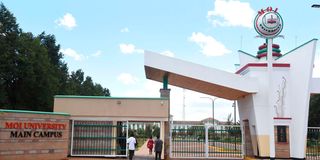
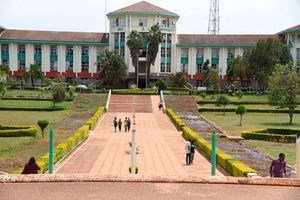
The new Moi University Council, tasked with improving the fortunes of the academic giant, has outlined six strategies to restore the confidence of key stakeholders.
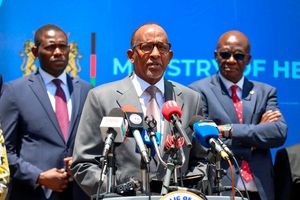
Appearing before the National Assembly Education Committee to provide an update on their achievements since taking office last year, council chairman Prof Noah Midamba and acting vice-chancellor Kiplagat Kotut on Thursday informed the lawmakers that everything would be in place within the next six months.
The management informed MPs that it is currently working on the rationalisation of staff, the halting of the procurement of unnecessary goods and the auditing of academic staff certificates.
The team also informed the Julius Melly-led committee that an audit of the payroll, verification of Sh10 billion of outstanding bills, and addressing the issue of casual labourers are also factors in the university's progress.
According to Prof Kotut, the new management has so far reduced the number of casual labourers from 600 in April last year to 300, while reducing the number of permanent academic staff from 2,000 to 1,765.
Due to the reduction in permanent staff numbers, the management informed the committee that they have managed to save 11 million Kenyan shillings from the payroll.
Prof Kotut said that 81 percent of their income currently goes towards paying salaries, which he said is not sustainable if the university is to remain afloat.
“We need to cut down on our wage bill even as we continue to look for ways to raise our own source revenue,” he told the committee.
Prof Kotut told the committee that they have managed to transfer 56 permanent staff to other universities such as Kabarnet, Karatina, Tharaka and the University of Eldoret.
“Some of the staff are very experienced and knowledgeable, so we don’t just sack them but try and get an opportunity for them in other institutions where they can serve better,” Prof Kotut said.
He said the transfer is done in collaboration with the Ministry of Education who have been helpful in identifying areas in higher learning where there are vacancies.
There is also an ongoing verification of academic papers for both academic and administrative staff, a move that will lead to rationalisation of staff.
“We have done a headcount on the staff, now we are authenticating academic certificates for both academic and administrative staff and the workload they do. Based on that, we will determine who we need,” Prof Kotut said.
The acting Vice Chancellor added that they have frozen procurement. “Nowadays, before we buy anything, it must go through the entire procurement process and we have to determine that we really need it,” Prof Kotut said.
The new council said the turnaround team took office in January last year to salvage the fortunes of the troubled university that was choking under instability attributed to governance and leadership challenges.
“The reforms we have so far adopted have restored confidence at the university and members of the staff can actually get their pay on time,” Prof Kotut said.
However, despite the positive strides made so far, he pointed out that historical debts amounting to Sh10 billion are still haunting the university, an amount the council urged the committee to intervene in order to settle the debts.
In this new financial year 26/27, Prof Kotut told the committee that the university needs at least Sh1.9 billion for its recurrent expenditure with a large percentage of the amount going to paying salaries.
“We are still in the red in terms of meeting our obligations. We are dealing with past pending bills and that is what is still holding us down,” Prof Kotut said.
The council told the committee that it needs at least Sh500 million to implement the Return to Work Formula of the university academic staff in order to avoid any other academic paralysis.
In order to meet the payroll related deductions, the university told MPs that it requires at least Sh1.25 billion and another Sh3 billion for payment of unremitted loans and outstanding pension contributions.
There are also stalled projects such as the completion and renovations of students’ hostels in line with the governments’ agenda in provision of an affordable housing program for over 10,000 students which requires Sh205 million.
The university also needs Sh400 million for the construction of Pharmacy, Dental and Nursing training facilities.
In addition, the university requires another Sh4.5 billion for the stalled science complex
The committee chairman Julius Melly told the new team that the country and parents expect nothing from them other than bringing back Moi University to its glorious days.
“We need to see actual results. You have now been in office for one year. While this committee will support you, you must show us tangible results,” Mr Melly said.
Mr Melly directed the council to itemise all their financial needs including all pending bills and their current financial position and present it to the committee for consideration.
“We need a document as a committee clearly stating your current financial position, pending bills, your income that you generate internally and your needs for consideration,” Mr Melly said.