Public schools have been handed a temporary reprieve after The National Treasury allowed them to continue procuring goods and services outside the electronic Government Procurement (e-GP) system, citing delays in rolling out training for managements of schools.
In a letter dated, from Principal Secretary for Public Investments and Asset Management Cyrell Odede Wagunda, the government acknowledges a request from the Principal Secretary for State Department for Basic Education Julius Bitok, seeking exemption for institutions to transition to the digital procurement system.
Heads of schools were opposed to the e-GP system citing its impracticability especially for schools in rural areas which at times procure some goods and services from the local communities and in small amounts. Some parents also supply schools with items like foodstuffs, firewood and labour, in exchange for school fees.
Mr Wagunda, said the exemption was necessary as schools had not been adequately prepared to adopt the system.
Principal Secretary for Basic Education Prof Julius Bitok.
Photo credit: Dennis Onsongo | Nation Media Group
“We have reviewed your request for exemption for schools and institutions to procure outside the E-GP System. We have not rolled out e-GP trainings for schools and institutions and in view of that, schools/institutions can continue procurement of goods, works and services outside the e-GP system until advised otherwise,” reads part of the letter.
Prof Bitok had sought guidance on whether institutions could be allowed to operate outside the platform temporarily. There are over 23,000 public primary schools and 9,000 public secondary schools.
The e-GP was launched last year. It is an online platform designed to automate and streamline public procurement processes. Through it, government agencies conduct procurement activities electronically, automating each stage from planning to payment. It aims at improving transparency, efficiency, and accountability in the procurement process.
The Treasury PS emphasised that although schools have been provisionally exempted from the e-GP, all their procurement activities must still comply with the law, directing institutions to adhere strictly to the Public Procurement and Asset Disposal Act.
“You are further advised that all procurement activities should be carried out in strict compliance with the Public Procurement and Asset Disposal Act, 2015,” read the letter.
The development highlights ongoing challenges in the transition to digital procurement systems within the education sector, raising concerns over preparedness and capacity at the institutional level.
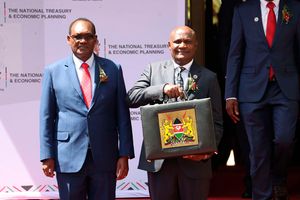
John Mbadi, the Cabinet Secretary for National Treasury and Economic Planning.
Photo credit: File | Nation Media Group
In 2024, the government was forced to shelf a directive that parents pay school fees through the eCitizen platform. This was opposed by schools and parents alike who cited complexity of payment through the platform.
A memo to all national school principals dated January 31, 2024 and signed by former Basic Education Principal Secretary Belio Kipsang directed the institution heads to share school bank account details with the office of the State Department's Director General as part of the government’s efforts to onboard all government services onto the e-Citizen platform.
"The directorate of e-Citizen in partnership with the Information Communication Technology Authority (ICTA), Ministry of Information, Communication and the Digital Economy and the National Treasury have been coordinating the onboarding of all government services onto the eCitizen platform to enhance service delivery," the circular read in part.
"As part of compliance with the requirements it is directed that parents/guardians make fee payments for their learners in your institutions through this platform."
However, the directive was later nullified by the High Court of Kenya, which ruled that it was unconstitutional due to lack of public participation and raised concerns over additional transaction costs imposed on parents.
The court’s intervention exposed gaps in policy design and implementation, including questions over the management of school funds and the legal framework underpinning the directive.
Cyrell Odede Wagunda, Principal Secretary at the State Department for Investment and Asset Management of the National Treasury.
Photo credit: File | Nation Media Group
“The directive lacks a legal foundation and was issued without public participation. School fees are not government revenue to be collected through a national platform," the court ruled.
The court further questioned the integrity and transparency of the eCitizen platform, noting that it is unclear who collects the funds and where they are deposited. Justice Mwita emphasized that charging parents an additional fee amounts to double taxation.
"It does not make sense for the government to compel citizens to use a platform and then force them to pay to sustain it," the judge remarked.