Rachel (not her real name), a procurement officer at a construction-equipment supplier in Nairobi, has in recent weeks been struggling to register the company in the government’s new procurement system, Electronic Government Procurement (e-GP), unsuccessfully.
When she started the process in July, she went through the stages of recording the firm’s details—including its name, official email address and information about its beneficial owners.
The registration process, however, stalled at the stage of recording business details such as the company’s tax category, registration number and procurement category, after the system failed to verify the firm’s tax PIN.
Her inability to register the company on e-GP has left it unable to supply heavy construction equipment as it has done for years. The company relies on government tenders for about half of its revenues.
“We’ve tried contacting the e-GP management through contacts displayed on the portal but most of the times the calls are not picked,” she said.
“When they picked, they told us the problem was not unique to us, many companies have faced it and they cannot tell us when it will be resolved,” she added.
Just like the company is unable to supply to the government, counties and public agencies are struggling to source goods and services, drowning in the chaos caused by what they have termed a rushed roll-out of the e-GP.
The government rolled out the system in July to handle all public procurement, ending a model where entities procured goods and services independently and without central visibility.
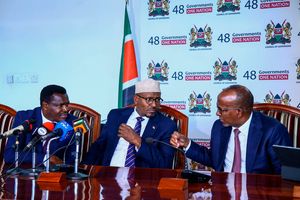
“The Electronic Government Procurement (e-GP) system is transforming public procurement by enhancing transparency, efficiency and accountability,” Treasury Principal Secretary Chris Kiptoo said in a Facebook post on Wednesday. “The e-GP system is a key driver in delivering the Bottom-Up Economic Transformation Agenda.”
Treasury Principal Secretary Chris Kiptoo.
Photo credit: Dennis Onsongo | Nation Media Group
The e-GP aims to digitise all procurement processes, from tendering to payment of suppliers and contractors, with the automation expected to curb overpricing and misallocation of payments, which has been blamed for corruption and the surge in pending bills.
A delay in deployment of the system for use by counties and agencies has, however, stalled operations in the national and county governments, which have been unable to procure goods and services.
County officials who spoke to the Nation on Wednesday voiced frustrations over the stalling of procurement operations, with crucial services across health and agriculture, and implementation of development projects grinding to a halt.
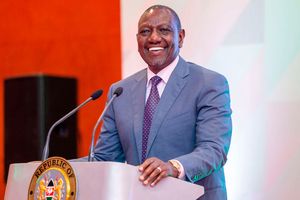
“We are stuck like everybody else. We thought we would be a benchmark for the entire country but this thing is not working,” said Makueni Governor Mutula Kilonzo Jnr.
Makueni Governor Mutula Kilonzo Jr.
Photo credit: File | Nation Media Group
Makueni was one of the three counties Treasury used for piloting of the e-GP, but Mr Kilonzo said the system has failed to deliver so far. The other counties were Busia and Elgeyo-Marakwet.
Makueni has been unable to procure about 60 per cent of essential supplies for hospitals since the Kenya Medical Supplies Authority only supplies 40 per cent of hospitals’ needs.
“The other 60 per cent we must get from other suppliers and we cannot procure that. Servicing of motor vehicles and even medical services cannot be procured,” he said.
Many counties are now only paying salaries to their staff but cannot implement projects or procure goods and services required to run operations.
Baringo Governor Benjamin Cheboi said no development project had been undertaken in the county since the financial year started in July, with road construction and funding to early childhood development education centres among the activities affected.
He said the county’s procurement staff are currently undergoing training on how to use the system and added that the economy is taking a hit from the blocked government spending.
“Our concern is the time lost as Treasury rolls out the system. We are now towards the end of the first quarter and we have procured nothing, no development project is happening. The country is losing because projects drive the economy by creating jobs and consumption across sectors,” Mr Cheboi said.
Nairobi City County procurement staff were yesterday undergoing training on use of the e-GP in Kabarnet, Baringo County, with an official disclosing that no procurement has been undertaken since the financial year began.
In Kiambu, Governor Kimani Wamatangi revealed on Monday, 123 health facilities were on the brink of running out of medical supplies, operating with less than 20 per cent stock levels due to the inability to procure.
Nyeri Governor Mutahi Kahiga said that while the county had received funding for July, it has been unable to spend because of the procurement hurdles and budget approval processes.
Nyeri Governor Mutahi Kahiga.
Photo credit: File | Nation Media Group
“They have only started training the procurement officers but they are yet to handle everyone. We have service providers and users still to be trained,” he said.
Other counties have reported challenges in settling bills, such as fuel and electricity, and a State agency is reported to have grounded its vehicles on Monday after the insurance cover expired.
Treasury Cabinet Secretary John Mbadi on Wednesday said 62 State departments and 19 counties had been onboarded onto the e-GP, but could not tell whether any had undertaken procurement through the system.
Mr Mbadi disclosed that Treasury has also not undertaken any procurement through the system and has no visibility of agencies that procure through it.
“... we haven’t gone ahead to procure anything ... we may procure even tomorrow. By tomorrow or Friday we will procure something for you just to see,” the CS said.
Mr Mbadi insisted that counties and State agencies whose budgets have been uploaded on e-GP could proceed to upload their procurement plans and start processes.
“Some procurement guys are not telling governors the truth because they don’t want this system to work. They misreport to governors to make political noise,” he said.
Entities that Treasury said are live on the system include Treasury, the Public Procurement Regulatory Authority, Ethics and Anti-Corruption Commission and Privatisation Commission. It also said Samburu, Kisumu, Kisii, Kitui, Vihiga, Bungoma and Busia are among the 19 counties whose budgets have been uploaded on the e-GP and thus ready for procurement processes.
The e-GP system was procured in April 2022 at a cost of $2.9 million (about Sh375 million at current exchange rate). An Indian firm, i-Sourcing Technologies, is the main developer behind the system and is delivering it in partnership with SYBYL, a Kenyan firm, Mr Mbadi said.
“The system belongs to the government, but it has not been fully handed over because it is still being developed. We had a contract of three years from 2022 to 2025. The three years were supposed to end this year in June but because of the delays in implementing it from 2022, we sought extension for another three years,” the CS said.
“At the end of the three years, the system is supposed to be handed over fully with access codes surrendered to the government, during which time we will have enough capacity to run the system independently,” he added.
Treasury has ruled out running parallel procurement systems during the transition, unless it is presented with a challenge it cannot address
“Up to now, no one has reported to me a challenge that cannot be dealt with. If there is a challenge that cannot be dealt with, I will step in and we will give exemptions. You cannot implement a new system like this by listening to excuses,” Mr Mbadi said.
But Association of Kenya Suppliers Chief Executive Officer Ishmail Bett said many suppliers are still unaware of the finer workings of the system since public entities have not populated the portal with procurement opportunities for them to start working with.
“Many suppliers have not interacted with the system so far because at the moment it is procurement teams on the government side who are dealing with it. We don’t have the full picture of how the system looks like to even tell if it’s working or not, or how effective it is,” he said.