University students are faking their parents’ deaths in a desperate attempt to get more money while applying for government scholarships, the Universities Fund has revealed.
There is a growing trend of fraud under the needs-based higher education funding model, where the amount of financial support a student receives depends on their level of financial vulnerability, officials say.
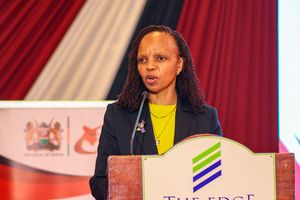
Universities Fund acting Chief Executive Officer Dr Edwin Wanyonyi said the agency has detected cases where some applicants are falsifying family information, including claiming that they are orphans.
"You now know that if you are an orphan, you qualify for the highest level of scholarship. Some of you are now trying to 'kill' your parents on paper so that you can receive more government support," Dr Wanyonyi said during a higher education funding sensitisation forum at Uriri High School in Migori County.
University students apply for funding by the Universities Fund and the Higher Education Loans Board (Helb) through a joint portal that was introduced in 2023. The data collected by the two agencies is used to categorise students according to their level of vulnerability.
Dr Wanyonyi warned that such deception would not succeed because the Universities Fund and Helb have verification systems capable of confirming whether parents are alive or dead before funding decisions are made.
"We have mechanisms to verify the information you provide. If your parents are alive, we will know. The best thing is to be truthful because the funding model is designed to identify those who genuinely need support," Dr Wanyonyi said.
His remarks come as more than 200,000 students placed in universities, through the Kenya Universities and Colleges Central Placement Service (KUCCPS), begin applying for government scholarships and Helb loans ahead of their admission in September.
Under the current higher education funding model, every student admitted to a public university qualifies for some level of government scholarship.
Students from the most vulnerable households receive the highest scholarship allocation, with the government meeting up to 55 per cent of their tuition costs, while the remaining amount is covered through loans and household contributions depending on financial need.
"You have already been placed by KUCCPS. The next step is securing funding. Your first stop should be the government scholarship because that is the State's investment in your future," Dr Wanyonyi said.
"The highest scholarship covers 55 per cent of tuition fees. It is an investment by the government in your education.”
He advised students to apply simultaneously for both scholarships and Helb loans to improve their chances of receiving adequate financial support.
"When you begin your application, make sure you select both scholarship and loan. That gives you the best opportunity to receive sufficient funding for your studies," he said.
Dr Wanyonyi asked applicants to provide complete and accurate information about their families, including household income, number of siblings, chronic illnesses family members suffer and other socio-economic circumstances used to determine their level of need.
"Parents should walk this journey with their children. Help them provide all the required documents and ensure they give us truthful information. Details such as poverty levels, the number of siblings and illnesses in the family are important. They help us determine the appropriate level of scholarship," he said.
Dr Wanyonyi expressed concern over genuinely needy students who do not apply for the funding due to lack of awareness.
The Universities Fund, KUCCPS and Helb are conducting nationwide sensitisation campaigns to educate students and parents on the funding application process and dispel misconceptions surrounding the higher education funding model.
Students who have already received their admission letters have until September 6, 2026, to complete their applications for scholarships and loans.
During a sensitisation forum in Migori, Helb Chief Executive Officer Geoffrey Monari asked all 2025 Kenya Certificate of Secondary Education (KCSE) Form Four leavers, regardless of whether they scored an “A” or an “E”, to apply for government funding if they had secured placement in a university or Technical and Vocational Education and Training (TVET) institution.
Higher Education Loans Board CEO Geoffrey Monari.
Photo credit: File | Nation Media Group
"You must apply to be considered for funding. If you do not submit an application, you will not be eligible for government scholarships or loans. But please be honest in your application; if you used to get a scholarship, please give us the details and upload a letter for confirmation. Orphans must upload death certificates of their parents,” he said.
Mr Monari said students who are still minors and do not have national identity cards can still apply for government funding using their KUCCPS index numbers.
He said the amount of funding and scholarship awarded will depend on the information provided during the application process and determination of financial need. He also asked students living with disabilities to disclose their status and submit the necessary supporting documents to enable proper assessment.
Mr Monari emphasised that the application process is free of charge. He warned students not to allow other people to fill their forms on their behalf.
He also cautioned applicants against using other people’s telephone number, email address or national identity card when applying, saying all official communication, including funding decisions, would be sent through the contacts provided during registration.
"We have encountered cases where students claim they never received information about their loans or scholarships, only to discover they used someone else's email address or phone number. Opening a personal email account is free. Every student should have their own email instead of relying on cybercafés or other people's accounts," he said.
He also advised students to complete every section of the application form accurately and avoid leaving mandatory fields blank, as incomplete applications could delay processing.
Mr Monari further urged applicants to open personal bank accounts instead of using those belonging to parents or guardians, noting that some banks now allow minors to open accounts.
"The money is meant for the student and should be deposited into the student's own account. Using another person's account can delay payment and create unnecessary complications," he said.
"Do not share your password or PIN with anyone. Remember, you will receive a substantial amount of money to support your education. Some students are tempted to misuse it, including gambling on football matches in the hope of making quick money. This funding is meant for your education, not gambling," he said.
Mr Monari said the joint sensitisation campaign by KUCCPS, HELB and the Universities Fund is intended to help students understand the application process, reduce errors that often delay funding, and ensure more eligible learners successfully access government financial support.