Cabinet Secretary for Education Julius Ogamba during the Knec Symposiumat the Kenya National Examinations Council headquarters in Nairobi on May 4, 2026.
Education Cabinet Secretary Julius Ogamba has declined to comment on the proposal to increase school fees, limiting his response to assurances that the government has increased the education sector’s allocation to nearly 30 per cent of the country’s annual budget.
Principals of senior schools under the auspices of the Kenya Senior School Heads Association (Kessha), have proposed a review of fees by up to Sh43,000, arguing that schools can no longer operate sustainably under the current funding model because of inflation, delayed capitation and the cost of implementing the competency-based education (CBE).
However, parents have opposed the proposal, arguing that any increase in school fees would increase the financial burden on households already struggling with the high cost of living.
They insist that basic education should remain affordable and that any funding shortfalls should be addressed by the government through adequate funding rather than being passed on to families.
Kessha chairperson Willy Kuria last week presented the proposal to Mr Ogamba and Basic Education Principal Secretary John Ololtuaa. When the Nation reached out to Mr Ogamba for the government position on the proposal, he neither supported the proposal not opposed it.
“The government has been providing the largest portion of budget allocation to the education sector at nearly 30 percent. The increased funding is intended to address any funding gaps in the sector. [In February], we gazetted the prevailing boarding school fees and affirmed the capitation rates. For the first time in over 10 years, capitation has been disbursed to schools before the opening date,” said Mr Ogamba.
Some stakeholders in the education sector have accused the government of using parents to plug funding gaps created by poor financial management and corruption.
“The government’s silence, even after the outcry from parents, suggests it has failed to deal with the runaway corruption within its own system. If the government cannot eradicate corruption within the Ministry of Education, then it should come out honestly and tell parents that it has failed to tame the problem instead of shifting the burden to families,” said Mr Moses Nthurima, deputy secretary-general of the Kenya Union of Post-Primary Education Teachers.
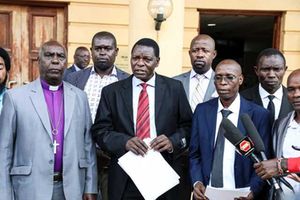
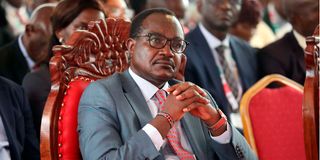
Kenya Union of Post Primary Education Teachers (Kuppet) Deputy Secretary-General Moses Nthurima.
Mr Nthurima argued that parents should not be forced to shoulder the cost of what he described as failures in the management of public funds.
He maintained that Parliament has consistently approved substantial allocations for education, yet schools continue to report chronic funding shortages.
“Parents should not be paying additional school fees if the funds allocated for free education are reaching schools as intended. The problem is not the size of the education budget. The problem is accountability. We do not know where the money goes after Parliament approves it,” he said.
Under Kessha’s proposal, annual parental contributions in national schools would increase from Sh53,554 to Sh87,781, while in extra-county and county boarding schools it would rise from Sh40,535 to Sh83,622. Parents with children in day schools, who currently do not pay tuition, would contribute Sh7,675 annually.
Kessha argues that the current fees structure, introduced in 2015, has remained unchanged despite sharp increases in the cost of food, electricity, fuel, learning materials and salaries.
The association also says the rollout of CBE has introduced additional expenses, including specialised teachers, equipment and infrastructure, which many schools are struggling to finance.
The school heads further attribute the financial strain to delayed and partial capitation disbursements, saying schools had received only 56 per cent of the expected annual capitation by the second term.
While acknowledging the financial difficulties schools face, the National Parents Association said: “The fact that the government is not able to fully fund education does not mean parents should carry the burden of fee increments.”
It added that the government should explore alternative financing mechanisms.
“How logical is it to ask a parent who cannot raise Sh1,000 because of poverty to suddenly find Sh30,000? That would only further frustrate parents and could lock out children from vulnerable families, especially those joining senior school,” the association said.
Follow our WhatsApp channel for breaking news updates and more stories like this.