Thousands of teachers serving in acting capacities as principals, head teachers and deputy administrators may have to continue working without additional pay, after the Teachers Service Commission (TSC) revealed that the Sh2.2 billion required to cover acting allowances had not been allocated in the proposed 2026/27 budget.
During deliberations on the 2026/27 financial year estimates of revenue and expenditure in a presentation to the National Assembly Departmental Committee on Education, TSC highlighted the unpaid acting allowances as one of the most significant budget shortfalls. The Commission warned that this could disrupt their operations and further impact teachers’ welfare.
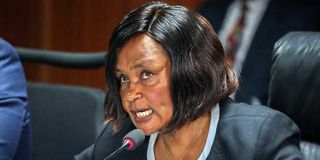
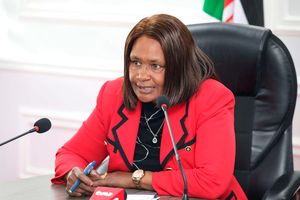
“Payment of acting allowances to administrators in acting positions, estimated at Sh2.2 billion, has also not been factored in,” according to the TSC acting CEO Evaleen Mitei.
The acting Chief Executive Officer of the Teachers Service Commission (TSC) Evaleen Mitei before the National Assembly Departmental Committee on Education.
Photo credit: Dennis Onsongo| Nation Media Group
This means teachers appointed to senior positions on a temporary basis, often for months or even years, may continue to perform the duties of principals and headteachers without receiving the additional compensation usually associated with these roles.
According to parliamentary discussions and education sector reports, nearly 99,000 teachers are currently serving in acting capacities as principals, deputy principals, headteachers and their deputies, as well as senior teachers.
Acting appointments are common in schools when permanent office holders retire or are transferred, or when institutions are awaiting formal promotion by the Commission.
In February this year, MPs backed the Teachers Service Commission (TSC) (Amendment) Bill, 2024, which seeks to compel the TSC to pay acting allowances and limit acting appointments to six months.
“We need comprehensive data on how many teachers are in acting roles, how much they are owed, how much has been paid, and the reasons for the delayed payments,” said Lugari MP Nabii Nabwera. The report noted that thousands of teachers had served for extended periods without additional pay.
Under the amended law, teachers appointed to administrative roles will be entitled to a special duty allowance, provided they meet the eligibility criteria for a substantive appointment.
The Bill stipulates that a teacher may only act in a position for which they qualify. For instance, a teacher can only be appointed to act as a headteacher if they fulfil all the requirements for a formal appointment to that position.
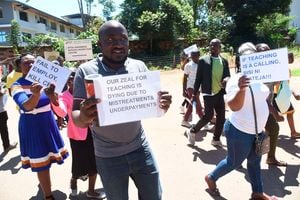
Lawmakers said assigning teachers administrative duties without formal recognition or financial compensation amounted to exploitation.
They also noted that prolonged acting appointments had undermined morale among teachers and hindered effective succession planning within school leadership structures.
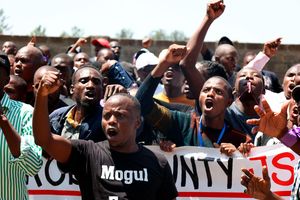
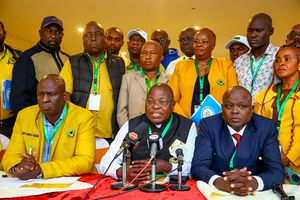
Speaking during a stakeholder engagement forum on the TSC Bill, Kuppet Secretary-General Omboko Milemba lamented the ongoing plight of these teachers, who continue to shoulder additional responsibilities without appropriate compensation.
“These teachers are suffering. Thousands are acting in various positions, yet they are not paid. It’s a violation of their rights, and it must be addressed,” he said.
UDA Deputy Secretary-General Omboko Milemba.
Photo credit: File | Nation Media Group
Additionally, the legislation caps the acting period at a minimum of 30 days and a maximum of six months. Once the six-month period lapses, the Commission will be required to substantively fill the vacancy.
The budget shortfall comes despite the TSC seeking a total of Sh422.652 billion for the 2026/27 financial year, slightly lower than the Sh422.956 billion approved in the 2026 Budget Policy Statement.
According to the commission, the reduced allocation will also affect teacher training and retraining under the Competency Based Education system, as well as the handling of disciplinary cases.