Hundreds of thousands of students in universities as well as those in technical and vocational education and training (TVET) institutions,, will not be fully funded after the government allocated only a fraction of the money required to finance their education.
In the 2026/2027 financial year budget estimates, student loans and scholarships have a massive funding gap that could leave many students without adequate support.
The estimates show that the Higher Education Loans Board (Helb) and the Universities Fund together face a combined funding shortfall of more than Sh72 billion, raising fresh concerns about access to higher education for students from low-income households.
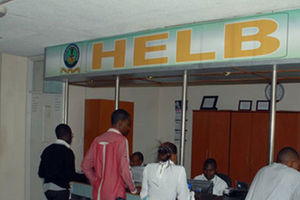
According to the 2026/27 Budget Estimates presented last week by the Cabinet Secretary for Finance, John Mbadi, the Higher Education Loans Board (Helb) has been allocated only Sh56.3 billion against a requirement of Sh112.1 billion needed to support an estimated 1.38 million students in higher education, leaving a funding gap of Sh55.8 billion.
The allocation translates to about Sh40,694 per student against a requirement of Sh81,020 per student, creating a funding gap of Sh40,327, on average, for every beneficiary.
An analysis of the figures shows that if students were to receive the full amount required under the funding model introduced in 2023, the available allocation would be sufficient to fully support about 695,000 students only.
This means nearly 689,000 students among the projected 1.38 million beneficiaries could miss out on full funding.
The funding squeeze comes at a time when universities and TVET institutions are grappling with growing enrolment and rising operational costs, increasing the pressure on the government's higher education financing programme.
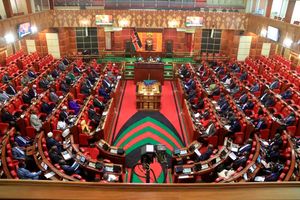
Cabinet Secretary for the National Treasury and Economic Planning John Mbadi, flanked by Central Bank of Kenya Governor Dr Kamau Thugge (left), displays his briefcase before reading the 2026/27 budget at Parliament Buildings, Nairobi, on Thursday, June 11, 2026.
Photo credit: Lucy Wanjiru | Nation Media Group
In the budget estimates, the Universities Fund has been allocated Sh31.1 billion against a requirement of Sh47.36 billion needed to finance scholarships for needy students under the student-centred funding model, leaving a funding deficit of Sh16.26 billion.
The shortfall translates to an average funding gap of approximately Sh74,245 for each of the projected 219,279 new students expected to benefit from scholarships next year.
While the Universities Fund estimates that each beneficiary requires an average of Sh216,072 in support, the proposed allocation provides only about Sh141,827 per student.
The funding deficit is expected to worsen existing obligations. According to the Universities Fund, pending scholarship commitments are projected to rise from Sh22.26 billion in the current financial year to Sh38.52 billion in 2026/27.
“The Universities Fund has been implementing the Student-Centred Funding Model which adopts a need-based approach to student financing, offering scholarships and loans based on individual students’ financial capability,” Principal Secretary, State Department for Higher Education, Beatrice Inyangala, recently told the National Assembly’s Departmental Committee on Education.
Dr Beatrice Inyangala, the Principal Secretary, State Department for Higher Education and Research.
Photo credit: File | Nation
The fund administers the student-centred funding model, which allocates scholarships and loans based on a student’s level of financial need, with students from vulnerable households receiving the highest levels of support.
With enrolment continuing to rise and demand for government support increasing, the latest budget allocations highlight the growing challenge facing Kenya's higher education sector as it seeks to balance expanding access with limited public resources.
Government data shows student numbers have increased from about 70,000 in 2017 to approximately 258,000 in 2025, representing a rise of more than 300 per cent in less than a decade and significantly increasing demand for government support.
Currently, 437,648 students are funded under the student-centred funding model, drawn from three cohorts: 122,634 admitted in 2023, 134,889 in 2024 and 180,125 in 2025.
"In terms of student numbers, the growth is very significant. Over the last 10 years, enrolment has grown by more than 300 per cent," University Fund acting Chief Executive Officer Dr Edwin Wanyonyi told the Daily Nation.