A parliamentary committee has warned that the Sh164 billion allocated for Higher Education in the fiscal year 2026/27 is hardly enough to sustain public universities and may compromise the education standards offered in the institutions.
The National Assembly Committee on Education sounded the alarm in its report on the budget estimates for the State Department for Higher Education to the House Budget and Appropriations Committee (BAC) amid increased student enrolment as pending bills owed by public universities crossed the Sh100 billion mark.
The Education Committee raised concerns on the sustainability of the student centered funding model for universities given the resource requirement for its full implementation coupled by the increased student enrolment levels.
The Education committee, chaired by Tinderet MP Julius Melly noted that failure to provide the required resource allocations compromises the quality of education in the public universities.
“The resource challenge is an indication that learners at various levels are not funded as expected based on existing policies on funding,” the Education Committee says in its report to BAC.
The allocation to student centered areas- capitation, loans and scholarships- are the most affected in terms of funding gaps.
The committee notes that “this may in the long run affect the quality of education being delivered in our learning institutions hence negatively affecting the education outcomes.”
“These critical resource gaps in the sector need to be addressed to ensure that the various reforms envisaged in the sector are realized and the gains made towards Education for All are not eroded,” the Melly-led committee says.
“If this funding model is fully funded, the pending bills burden in universities can be addressed.”
National Assembly's Departmental Committee on Education Chairperson and Tinderet Constituency MP Julius Kibiwott Melly.
Photo credit: Dennis Onsongo | Nation Media Group
As one of the enablers of the Beta agenda, the education sector is expected to be at the center of producing requisite skills required in the labor market to support the core pillars of Kenya Kwanza’s Beta agenda as well as other sectors of the economy.
The Sh164.1 billion allocated to the State Department for Higher Education, is expected to support the implementation of three programmes with the key being the university education.
The priority areas are funding of students through provision of scholarships and loans to students, support to various SAGA’s as well as infrastructure support to public universities.
There is also a huge funding gap for loans and upkeep components for both TVET and University students.
The Education Committee notes that although Sh112 billion is required in the 2026/27 financial year to support approximately 1.4 million university and TVET students, Sh56.3 billion has been allocated.
This is notwithstanding that a further funding gap of Sh44 billion was accumulated in the fiscal years 2024/25 and 2025/26.
Student-centred funding model
“Such significant funding gaps if not addressed make the student centered funding model ineffective in supporting the envisaged higher education reforms since resources are not available to these institutions.”
The State Department also has a funding gap in the provision of scholarships under the current student-centred funding model, despite increasing from Sh18.4 billion in the current financial year to Sh30.9 billion.
The funding required in 2026/27 to support approximately 656,927 eligible students is Sh47.4 billion against an allocation of Sh30.9 billion.
This means that the cumulative funding gap for scholarships in the last three financial years, inclusive 2026/27 period, is Sh38.5 billion.
The funding gaps in university education emerged as Alego Usonga MP Samuel Atandi, the chairperson of BAC, accused the Ministry of
Education for failing to implement education-related projects born out of the public hearings on the budget estimates.
The Chairperson of the National Assembly Budget and Appropriations Committee, Alego Usonga MP Samuel Atandi.
Photo credit: Dennis Onsongo | Nation Media Group
“It is wrong for the Ministry of Education to ignore proposals from the people during the budget hearings, on the kind of projects and where they would want them established,” said Mr Atandi.
“As a committee, we will not sit back and watch the Ministry as it ignores what the people want implemented,” the BAC chair said adding, “Our report to the House will have specific recommendations on the failures to implement people-centred projects.”
The Melly-led committee noted that it is concerned about the sustainability of the new student-centred funding model for universities, given the resource requirement for its full implementation.
“This resource requirement, if not adequately addressed, the institutions as well as the students may not derive the desired benefits out of this funding model.”
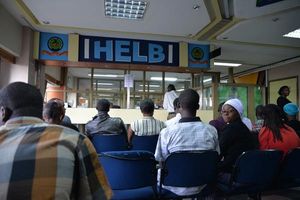
Under the new funding model, funding is channelled through the Higher Education Loans Board (HELB) for loans and the University Funding Board (UFB) for scholarships, for subsequent disbursement to the universities.
To ensure efficiency in the disbursement of the loans and scholarships to universities, HELB and UFB are required to requisition resources from the National Treasury on a monthly basis, unlike previously, when disbursement was done on a quarterly basis.
They also raised an alarm over the slow progress made in the proposed merger of HELB, UFB and the Kenya Universities and Colleges Central Placement Service (KUCCPS).
The proposed merger seeks to create one institution to deal with all matters relating to tertiary education funding and placements.
The re-organisation, the committee says, is critical as the new funding model transits fully at both TVET and university levels, “as it will enhance efficiency in management of resources meant for loans and scholarships.”
Further, the committee raised a red flag that the Appropriation in Aid (AiA) collected by HELB has remained fixed for almost three years.
This, according to the committee, is an indication that loan repayment by beneficiaries has not increased despite the number of students benefiting from the fund increasing, especially after the onboarding of TVET students.
“This if not addressed may defeat the purpose of the scheme being a revolving fund as well as create challenges as HELB explores the possibility of collateralization of the loan repayments.”