Huge funding gaps as well as rising debts totalling more than Sh205 billion are major challenges that threaten the higher education sector, according to data from the State Department for Higher Education.
Pending bills and deficits, non-performing loans at the Higher Education Loans Board (HELB), university scholarships and pending disbursements to private universities are among the biggest liabilities.
According to the State Department for Higher Education, HELB requires Sh112.1 billion for the 2026/27 financial year but has only been allocated Sh56.3 billion, leaving a shortfall of Sh55.8 billion. The board has also accumulated pending bills projected to rise to Sh100.4 billion in the next financial year.
The data shows that HELB’s funding crisis has worsened over the years. In the 2024/25 financial year, the board targeted 879,206 students and required Sh48.4 billion, but received Sh37.7 billion, leaving a deficit of Sh10.7 billion.
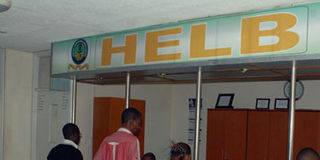
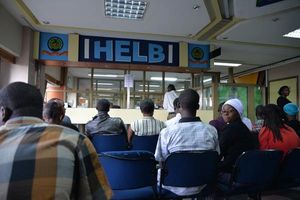
Students apply for Helb loans in Nairobi.
Photo credit: File | Nation Media Group
In the current financial year, the target rose to 1.1 million students, with funding needs increasing to Sh75.06 billion against an allocation of Sh41.1 billion, resulting in a Sh33.9 billion deficit.
The Universities Fund, which finances scholarships for university students, also faces a funding gap of Sh16.26 billion after an allocation of Sh31.1 billion against a requirement of Sh47.36 billion.
The deficit is expected to increase the scholarship deficit from Sh22.26 billion in the current financial year to Sh38.52 billion in the 2026/27 financial year.
Data from Universities Fund shows that the number of new university students is expected to rise from 180,125 in the current financial year to 219,279 in 2026/27, pushing the cumulative number of students on scholarship to 656,927.
“The Universities Fund has been implementing the Student-Centred Funding Model which adopts a need-based approach to student financing, offering scholarships and loans based on individual students’ financial capability,” Principal Secretary, State Department for Higher Education, Beatrice Inyangala, told the National Assembly’s Departmental Committee on Education.
Private universities are also owed billions of shillings in unpaid tuition fees for government-sponsored students placed through the Kenya Universities and Colleges Central Placement Service (KUCCPS).
According to the report, the Association of Private Universities in Kenya (KAPU) has already issued a notice of intention to institute legal proceedings against the State Department for Higher Education over the unpaid dues.
“The resultant liability is estimated at Sh60,277.66 million,” the report states.
Public universities have separately accumulated pending bills amounting to Sh100.3 billion as at March 31, 2026, although the liabilities have not been factored into the proposed budget ceilings.
“As at March 31, 2026, public universities had accumulated pending bills worth Sh100,309.24 million. These bills have not been provided for in the proposed FY 2026/27 budget ceilings,” she said.
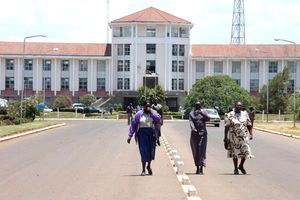
The Technical University of Kenya campus along along Haile Selassie Avenue in Nairobi.
Photo credit: File | Nation Media Group
The report further shows that the Technical University of Kenya (TUK), which has faced prolonged financial difficulties and labour disputes, requires Sh3.073 billion to implement return-to-work agreements and settle salary obligations.
The State Department also flagged funding gaps linked to the transition to Competency-Based Education (CBE), curriculum review and infrastructure projects in universities.
The disclosures come as universities struggle with shrinking capitation, rising salary obligations and growing pressure under the need-based funding model introduced by the government.
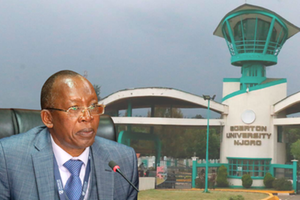
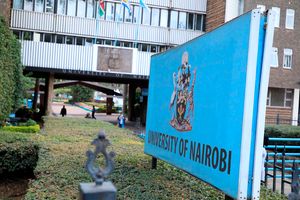
Among the institutions carrying the heaviest debt burden are Egerton University with Sh25.5 billion in unpaid bills, followed by University of Nairobi at Sh17 billion, Kenyatta University at Sh12.8 billion and Moi University with Sh10.4 billion in pending bills.
The State Department for Higher Education itself is facing a significant budget deficit. According to the presentation, the department requires Sh311.9 billion for recurrent expenditure in the 2026/27 financial year but has only been allocated Sh155.2 billion, leaving a shortfall of Sh156.7 billion, equivalent to a funding gap of 50.2 percent.
The PS revealed that the development expenditure is also under pressure, with a shortfall of Sh2.49 billion. The financial strain is now spilling into core university operations, infrastructure projects and staff welfare.
At the Technical University of Kenya (TUK), the government admitted that funds required to implement the Return-to-Work Formula signed with staff unions were not allocated.
“In addition to the above, since July 2025 the University has only been paying staff net as opposed to gross salaries due to recurrent budgetary deficits,” the report states.
The institution further requires an additional Sh845 million to pay gross salaries in the 2026/27 financial year.
The State Department acknowledged delays in several projects, blaming the transition from IFMIS procurement to the Electronic Government Procurement system.
Some projects, including the University of Nairobi Engineering and Science Complex, recorded zero expenditure despite budget allocations.