The Technical University of Kenya (TUK) has suffered a legal blow after the Court of Appeal found it violated the constitutional right to fair administrative action of 21 students whose missing examination scripts delayed their graduation.
The court, however, reduced the compensation awarded to each student from Sh148,764 to Sh50,000, in a judgment delivered by Justices Daniel Musinga, Mumbi Ngugi and Francis Tuiyott.
The appellate court ruled that while TUK was not to blame for the disappearance of the students' mathematics examination scripts, it failed to respond with the urgency the crisis demanded, delaying the students' graduation by a year.
The case arose after a lecturer failed to submit marks for a compulsory mathematics examination sat by 72 diploma students in the School of Mechanical and Mechatronics Engineering in 2012.
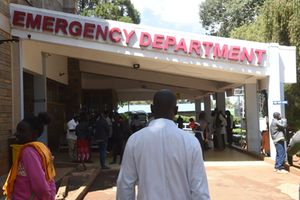
Court of Appeal found TUK violated the constitutional right to fair administrative action of 21 students whose missing examination scripts delayed their graduation.
Photo credit: File
The missing scripts forced the university to organise a re-sit in January 2015, delaying the students' completion of their studies.
Twenty-one of the affected students moved to court, arguing that the university had violated their constitutional rights after excluding them from the December 2014 graduation list despite allowing them to proceed to their final year of study.
The students contended that the institution acted unfairly by failing to communicate the problem in good time and denying them an opportunity to graduate with their classmates.
The High Court agreed with the students in 2019, holding that the university had violated their rights to fair administrative action and human dignity, awarding each student Sh148,764 as compensation.
The Court of Appeal however partially overturned that decision, saying the TUK failed to resolve the matter expeditiously despite having ample time to investigate the missing scripts and organise remedial measures.
“We have no doubt that the University did not act with the urgency that the matter at hand bespoke, leading to students graduating one year later,” the judges said.
The court noted that while the university was entitled to investigate the lecturer responsible for the missing scripts, it should have ensured that the process did not jeopardise the students' legitimate expectation of graduating on time.
The judges observed that the university only initiated criminal proceedings against the lecturer after receiving a demand letter from the students' lawyers, about one-and-a-half years after the examination had been administered, describing the institution's response as lax and inefficient.
Right to dignity not violated
However, the appellate court disagreed with the High Court's conclusion that the students' right to dignity had been violated.
It held that although the delayed graduation undoubtedly inconvenienced the students, there was no evidence to support claims that they had been regarded as failures by their parents, friends or society because of the delay.
"The holding by the trial court that the students' right to dignity had been violated was, in our view, based solely on speculation and conjecture," the judges ruled.
The court also found that the High Court had erred in calculating damages based on assumptions about how long it would have taken the students to secure employment after graduation.
While acknowledging that constitutional damages are intended to vindicate violated rights rather than punish public bodies, the judges said there was no evidence on record to justify the higher award.
Instead, they substituted the compensation with an award of Sh50,000 for each of the 21 students for the violation of their right to fair administrative action.
The court upheld the High Court's award of costs to the students but directed that each party bears its own costs of the appeal.