When Cheptumo Ayabei joined the Teachers Service Commission (TSC) in 1999 as a Finance Officer, he couldn't have imagined that more than two decades later, he would rise to head the institution.
His career in public service has been one of steady progression. He first worked at the Ministry of Education, where he served as Assistant Secretary and Senior Assistant Secretary in Finance between 1990 and 1999, before joining the TSC Finance Directorate in 1999. In 2009, he was appointed to head the directorate, a position he held until his elevation.
He is also the first person living with disability to head the commission, one of Kenya's most powerful and sensitive public offices.
Photo credit: Nation Media Group
A source at the commission told the Nation that Mr Ayabei was issued with his appointment letter immediately after the commissioners finalised the interviews and made their decision. He is to assume office with immediate effect.
Teachers Service Commission Acting CEO Evaleen Mitei.
Photo credit: File | Nation Media Group
The other candidates shortlisted and interviewed were Evaleen Mitei, who has been acting CEO since July last year, when former CEO Nancy Macharia retired, Robert Odette, Lawrence Ngai Kaburu and Farah Abdi Saman.
Mr Ayabei holds a Master of Science degree in Finance and Banking from the University of Stirling in the United Kingdom and a Bachelor of Education (Arts) from Kenyatta University. He also holds a Certificate in Public Finance and Accounts from the University of Connecticut and the University of Strathclyde in Scotland. He is a Certified Public Accountant of Kenya (CPA-K) and a member of the Institute of Certified Public Accountants of Kenya.
His stated vision has been to make the Finance Directorate proactive in identifying challenges and offering innovative solutions, so that the commission can achieve its objectives and serve its clients more effectively.
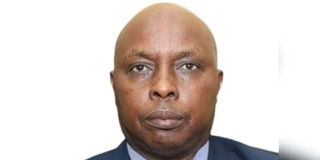
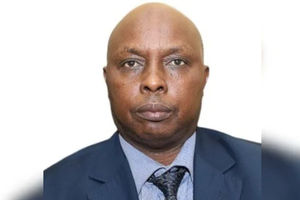
Mr Cheptumo Ayabei, TSC's new chief executive officer.
Photo credit: Courtesy | TSC
Mr Ayabei's responsibilities now go beyond financial management. Teachers, unions and the government expect him to address long-standing human resource and administrative challenges in the education sector.
Teacher shortage. One of the first tests will be the shortage of teachers, which continues to affect learning in public schools, particularly in remote and marginalised areas. The government has committed to recruiting additional teachers to bridge the gap, while the TSC has also been recruiting replacements for those who leave through natural attrition. Mr Ayabei will oversee recruitment and deployment and ensure that staffing needs are met in primary, junior and senior schools.
Senior school. The transition to senior school under the Competency-Based Education (CBE) system will also require the commission to align teacher recruitment, training and deployment with the new education structure.
Career progression. Another major assignment is implementing the revised Career Progression Guidelines (CPG), which are meant to let teachers advance through both classroom teaching and administrative leadership pathways. The issue remains a major concern among teachers, particularly those who complain of stagnation in their careers.
President William Ruto has announced an additional Sh4 billion for teacher promotions, with a commitment to promote 50,000 teachers in the 2026/2027 financial year. The new CEO will have to turn these commitments into actual promotions while managing the expectations of teachers who have waited years to move up.
Welfare, pay and working conditions will also feature prominently. The commission must maintain good industrial relations with teachers' unions while resolving disputes over promotions, remuneration and other terms of service. Managing teachers' medical cover and implementing negotiated agreements will also require close coordination with government agencies and service providers.
His background in finance could help him balance these competing demands, but he will also have to meet the expectations of a workforce spread across thousands of schools.
Disability groups: 'A beginning, not an exception'
Mr Ayabei's appointment has drawn attention from disability rights advocates, who see it as an important step towards greater representation of persons with disabilities in public-sector leadership.
National Council for Persons with Disabilities (NCPD) chief executive Michael Munene described it as a significant milestone, given the low representation of persons with disabilities in senior management.
Citing the National Gender and Equality Commission's 2025 Audit of State Corporations, he said persons with disabilities held only 31 of the 2,434 top management positions, or 1.3 per cent. He added that only 16 of the 198 state corporations assessed had met the minimum five per cent representation threshold.
"Your appointment is a significant milestone for disability inclusion and representation in Kenya's public-sector leadership. It demonstrates that persons with disabilities have the competence, capacity and leadership potential to head major public institutions," Mr Munene said in a congratulatory message on his official Facebook page.
He called for a public service in which merit, ability and equal opportunity, rather than disability, determine who gets leadership roles.
Harold Kipchumba, a member of the Kenya Disability Parliamentary Association (KEDIPA) and the Justice and Legal Affairs Committee, described the appointment, which he said was the first of its kind at the TSC, as more than an individual achievement. He said it should open more doors for qualified persons with disabilities to take up senior positions in public institutions.
"Mr Ayabei's appointment should therefore be a beginning, not an exception; a precedent, not an isolated achievement," he said.
Mr Kipchumba argued that persons with disabilities still face stereotypes, institutional barriers and limited opportunities, despite the many qualified professionals, administrators and scholars among them. He called for meaningful representation in senior management, boards, commissions and other decision-making bodies. He also urged public institutions to provide reasonable accommodation, accessible infrastructure, assistive technologies and supportive working environments so that appointments translate into real participation.
He further called for the implementation of constitutional provisions and disability-rights laws, arguing that inclusion should be reflected in recruitment, promotions, education policies and resource allocation.
"Inclusion is not charity. We are not asking society to lower standards for us. We ask that barriers be removed so that we can compete, contribute and excel on equal terms," he said.
Jonathan Metet, who led a group of disability champions, cautioned that the appointment is a significant milestone but should not be mistaken for the achievement of meaningful inclusion in the public service. Citing the NCPD's report on the status of disability inclusion, he said persons with disabilities make up only 1.32 per cent of public-service employees, against the constitutional requirement of at least five per cent. He called for greater accountability in public institutions, saying the challenge lies in turning existing laws and policies into real jobs and leadership opportunities for qualified persons with disabilities.
Mr Metet also challenged Mr Ayabei to prioritise staffing shortages in special needs schools. He cited St Paul Charera Special High School, which he said has had no Physics teacher since 2020 despite repeated requests to the TSC.
"The school had written to the commission five times and made a sixth attempt this year, while other subjects also lacked teachers," he said. He said the new CEO must also address promotion concerns, reasonable accommodation and the implementation of disability-related tax exemptions, and that his success should be measured by tangible improvements in the working conditions of teachers with disabilities and in access to quality education for learners with disabilities.
Teachers' leaders: 'Depoliticise TSC'
Kenya Comprehensive School Heads Association (KECSHA) chairman Fuad Ali congratulated Mr Ayabei, saying his long experience at the TSC, including his tenure as Director of Finance, made him well placed to lead the commission.
"We congratulate him on his appointment and believe he is equal to the task. He is an experienced person who has grown through the ranks at TSC to reach the position of CEO. We have confidence that he will steer the commission in the right direction," Mr Ali said.
He said KECSHA had worked with Mr Ayabei when he was Director of Finance and looked forward to continuing the engagement. He added that ongoing initiatives, including implementation of the revised CPG, should gather pace under his leadership.
"We expect him to build on the work left by the acting CEO and ensure that the implementation of the CPG moves faster. We look forward to working with him, Kecsha normally works with the government of the day. This is the best Christmas gift for teachers," Mr Ali said.
Kenya National Union of Teachers (Knut) first national vice-chairman Dr Malel Langat said the elevation was particularly significant for teachers living with disabilities, who now have an example of someone who rose through the ranks to head a major public institution. He said Mr Ayabei's academic and professional qualifications, together with his experience at the TSC, put him in a position to tackle the challenges facing teachers, including implementation of the revised CPG.
"He has the qualifications; he holds a Master's degree and is a Certified Public Accountant. We expect him to steer the implementation of the reviewed CPG to ensure teachers benefit from the changes as directed by the President. The Sh4 billion allocated for promotions must become a reality," he said.
Dr Langat also warned that Mr Ayabei takes over at a time when political interference in the TSC's operations has become a concern, and urged him to safeguard the commission's independence as the country approaches the 2027 General Election.
"He must depoliticise TSC. Politicians should not be displaying employment letters at funerals, weddings and family gatherings. He must ensure that nobody within the commission acts outside its mandate or allows political interests to interfere with its functions," he said.
He added that the new CEO should restore order and protect the commission from external interference so that recruitment, employment and other administrative decisions are handled independently and professionally.
The chair of the Kenya Senior Schools Heads Association (Kessha), Willy Kuria, also welcomed the appointment of Mr Ayabei.
“Kessha congratulates Mr Ayabei. We are happy that he is an insider at the TSC who understands how the commission operates and knows what needs to be done. We fully support his appointment. The work ahead of him is clearly cut out. The president has already announced teacher promotions and the new Career Progression Guidelines (CPG), and the new CEO must now ensure they are implemented. These are urgent priorities,” said Mr Kuria.
Mr Ayabei now sits at the centre of an institution whose decisions affect hundreds of thousands of teachers and millions of learners. His finance background and long service at the TSC give him an understanding of its internal workings, but he will be judged on whether he can turn that experience into better service delivery, address teachers' concerns and strengthen the commission's capacity to deliver quality education.
The disability community will also be watching, as it sees his elevation as a chance to show that persons with disabilities can lead at the highest levels of public administration.