The independence of the Judiciary is facing a litmus test following calls by the Executive to mete out harsh penalties on opposition politicians, anti-government protesters and human rights activists.
This follows the recent wave of arrests and arraignment of tens of State critics at the Kahawa Law Court, which is designated to handle terrorism suspects.
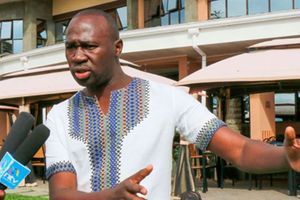
Activist Boniface Mwangi (Centre) with his wife Njeri Mwangi (right) and Lawyer Njanja Maina address journalists at Kahawa law courts on July 21, 2025 after he was charged with unlawful possession of ammunition.
Photo credit: Billy Ogada | Nation Media Group
“We note that while visiting the Kikuyu Law Courts after they were burnt down during demonstrations, Her Ladyship the Chief Justice (Martha Koome) made a sensational remark that the burning down of the court was an act of terrorism,” stated the Law Society of Kenya President Faith Odhiambo in a statement last evening. “While we joined the Judiciary in condemning the burning and vandalism of courts, we must recognise the responsibility borne by the justice sector in how we call for law and order. Evidently, our law enforcement institutions appear to have taken the cue from the Chief Justice and are flagrantly abusing the provisions of the Prevention of Terrorism Act, whose threshold is distinct and intended for exceptional circumstances. We call upon law enforcement to desist from this emergent trend.”
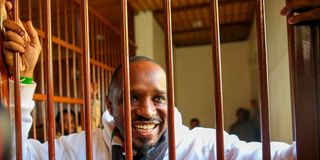
Activist Boniface Mwangi in court, denies terrorism charges
Activist Boniface Mwangi appears before the Kahawa Law Courts.
Photo credit: Billy Ogada| Nation Media Group
Mr Mwangi’s relatively high personal bond was set days after Interior Cabinet Secretary Kipchumba Murkomen called on the Judiciary to collaborate with the Executive in holding the arrested individuals accountable.
The minister said the Judiciary needs to impose stiff punishment against the individuals suspected of being involved in the recent violent anti-government protests.
He criticised a Sh50,000 cash bail set for a suspect accused of storming a hospital in Kitengela and causing destruction during the Saba Saba Day demonstrations.
111 Saba Saba protest suspects freed on Sh50,000 bail each
“After invading a hospital and interrupting a Caesarean section operation, only Sh50,000 was granted as cash bail. These lenient bail terms are unacceptable. I look forward to successful prosecutions and convictions,” said Mr Murkomen.
Article 49(1)(h) of the Constitution states that an arrested person has the right to be released on bond or bail, on reasonable conditions, pending a charge or trial, unless there are compelling reasons not to be released.
Hundreds of youths are in custody after being arrested and charged with various crimes following anti-government demonstrations between June 25 and July 7, 2025. Their bail terms have been set at between Sh50,000 and Sh100,000, with the courts coming under sharp criticism for allegedly aiding police impunity, either unwittingly or deliberately.
The charges levelled against the suspects by the court include serious offences such as arson and terrorism, with the government being accused of weaponising the justice system by targeting youth and activists.
On July 9, some 111 individuals were arrested in Laikipia County before being released on a cash bail of Sh50,000 each.
Additionally, 125 protesters arrested during the demonstrations were released by the Makadara Law Courts on Sh5,000 cash bail each.
Member of Parliament for Manyatta Constituency Gitonga Mukunji.
Photo credit: Boniface Mwangi | Nation Media Group
On July 11, Manyatta MP Gitonga Mukunji and some two co-accused were released by the court on a Sh300,000 cash bail or an alternative surety bond of Sh1 million having spent three days in police custody.
The MP, an ally of former Deputy President Rigathi Gachagua, was arrested in connection with the chaos witnessed during the Saba Saba protests.
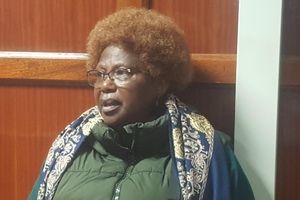
Former Naivasha MP Jane Kihara MP in court over an incitement chsrge...Photo/ Richard Munguti
Photo credit: Richard Munguti| Nation media Group
Director of Public Prosecutions Renson Ingonga yesterday, however, defended the terrorism charges, stating the suspects were taken to court strictly based on available evidence rather than on efforts to suppress legitimate political expression.
“The ODPP is aware of public concern regarding the potential misuse of terrorism legislation. Each accused individual will be accorded a fair trial, legal representation and full access to due process in line with the Bill of Rights under the Constitution,” he said.
He cited the statement by CJ Koome following the torching of Kikuyu Law Courts by demonstrators last month, who equated the act to “terrorism and not a mere act perpetrated by criminal elements”.
While appearing at the Kahawa Law Courts in solidarity with several youth arrested during the June 25 protests in Gilgil and other areas last week, former Chief Justice David Maraga accused President William Ruto’s administration of weaponising the criminal justice system to intimidate and silence dissent by terrorising the arrested youth and their families.
He pleaded with the court to consider the economic hardships faced by the arrested youth, most of whom, he said, have irregular incomes.
Mr Maraga’s plea came after the court granted varying bail and bond terms across three related cases, ranging from a bond of Sh200,000 to a cash bail of Sh50,000.
A coalition of pan-African organisations and human rights defenders has said more than 150 young Kenyans have been wrongfully charged and are facing cash bail demands ranging between Sh30,000 and Sh300,000.
More than 1,500 individuals have been arrested across the country, facing various charges, including terrorism, murder, robbery with violence, sexual assault, arson and malicious damage to property in relation to the June 25 and Saba Saba Day protests.
The cases have attracted widespread public criticism, with civil society and human rights groups raising concerns over what they term as the misuse of anti-terror laws to silence dissent.
Last week, however, the Judiciary came out to defend itself against vilification over its bail and bond decisions.
In a statement by the Chief Registrar of the Judiciary, Ms Winfridah Mokaya, the Judiciary argued that the bail and bond determinations are not made arbitrarily but are informed by the Constitution, the Criminal Procedure Code, and the Judiciary’s Bail and Bond Policy Guidelines.
She observed that the above-mentioned instruments provide a structured legal framework and clearly articulated criteria to guide the exercise of judicial discretion, taking into account the specific facts and circumstances of each case.
Ms Mokaya cited a reaction to bail and bond decisions issued by the Nanyuki and Kahawa Law Courts, which she said is part of an escalating trend of public vilification and unwarranted personal attacks directed at judicial officers in the discharge of their functions.
She warned the public from resorting to personal attacks against judicial officers, saying that Kenya’s legal architecture provides legitimate and structured mechanisms for recourse.
“Any party aggrieved by a judicial decision, whether relating to bail, bond, or any other matter, has an unfettered right to seek redress through appeals or reviews in accordance with the law,” said Ms Mokaya in the statement dated July 17, 2025.
“Resorting to personal attacks against judicial officers not only subverts due process but also imperils the sanctity and independence of the Judiciary.”
She said the Judicial Service Commission will not waver in defending the decisional independence of all judicial officers and judges from any form of undue pressure, interference, or intimidation as well as safeguarding the integrity of judicial processes.
“The Commission calls upon all members of the public, civic leaders and institutional stakeholders to respect the dignity of judicial institutions. Engagement with the Judiciary must be grounded in civility, constructive dialogue and an unyielding respect for the rule of law,” added Ms Mokaya.
President William Ruto’s administration has, of late, launched a systematic crackdown on dissenting voices in the country, with opposition politicians, human rights activists, as well as hundreds of young Kenyans detained on fabricated terrorism charges.
For instance, Mr Mwangi was arrested by the Directorate of Criminal Investigation (DCI) detectives for allegedly “facilitating terror during the June 25 protests” witnessed across the country.
DCI boss Amin Mohammed confirmed the arrest of the activist, saying it is linked to allegations of facilitating terrorist activities during the protests.
Meanwhile, Gatanga MP Edward Muriu has hit out at the government for “terrorising” its citizens for raising issues they promised to address.
“Anti-terror laws cannot be meted out against citizens for expressing their democratic rights guaranteed in the Constitution. It is an abuse of power. Worse still, the message being sent out there is that Kenya is a terrorist country worse than Syria and Afghanistan,” said Mr Muriu.
Former Public Service Cabinet Secretary Justin Muturi added: “They (the charges) are nothing more than pure intimidation with a view to silencing government critics. They are a prelude to more atrocities being meted on the opposition, especially not to speak about the runaway corruption in government.”