From sexist insults to online smear campaigns: The changing face of political violence against women in Kenya
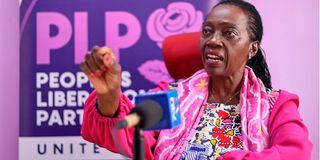
People's Liberation Party leader Martha Karua during an interview at the party's headquarters in Nairobi on June 19, 2026. She is one of several women leaders who have faced gender-based political attacks in recent election cycles.

Political violence against women in Kenya has evolved. While physical attacks and destruction of property remain a threat, recent election cycles show a shift towards psychological, sexualised and technology-facilitated violence.
Women seeking elective office are increasingly targeted through sexist remarks, attacks on their bodies and family lives, online disinformation, manipulated images and character assassination designed to undermine their credibility and discourage them from participating in politics.
This reflects a growing recognition that political violence extends beyond physical assault to include economic, psychological and digital abuse.


Sexist rhetoric dominates the campaign trail
It's time to call out politicians using sexist language
The 2022 General Election marked a turning point, with women politicians facing widespread gender-based attacks both on the campaign trail and online.
In January 2022, David Ngari, popularly known as Gakuyo, who was contesting the Thika Town parliamentary seat, resorted to sexist insults targeting the bodily anatomy and sexuality of his rival, Alice Ng'ang'a, instead of debating policy issues.
In June 2022, the rivalry between then Bahati MP Kimani Ngunjiri and Nakuru Senator Susan Kihika descended into personal attacks. Addressing journalists, Mr Ngunjiri told Ms Kihika: "I am not married by you, you Susan," rather than responding to her political agenda or record.
The same month, South Mugirango MP Silvanus Osoro targeted Martha Karua, then Azimio la Umoja-One Kenya Coalition's running mate, attacking her marital status and making sexist remarks about her body during a political rally in Thika.
Women gubernatorial candidates were also subjected to coordinated online abuse. Wavinya Ndeti, now the Machakos governor, faced persistent attacks questioning her academic qualifications and family life. In Embu, Cecily Mbarire's suitability for governor was challenged on social media because she was married to a man from another county.
Another woman seeking a gubernatorial seat was falsely portrayed online as being romantically involved with a senior male politician. She later exited the race following a negotiated political settlement.
2022

Kawira Mwangaza faces gendered humiliation
Gender-based political violence continued beyond the elections.
In November 2023, during Senate proceedings to consider the impeachment of former Meru Governor Kawira Mwangaza, senators were shown a video in which Njuri Ncheke elders, Tigania East MP Mpuru Aburi and a group of young men chanted sexist and derogatory slogans directed at the governor.
The incident reignited debate over misogyny in Kenyan politics. Although senators and leaders condemned the chants, Mr Mpuru denied wrongdoing and maintained he had been misquoted.
Apologise or I sue you for defamation, Aburi tells Kawira
2023Millie Odhiambo recounts years of political violence
The making of a firebrand: Millie Odhiambo's 'Rig or be Rigged' tell-all
In her book Rig or Be Rigged?, Suba North MP Millie Odhiambo chronicles the violence she has endured during election campaigns.
She recounts her home being burnt down after party nominations, attacks on her campaign convoy, and sustained sexist abuse, including being labelled a "barren woman" because she had no children. Opponents also portrayed her as a migogo — a woman married outside her home area — to suggest she did not belong in Suba politics.
She further describes false allegations that she had rigged party nominations, saying the accusations were intended to deny her the ODM nomination certificate and delegitimise her victory.
2025Sexist attacks against Gladys Wanga
Sexist rhetoric: Why misogyny in politics threatens Kenya’s democratic future
In May 2026, Siaya Governor James Orengo came under criticism after making sexist remarks about Homa Bay Governor Gladys Wanga during a political rally in Oyugis.
Rather than addressing policy differences, he dismissed comparisons between their political experience before making remarks widely condemned as misogynistic. The incident reignited debate over the continued use of sexist rhetoric to undermine women leaders.
2026Beyond 2025: Online violence becomes the new battleground
Technology has amplified political violence against women, making online abuse one of the biggest threats to women's political participation.
A 2025 briefing paper by the Westminster Foundation for Democracy found that women politicians in Kenya face cyberstalking, doxxing, image-based abuse, sextortion, trolling, impersonation and coordinated gendered disinformation.
The report warns that digital platforms have intensified traditional forms of political violence by increasing their speed, reach and permanence. Smear campaigns launched online frequently spill into offline intimidation, threats against families and harassment at political rallies, while incidents of offline abuse are amplified online, making them more visible and enduring.
The briefing cites the case of a parliamentary aspirant in Nyeri County who withdrew from the election race after fabricated, sexually explicit content about her was circulated online.
Kenya Women Parliamentary Association chairperson Leah Sankaire notes in the report that online harassment often escalates into real-world intimidation, stalking and exclusion, blurring the line between digital and physical violence.
Legal gaps
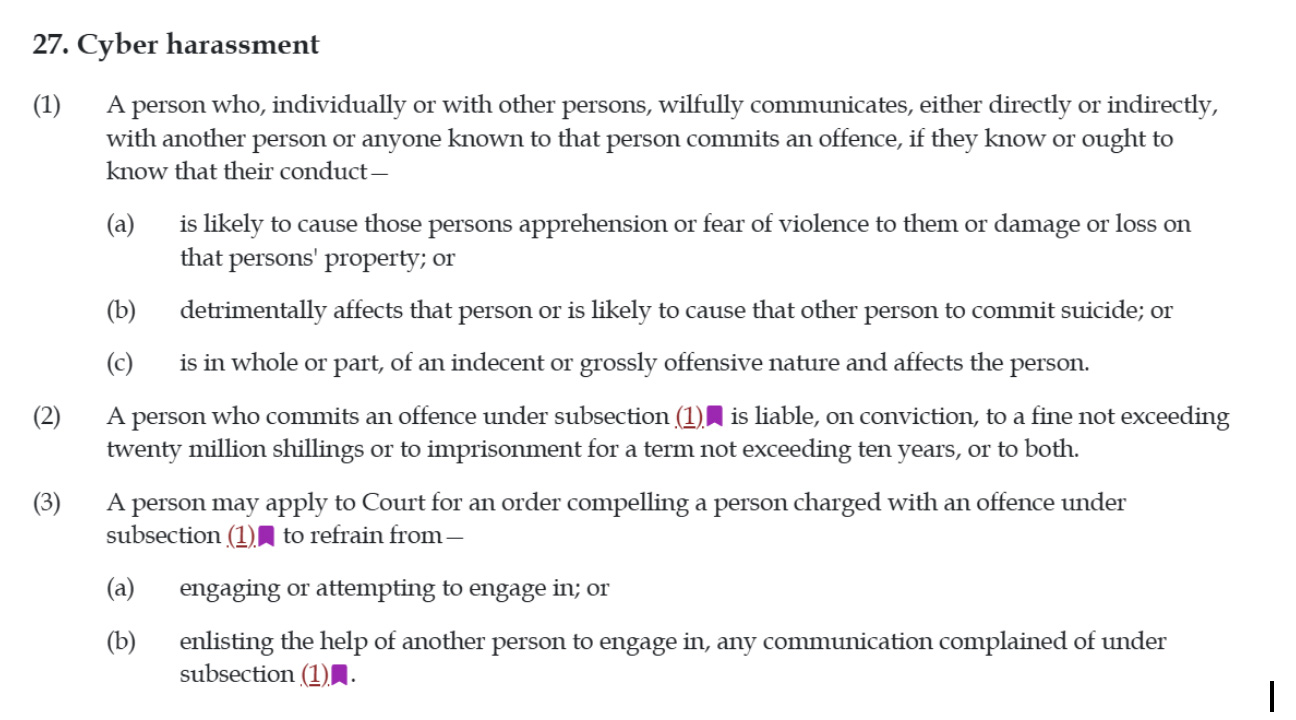
Although the Computer Misuse and Cybercrimes Act (2018) criminalises several cyber offences, it primarily targets individual perpetrators. It does not adequately address the responsibility of digital platforms that enable or fail to curb online abuse. As a result, harmful online environments remain largely unregulated.
The way forward
Experts argue that stronger enforcement, rather than simply new legislation, is needed.
Rumbidzai Kandawasvika-Nhundu, Principal Adviser for Democracy and Inclusion at the International Institute for Democracy and Electoral Assistance, says laws designed to prevent violence against women in politics must be fully implemented to prevent abuse, protect victims and ensure accountability.
She argues that all actors, including political parties, electoral management bodies, law enforcement agencies and technology companies, must be held accountable.
Political parties, as gatekeepers to political participation, have a particular responsibility to discipline members who perpetrate gender-based political violence.
The Independent Electoral and Boundaries Commission (IEBC) also has a critical role to play in preventing and responding to violence against women in politics.
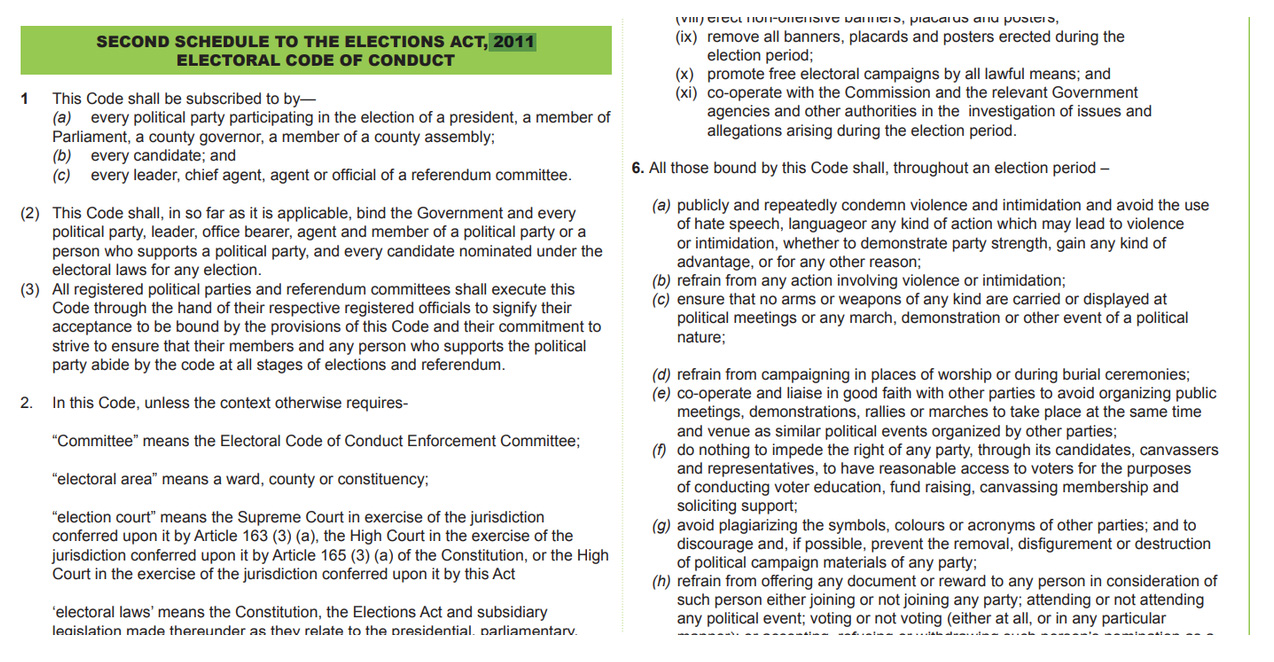
IEBC's Electoral Code of Conduct, contained in the Second Schedule to the Elections Act (2011), requires every political party, independent candidate and election participant to publicly condemn violence and intimidation, refrain from hate speech, and avoid actions likely to incite violence.
The code empowers the IEBC to institute proceedings against individuals or political parties that violate these provisions. Where the High Court finds serious or systematic violations involving violence or intimidation, it may suspend or cancel a political party's participation in an election.
As Kenya prepares for future elections, Rumbidzai says effective enforcement of these provisions will be critical to ending both offline and online violence against women in politics, and to ensuring women can participate in public life safely and equally.