Rachel Ruto's new battle: Saving girls from HIV, GBV and teenage pregnancy

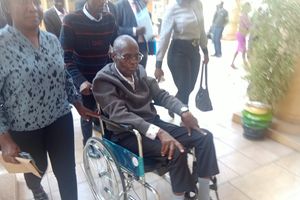
First Lady Mama Rachel Ruto (centre), Health Principal Secretary Ouma Oluga (right) and Homa Bay Deputy Governor Danish Onyango arrive at Mawego National Polytechnic during the launch of a mentorship and advocacy engagement progarmme under the first lady’s Voice of Children Initiative in Rachuonyo North, Homa Bay County, on August 26, 2026. The programme is meant to reduce tripped threat: teenage pregnancy, new HIV infection and gender-based violence.

What you need to know:
- Hope’s* story highlights how poverty, sexual violence and teenage pregnancy can derail girls’ education and future dreams.
- Kenya’s triple threat of teenage pregnancy, gender-based violence and HIV continues to put adolescents at risk.
Hope* was in Form Two when her father died and with him went the life she had known. Growing up, she had gotten everything she wanted from her parents. But her father's death changed all that overnight, leaving her mother to provide for the family alone and forcing the teenager to make do with far less than her friends had.
“We are four children in my family. I am the last born," Hope said.
Being the last born meant she was the one to step aside. Her mother could not raise fees for all four children, so Hope gave up school so her siblings could finish theirs first. “My mother could not pay fees for all of us. I had to sacrifice my education so that my siblings could build their future,” she said.


She ended up at home for more than a year, and that made her an easy target for sex pests. Several people had promised to support her dreams at her father's funeral, but once the burial was over, most of them vanished.
Only one man in the village kept checking on her, except he had a hidden agenda, using promises of support as cover to defile her. “I lost hope when I conceived. I knew that my future was shattered,” she said.
She gave birth, after which a humanitarian organisation stepped in to help her return to school. She applied for a scholarship and was placed at The Mango Tree Girls School in Rachuonyo North, where she is now in Form Four, dreaming of becoming a civil engineer.
Hope told her story to First Lady Rachel Ruto at Mawego National Polytechnic on August 26 at the launch of the Mentorship and Advocacy Engagement under the Voice of Children Initiative.
The programme is meant to fight what officials call the "triple threat" of teenage pregnancies, gender-based violence and HIV infection. It is supported by the Organisation of African First Ladies for Development and is being rolled out in Baringo, West Pokot, Uasin Gishu and Homa Bay.
Ms Ruto launched the programme to tackle school dropouts and the lifelong health risks tied to them, putting weight behind HIV prevention, reproductive health, child protection, response to sexual and gender-based violence, and youth empowerment, all aimed at giving every child a safe, nurturing environment to dream boldly and rise without limits.
“The fight against the triple threat must be treated with the force it deserves,” she said, noting that many violations against vulnerable groups go unreported, a fact that worries her.
Hope's story is not unique. Across the country, teenage girls face similar struggles, from defilement and unwanted pregnancy to HIV infection, often through no fault of their own.
The National Aids and STI Control Programme (Nascop) says Kenya has 1.4 million people living with HIV, of whom 1.3 million are on antiretroviral therapy. Speaking at the launch, Nascop head Dr Andrew Mulwa said not everyone in Kenya knows their status. Ninety-three per cent of Kenyans know their HIV status, and of those, 91 per cent are on treatment. The country has so far achieved an 87 per cent suppression rate.
New cases remain the biggest challenge, Dr Mulwa said, with youths and adolescents leading the numbers, a trend that threatens to derail Kenya's goal of ending the virus by 2030. “Youths aged 15 to 35 years are our greatest barriers in managing the virus. The programme started by the First Lady will help us in ending the problem,” he noted.
National Syndemic Diseases Control Council (NSDCC) chief executive officer Douglas Bosire said Kenya has made significant progress in reducing HIV prevalence. He cited Homa Bay as one of the counties that was hit hardest by the virus, where prevalence has dropped from 26 per cent in 2013 to 12 per cent today.
“The lake region is a beacon of hope in ending HIV. Figures have shown reduction in infections and deaths,” Dr Bosire noted.
The virus predominantly affects the youth, according to NSDCC, and many of those affected are adolescents who also fall pregnant. Dr Bosire says up to 600 teenagers visit antenatal clinics every day.
Statistics
Ministry of Health data, through NSDCC, puts the number of people living with HIV in Homa Bay at 129,087, second only to Nairobi. This includes 7,199 children aged between zero and four years, and 121,188 teenagers aged 15 and above, with young people aged 15 to 24 accounting for 121,837 of that number. Based on 2026 estimates, Homa Bay's HIV prevalence stands at 11.74 per cent, 14.70 per cent among women and 8.7 per cent among men.
Nelly Egehiza, NSDCC programme officer for Homa Bay and Migori, told the gathering that 997 people were infected with HIV in 2025, among them 205 aged between 10 and 15 years, 396 adolescents aged 15 to 24, and 226 people aged between zero and 14 years. Of these, 771 people aged 15 years and above were infected last year.
“Data shows that 39.7 per cent of the new infections are people aged 15 to 24 years,” Nelly said.
Kagan, Mfangano and Homa Bay Town Central wards led in new HIV infections among adolescents aged 10 to 14 in 2025, while Kanyamwa Kosewe and Gwassi North wards recorded the highest infection rates among teenagers aged 15 to 18. “The most likely method of transmission was unprotected sex,” Nelly said.
NSDCC relies on gender-based violence cases reported in hospitals, and between 2016 and last year, the agency received reports of 19,160 GBV cases, 6,016 of them involving people aged 10 to 17, or 31 per cent of all cases reported. Of these, 1,209 survivors aged 10 to 17 were put on Post-Exposure Prophylaxis, and 774 were given emergency pills to prevent pregnancy.
Rangwe recorded the highest number of GBV cases in 2025, at 130, followed by Homa Bay Town (115), Ndhiwa (111), Suba South (75) and Rachuonyo South (66). Suba North had the lowest, at 19. Ms Egehiza says some cases never get to the agency at all, because survivors report to the police or other authorities but never make it to hospital.
Health Principal Secretary Ouma Oluga said 58 per cent of Kenyan women seek antenatal care, and in Homa Bay, that figure is 61 per cent. The ministry wants to push it up to 90 per cent. “Visiting the hospital helps in identifying problems during pregnancy, to end deaths during childbirth. We are working with community health promoters to achieve this,” the PS said.
He called for more skilled deliveries, currently at 89 per cent nationally and 91 per cent in Homa Bay. He said the government does not encourage teenage pregnancy, because of the stigma it brings, with some girls running away from home and only resurfacing once complications set in before childbirth.
Homa Bay remains among the counties with the highest rates of teenage pregnancy, and the Ministry of Health records 23,600 teenage pregnancy cases nationally every year, some of them involving girls who are also living with HIV.
Gender Principal Secretary Caren Agengo said many adolescents are exposed to the risk of HIV infection, and this ruins their futures. She attributed this partly to limited access to information and partly to poverty, which leaves vulnerable girls easily lured into risky sexual behaviour.
"In every case of teenage pregnancy, there is a dream, a family and a future that is affected," the Gender PS said, adding that the government needs support to help Kenyan girls overcome the challenge.
Homa Bay Governor Gladys Wanga, speaking at the launch, said she is concerned about the triple threat, noting that maternity wards in most public hospitals are filled with adolescents about to give birth, a burden she says falls squarely on government.
"Some households have children as the head of the family. Some are even infected with HIV yet they are not aware," Ms Wanga said.
Her administration has cut recorded teenage pregnancies in the county by half, from 14,000 in 2022 to 7,000 in 2025, which she credits to interventions by national government administrators and other agencies. Homa Bay also has high rates of gender-based violence, and the governor says this makes for unsafe homes for children.
The county is among the regions that take part in the annual Sigand Nyinam, a gathering of professionals and leaders who meet to discuss the challenges facing women and teenage girls.
Ms Wanga wants more groups to back the initiative, which she says has already shifted many teenagers' mindsets towards education. She noted that many adolescents complain of not being engaged by their parents.
"Most parents leave the house in the morning and go back at night. They don't have time to talk to their children. This makes them grow up without any moral support and guidance," she said.
Under the programme, several healthcare workers have already been trained to offer youth-friendly services. But the First Lady said a campaign alone will not protect children, and she wants all Kenyans to join the fight.
"Teenagers should speak up on issues affecting them. They should not be lured into making mistakes, rather they should be guided in protecting their dreams," she noted.
Children cannot make these choices on their own, she said; they need guidance. Every teenager, in her view, deserves an open door to pursue their dreams.
*Name changed to protect identity of the girl.