Rape threats, online abuse target women eyeing political seats

Parliamentary hopefuls Julia Chege (Kangema) and Faith Lukosi (Makadara).

What you need to know:
- Women aspirants warn that digital violence, rape threats and abuse are raising security costs and deterring participation even before elections.
- Female candidates describe coordinated online attacks questioning education, marriage and morality to intimidate and undermine political ambitions nationwide.
When Faith Lukosi announced her candidacy for the Makadara parliamentary seat, the response from some quarters was not about policy or her track record. It was a rape threat.
Someone posted in a WhatsApp group warning her to keep away from the constituency's interior. If she showed up, the message said, they would gang up and rape her repeatedly.
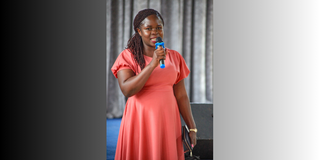
Faith Nora Lukosi addresses the congregation after a service at Makadara Friends Church last Sunday. She has announced her candidature for the Makadara parliamentary seat.


“After I raised accountability issues, I noticed there were coordinated attacks online directed at me. The man told me that if I dared step on the ground, they would gang up and rape me. This really terrified me and for a moment stopped me from going to the ground,” Faith says.
She took the threat seriously. She put together a security team and drew up a protection budget, all of this more than a year before the elections. “I am spending a lot on security because I had to take the threats seriously. I do not know what may happen to me when I am on the ground. Digital violence is really taking a toll on us, women aspirants. It has brought additional costs that were never part of the original plan. Whenever I do not have a security budget, I simply do not attend events in the constituency.”
Dr Julia Chege, who is vying for the Kangema parliamentary seat, is dealing with the same problem. Every update she posts about her activities attracts abusive and derogatory comments. “I am abused on digital platforms every day. Some of those posting ask about my level of education, my marital status and other personal matters that have nothing to do with my candidacy,” the aspirant says.

Julia Nyokabi Chege, who is vying for Kangema parliamentary seat, during the interview at the University of Nairobi.
She notes that the pattern reflects a culture of intimidation, often driven by gatekeepers who incite others to turn on female candidates. “I have repeatedly faced online hostility aimed at discouraging my views and questioning my role in leadership. Such attacks try to undermine confidence, spread negativity and create fear,” she says.
Need for respectful engagement
Julia says the situation points to the need for respectful and constructive engagement on digital platforms, rather than allowing intimidation to go unchallenged. Both are convinced that unless something is done, digital violence will be one of the biggest reasons women stay out of the next general election.
They shared their experiences at the National Two-Thirds Principle Scorecard Conference held in Nairobi last week. It was organised by the Association of Media Women in Kenya (Amwik) in partnership with the Friedrich Naumann Foundation for Freedom.
Amwik executive director Queenter Mbori said structural and sociocultural barriers continue to hinder women from participating in politics. She pointed to weak judicial mechanisms, a leadership and democracy impasse, male-dominated party structures, economic barriers and inadequate responses to gender-based violence as the main problem areas.
Queenter called for the training of content creators, bloggers and influencers on harassment ahead of the 2027 General Election. “Our research on technology-facilitated gender-based violence shows that digital platforms are often used to silence women. We must educate those in digital and new media to ensure their broad reach promotes women's leadership instead of undermining it,” she said.
Amwik board chairperson Robi Koki said research shows that failure to implement the two-thirds gender principle is not an accident, it is deliberate. “It is the result of five deliberate, interlocking pillars of obstruction that continue to undermine our democracy. The shift to digital political spaces has brought a rise in technology-based gender violence designed to silence women.”
Lack of political goodwill
Asha Bashir, the secretary general of the People's Liberation Party, said violence, both online and offline, is likely to be used to discourage women from running in the next general election. She blamed lack of political goodwill from the political class and relevant stakeholders.
Editors Guild president Zubeida Kananu called on stakeholders to ensure women’s participation in politics without fear. “Opponents should not be allowed to use digital violence to silence women and keep them from seeking political positions.”
Beatrice Nderi from the Office of the Registrar of Political Parties urged women to be intentional about putting themselves forward for political seats. “The more women are on the ballot, the more women will be elected,” she said.
Digital violence against women in politics is increasingly common, with women from marginalised groups facing the worst of it. Online attacks against female politicians tend to focus on fabricated personal misconduct, which fuels objectification, reinforces harmful stereotypes and undermines women's credibility.
According to UN Women, between 16 and 58 per cent of women and girls have been subjected to digital violence, ranging from online harassment and cyberstalking to non-consensual sharing of intimate images.