There are few quicker routes to fame, or infamy, in Kenya than standing between the country and its staple ugali, whether as a bridge or an obstacle.
After nearly three decades of building an expansive business empire away from the spotlight, Henry Mwingirwa is about to face that test as his entry into maize imports could help shape the ugali millions of Kenyans will eat.
Mr Mwingirwa’s Baita Trading Company (BTC) will import 540,000 metric tonnes, or six million 90kg bags, of non-GMO maize from Zambia in a deal that immediately puts his business interests under a national spotlight.
In August, Agriculture CS Mutahi Kagwe opened a window allowing private firms to import 25 million bags of white, non-GMO maize duty-free after successive poor harvests threatened to trigger a shortage of flour on Kenyan supermarket shelves.
Agriculture and Livestock Development Cabinet Secretary Mutahi Kagwe.
Photo credit: File | Nation Media Group
A month earlier, Zambia’s Food Reserve Agency (FRA) had announced a bumper harvest of 5.1 million tonnes of white, non-GMO maize.
Mr Kagwe saw an opportunity to curb a shortage through the duty-free window. Mr Mwingirwa saw an opportunity to expand his business portfolio. The FRA saw an opportunity to increase Zambia’s foreign exchange reserves.
The three interests have now converged in Mr Mwingirwa’s multimillion-shilling deal, making the businessman, who has largely kept a low public profile, a significant player in Kenya’s maize market.
Kenya’s laws do not restrict who can import maize. Any trader operating lawfully and with the financial muscle to complete the transaction can import maize, provided the product shipped into the country meets the required standards.
Currently, a 90kg bag of maize retails at Sh4,300 in most parts of Kenya. At that price, Mr Mwingirwa’s six million bags have a current market value of Sh25.8 billion.
It is unclear, however, how much BTC will pay for the maize and how much it will sell it for to millers and other buyers.
“As far as the price goes, there is an agreed pricing mechanism which will mean that at the commencement of each tranche, the two parties, Baita Trading Company of Kenya and Food Reserve Agency of Zambia, will meet and agree on a price,” FRA Board chairperson Suresh Desai said on Thursday when announcing the deal with BTC.
When the Nation contacted Mr Mwingirwa on Friday, the businessman said he was in a meeting and would call back afterwards.
By the time of going to press, Mr Mwingirwa had neither returned our calls nor responded to subsequent text messages seeking clarification on the Zambia maize deal.
For most of his business life, Mr Mwingirwa has avoided drawing too much attention to himself, whether for good or bad reasons.
That changed in June 2024 when the businessman made it clear that he would be on the ballot in the 2027 General Election.
The 50-year-old Strathmore University alumnus has declared that he will seek to dislodge Lawrence Mpuri Aburi from the Tigania East MP seat in 2027.
Mr Mwingirwa is an ally of Party of National Unity (PNU) leader Peter Munya. He has appeared at PNU rallies and events, indicating that he could contest the seat on a PNU ticket.
Business Registration Service (BRS) records show that Mr Mwingirwa owns 999 shares in Baita Trading Company Ltd, while Joyce Kanana Mwingirwa owns one share in the firm. The firm was incorporated on December 11, 2007.
While BTC has gained national prominence because of the Zambia maize deal, it is no stranger to trade.
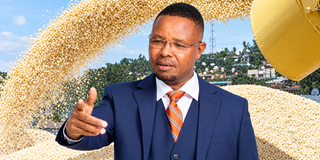
Henry Mwingirwa, the 50-year-old businessman set to import six million bags of maize from Zambia worth Sh25.8 billion.
Photo credit: Pool
The firm is behind Kisaju Plains, a residential development in Isinya, Kajiado County. BTC has subdivided the land and is selling each 50x100 metre plot for Sh1.65 million.
The property is approximately 6km from Isinya town, along Pipeline Road.
In 2023, Mr Ntoikah sued Mr Mwingirwa for allegedly refusing to settle the full purchase price.
Mr Ntoikah claimed that on an undisclosed date, he and Mr Mwingirwa entered into a gentleman’s agreement under which the latter would pay Sh54 million for the land. The court papers do not indicate the acreage.
Mr Ntoikah said Mr Mwingirwa paid a Sh18 million deposit, promising to pay the Sh36 million balance later. Part of the Sh18 million, the plaintiff argued, was paid through cheques issued in 2013.
Mr Ntoikah argued that the land had been subdivided and partly developed, in violation of their agreement. Mr Mwingirwa filed an objection, arguing that the law of contract provides that such suits can only be filed within six years of the agreement.
“The plaintiff does not state the date of the agreement in his witness statement or the plaint. This Court will therefore go by the Defendant’s documents which show that the Defendant was issued with a title deed on 21st August 2012,” the Kajiado Lands Court ruled when dismissing Mr Ntoikah’s case.
“This means the Plaintiff has not been a registered owner of the suit property for years. It also means the Defendant has been the registered owner of the suit property for over eleven (11) years. I find that the Plaintiff's claim is statute barred and cannot stand. He ought to have brought his claim within six (6) years,” the court added.
BTC is also behind Athi Plains Gardens in Machakos County and Isiolo Plains Gardens in Isiolo County. Both developments were completely sold out.
Mr Mwingirwa’s firm is also in the alcohol imports business. Global trade intelligence platform Volza indicates that BTC has had 311 alcoholic beverage shipments from three suppliers in the United Kingdom, France and South Africa.
The internationally harmonised codes indicate that BTC has, over the years, imported vodka, whiskey, brandy, rum, gin, tequila, wine and malt beer.
BTC has also done business with the Law Society of Kenya Housing Cooperative Society. The LSK Housing Cooperative Society’s annual report for 2024 shows that the body owed BTC Sh23.79 million.
In 2023, the debt was Sh26 million, indicating that it had been partly paid by the time the annual report was compiled.
The document also showed that the debt owed to BTC in 2023 had been reduced by the time the annual report was compiled.
Mr Mwingirwa’s business empire stretches into hospitality, with La Baita Lounge in Nairobi’s Upper Hill headlining that investment section.
BRS records show that Mr Mwingirwa owns 900 shares in La Baita Lounge Ltd, while Joyce Kanana Mwingirwa owns 100 shares.
The firm was incorporated on May 21, 2021.
On June 12, the Tax Appeals Tribunal dismissed a Kenya Revenue Authority (KRA) claim of Sh251 million against La Baita Lounge Ltd.
After a compliance check covering 2021 to 2025, KRA had issued a Sh251 million demand for income tax, PAYE, withholding tax and VAT, inclusive of penalties and interest.
KRA dismissed La Baita’s objection, and the firm filed a case at the Tax Appeals Tribunal.
La Baita argued that, when issuing the assessment results, KRA unfairly included shareholder loans and capital injections as taxable income, ignored that part of the firm’s real estate business was VAT-exempt, and unreasonably rejected expenses such as rent and repairs.
The firm also accused KRA of unfairly treating all staff as liable for PAYE, despite a majority of the workers earning below Sh24,000. Under Kenyan tax laws, only workers who earn Sh24,000 or more are liable for PAYE.
The tribunal agreed with La Baita and struck out KRA’s assessment. This means KRA will have to carry out the assessment afresh, a move that could significantly lower the amount claimed.
La Baita is a popular establishment, hosting occasional big events.
Within the La Baita premises in Upper Hill sits Baita Auto, which Mr Mwingirwa also owns.
Agriculture CS Mutahi Kagwe opened the window for importing up to 25 million bags. Mr Mwingirwa’s Zambia deal covers 24 per cent of the total maize that will be imported duty-free.
That maize deal, coupled with his venture into politics, may thrust Mr Mwingirwa from a man who spent nearly three decades building a business empire away from prying eyes into the centre of public attention.
The deal comes as Mr Mwingirwa’s profile rises, bringing scrutiny to businesses he built over decades.