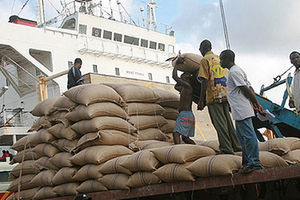
Kenya may need to import nearly five million tonnes of maize and wheat after drought wiped out large sections of the country’s grain basket, threatening supplies to households, millers and animal feed manufacturers.
The United States Department of Agriculture (USDA) says Kenya faces a critical maize shortage of 2.2 million tonnes this year, requiring the government to raise imports to a record 2.3 million tonnes to secure national food supplies.
The agency has also sharply cut its wheat production forecast for Kenya in the 2026/2027 marketing year, which started in July, by 150,000 tonnes to 130,000 tonnes from its earlier estimate of 280,000 tonnes. The downgrade follows an extended period of intense dryness across major wheat-producing counties in the Rift Valley, leaving Kenya to fast-track wheat imports estimated at 2.6 million tonnes to cover the deficit.
The agency says the total area under wheat harvest is now projected to fall to 70,000 hectares from an earlier estimate of 100,000 hectares following the harsh weather shocks. Although the government has announced plans to import maize, the USDA says the specific sources remain unclear, with Kenya’s traditional regional suppliers unable to cover a deficit of this size because they too face widespread agricultural challenges.
“Regional suppliers have also been impacted by unusual weather in this growing season. Adverse weather in eastern Uganda depressed domestic output, while Tanzania forecasts a significantly tighter exportable surplus of only 800,000 tonnes,” the agency says in a report dated August 28, 2026.
“Conversely, Zambia achieved a historic bumper harvest in its 2026/27 crop marketing season. Their current food balance sheet suggests a net exportable corn surplus of around 1.47 million metric tonnes. However, actual export volumes may be curtailed or restricted due to the looming El Niño conditions and lower production expectations for the subsequent cycle.”
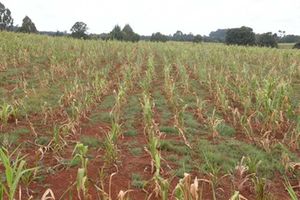
Farmers inspect their failed maize crop in Mirera, Naivasha, Nakuru County, on July 12, 2026.
Photo credit: Boniface Mwangi| Nation Media Group
USDA projects Kenya’s maize consumption at 4.5 million tonnes in the 2026/2027 marketing period, which started in July, noting that the domestic animal feed industry faces perennial deficits and millers risk operational collapse if the projected maize imports fail to materialise.
“The corn pressure is intensified due to the depleted strategic reserves. Local corn prices have already surged past Sh50,000 ($387.60) per tonne at local buying centres. With Kenya’s long-standing ban on genetically modified products, the feed industry may need to revert to alternatives, like lower-cost, non-GMO sorghum,” the agency says.
From early June through late July 2026, Kenya experienced an unexpected dry spell across the western half of the country. The dry conditions damaged much of the corn and wheat crops that normally would have been harvested in November 2026.
The agency says that despite a significant expansion in planted area, driven by the previous season’s performance and government support, erratic weather patterns damaged wide swaths of farmland after early rains were followed by a prolonged dry spell during critical crop growth stages in June and July.
“The result of this unusual weather was widespread wilting and stunting of corn and other crops. The mid-season dry spell caused unprecedented damage across Kenya’s primary grain basket counties,” it says. “Based on satellite weather observations from June through July and in-person field visits during the last week of July 2026, FAS Nairobi recommends significant decreases to corn and wheat production estimates across Western Kenya.”
The agency says that in those areas — North Rift Valley and Western regions — close to half of the total area planted has been wiped out, while surviving fields are expected to record yield declines of as much as 35 percent. The crop failure is heavily concentrated in key surplus-producing counties, including Uasin Gishu, Trans Nzoia and Nakuru.
“Throughout much of Kenya’s grain-producing regions, rainfall levels in June and July were at some of their lowest levels since 1980. Monthly precipitation across much of the west of the country reached its lowest levels in the last 30 years from early June until the last week of July 2026,” USDA says.
“In some cases, precipitation was more than 200 millimetres below normal during June and July. Some rain did begin to fall across the region in the final days of July. By that time, however, crop failures were already widespread.”