Hello

Your subscription is almost coming to an end. Don’t miss out on the great content on Nation.Africa

Ready to continue your informative journey with us?

Hello

Your premium access has ended, but the best of Nation.Africa is still within reach. Renew now to unlock exclusive stories and in-depth features.

Reclaim your full access. Click below to renew.

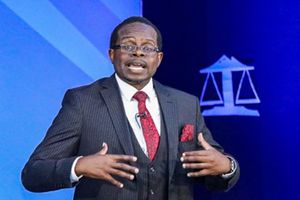
Senior Counsel Charles Kanjama.
Caption for the landscape image:

How Charles Kanjama beat Wanyama, Kabata to win LSK presidency

Scroll down to read the article

Senior Counsel Charles Kanjama.  

Photo credit: File

Members of the Young Bar within the Law Society of Kenya (LSK) provided the decisive voting bloc in the race for the society’s presidency.

Candidates Mwaura Kabata and Peter Wanyama heavily targeted this critical group during their campaigns.

Their competitor, Senior Counsel Charles Kanjama, also kept close tabs on the Young Bar but focused more strategically on the Middle and Senior Bar.

That strategy paid off.

Charles Kanjama

Senior Counsel Charles Kanjama during LSK's presidential candidates debate at the Catholic University of Eastern Africa, Nairobi on February 16, 2026..

Photo credit: Lucy Wanjiru | Nation Media Group

As he moved from office to office campaigning, Kanjama assured senior practitioners of “sobriety” in addressing their concerns and confronting the pressing issues facing the country. They responded by turning out in his favour.

Mr Kanjama’s final campaign meeting drew about 850 lawyers, cutting across the Young, Middle and Senior Bar.

He used the forum to outline his vision for the profession and to promote his RIPE agenda — Rule of Law, Integrity and Independence, Practice, and meaningful Engagement.

“You showed up. You guarded your vote. You affirmed, clearly and unmistakably that the time is RIPE for sober, steady and disciplined leadership as the helm of our society. Today’s result sends a simple and powerful message. The will of the membership cannot be bent by undue influence. It must always be respected,” he said.

Mr Kanjama garnered 3,728 votes while Wanyama got 2,616 votes and Kabata came third with 2,086 votes.

In his acceptance speech, Mr Kanjama pledged to turn his campaign commitments into a structured governance framework ahead of taking office in March.

“I am deeply grateful to the campaign team. When we began this journey, we were few and almost countable. Today, you have voted in your thousands. Through that vote, you have given me the authority to lead clearly and without question, as reflected in the margin with which you have spoken,” he said.


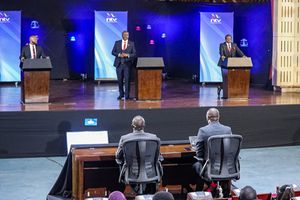
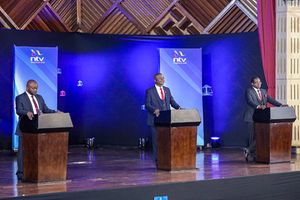
LSK candidates
New Content Item (1)
Photo credit: Lucy Wanjiru | Nation Media Group

In his manifesto, Mr Kanjama proposed a structured mentorship programme, improved welfare solutions through partnerships with organisations such as the LSK Sacco and the Advocates Benevolent Association, and expansion into emerging practice areas like technology law.

“I will deliver Wakili Towers efficiently, using transparent procurement and disciplined project management,” Mr Kanjama promises.

He also backed the establishment of an LSK Training Institute to professionalise Continuous Professional Development (CPD) and provide specialised learning across various practice areas.

All three candidates pledged to address the welfare of the Young Bar, particularly by easing the burden of CPD requirements for advocates with less than two years of practice to help them transition smoothly into the profession.

Speaking after casting his vote at the Supreme Court buildings, Senior Counsel Okongo Omogeni, a former LSK president, expressed hope that the next president would ensure the society remains a vibrant civil society voice as the country heads toward the August 2027 General Election.

He emphasised the need for firm and courageous leadership that would remain independent and resistant to intimidation from the government of the day.

He praised outgoing president Faith Odhiambo for her leadership.

“She gave a good name to the Law Society (of Kenya). She was fairly courageous. When we expected her to step out and defend the rule of law and civil liberties, she was out there for us. She has vindicated herself,” he said.


Mwaura Kabata

Law Society of Kenya presidential debate candidate Mwaura Kabata during the debate at the Catholic University of Eastern Africa, Nairobi on February 16, 2026.

Photo credit: Lucy Wanjiru | Nation Media Group

Mr Kabata congratulated Mr Kanjama and wished him well, noting that he had been elected at a critical time as the country prepares for the 2027 General Election.

Mr Wanyama, meanwhile, raised concerns about voter apathy among members.

He noted that although the LSK has more than 26,000 members, only 18,000 are active and hold practising certificates. Of those, only 8,600 voted in Thursday’s polls.

“These numbers make an interesting observation. In my pre-election analysis I anticipated that about 13,000 advocates would turn out to vote. I was wrong. Only 8,600 turned up,” he said on a social media post.

Mr Wanyama said a “silent majority” did not participate.

“What are the underlying reasons for the conspicuously apparent voter apathy?” he posed.

Presidential aspirant and gospel singer Reuben Kigame also raised an issue about the low voter turnout.

“I am glad that a candidate who shares my philosophy of human dignity, justice, values and the rule of law one in the LSK elections yesterday, but there is a problem we must all pay attention to. Records show that the LSK has about 27,000 registered members, yet only 8506 participated in the elections yesterday. There is a big problem. We must ask the question, how come nearly 18,000 Advocates did not participate in yesterday’s election? Is the electoral system appropriate? Is it too difficult to digitize an election involving 27,000 people so that they have the convenience of voting from wherever they may be? Might we be dealing with voter apathy even among our learned friends?” asked Mr Kigame.

Running for the presidency for the second time, he questioned why many advocates appeared disengaged from LSK elections despite the significant impact of leadership outcomes on their professional affairs.

He also suggested possible structural reforms, including leveraging digitisation, blockchain and digital registers to introduce online voting.

Faith Odhiambo

Law Society of Kenya President Faith Odhiambo during an interview at the launch of her bid for the seat at the Catholic University of Eastern Africa, Karen on February 3, 2024.

Photo credit: File | Nation Media Group

Outgoing president Odhiambo congratulated Mr Kanjama, saying his record of service and contributions to governance reforms made him a worthy torchbearer of the LSK’s vision and mandate.

Former Vice President Kalonzo Musyoka lauded Kanjama’s RIPE agenda, describing it as timely.

He said Kanjama’s commitment to publishing an annual rule of law report, completing the Wakili Towers project transparently, establishing a training institute and strengthening mentorship and welfare for young advocates reflected practical, values-driven leadership.

“A strong bar is the guardian of a strong Constitution,” senior counsel Musyoka said.

Follow our WhatsApp channel for breaking news updates and more stories like this.