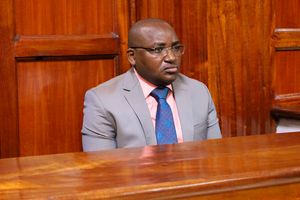
Justice Isaac Lenaola was livid on May 18, 2012 as he awarded a 44.1-acre piece of land to the Sheikh Fazal Ihali Noordin Charitable Trust, as the laissez faire attitude in Attorney-General’s office had seen yet another case against government go uncontested.
The judge first wandered from his final decision and ranted on how such situations were forcing judges’ hands in one-sided stories placed before the courts, and risking taxpayers’ sweat in a game of Russian roulette where the loss translated to either millions of shillings or possible loss of critical assets.
In this case, the Sheikh Fazal Ihali Noordin Charitable Trust had filed a case seeking to compel the Ministry of Lands and Housing to renew its lease and issue a title deed for the Pangani land.
“It is becoming common that government ministries and departments represented in litigation by the Attorney-General do not take cases before court with any semblance of seriousness. Invariably therefore, complainants end up having their orders, where they are deserving of such orders, without the court having the benefit of hearing the Government’s side. The consequences are sometimes not only of a painful nature to the government but to the innocent taxpayer and citizen who ends up paying the price of an indolent, lethargic and completely unconcerned government ministry and/or department,” said Justice Lenaola, who is now a Supreme Court judge.
Mr Amos Wako was the Attorney-General when the case was filed in 2005 but left office in August 2011 with Githu Muigai as his successor.
That the advent of the 2010 Constitution had not broken a cycle that was reinforced in the 24-year administration of President Daniel arap Moi that was replaced by the Mwai Kibaki government in 2003 seemed to irk the judge, who did not apologise for digressing.
“It has been the hope of this court that with the reorganisation of government, and the separation of the offices of the Attorney-General and the Director of Public Prosecutions, not to mention the invocation of Article 10 of the Constitution, a modicum of order would be seen in defence of government where litigation is filed against it. Sadly, that hope has continued to be a mirage! I have deliberately digressed,” Justice Lenaola added.
Without the benefit of alternative facts, Justice Lenaola said his hands were tied in awarding the property to the trust.
About 13 years later, the judge’s words, and decision, have come back to bite hard as taxpayers stare at a Sh1.4 billion loss in the eye following a Land Acquisition Tribunal’s decision that the government illegally built a Sh200 million footbridge on the Pangani land.
The tribunal’s September 9, 2025 decision awarded Sh1.2 billion to the trust, and ordered that a Sh200 million bridge encroaching on a small, but critical, section of the property be demolished within three months.
Pangani footbridge along Thika Road in Nairobi on September 15,2025.The Land Acquisition Tribunal has ordered the Government to demolish this bridge within 90 days for enchronching on private property without compensating the owner.
Photo credit: Evans Habil | Nation Media Group
Tribunal chairperson Nabil Orina and members George Supeyo and Ruth Okal in their decision dismissed the National Land Commission’s (NLC) defence that at the time of building the footbridge, the land was registered to the National Treasury in trust for the government.
Dr Orina, Mr Supeyo and Ms Okal held that the National Treasury was a party in the case before Justice Lenaola, and did not object to the judge’s decision to declare the Sheikh Fazal trust the legal owner.
“We do not agree with this contention. Both the 1st and the 2nd Respondent were parties in Nairobi High Court Misc. Civil Application No. 1531 of 2005 (OS) in which matter Lenaola J (as he then was) found in favour of the Claimants; affirmed their leasehold interests in the suit property; and further directed that the Registrar of Lands registers title in favour of the Claimants for a term of 99 years from 16th July 2002,” the tribunal said in its judgment.
It has now emerged that the tribunal made a far-reaching decision on the land as separate cases in the High Court on ownership of the same land are still ongoing.
The Sheikh Fazal trust sued the Finance and Lands ministries, alongside the Commissioner of Lands and Registrar of Titles in 2005 after the government staked a claim in the same property.
The government intended to develop a staff housing project for civil servants, and a title deed was issued in the Ministry of Finance’s name.
On February 13, 2012, the Attorney-General’s office filed an affidavit to contest the trust’s claim. But being more than six years late, Justice Lenaola struck the document off the court record.
The judge, however, offered the Attorney-General a window to file a response to the suit within 14 days. That was the last anyone saw or heard of the government in that case, handing the trust a walkover victory.
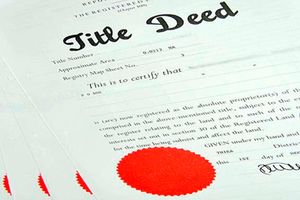
The title deed issued in the Ministry of Finance’s name was the third ownership document issued within two years.
In March, 2003 the Ministry of Lands and Housing issued two title deeds for the same Pangani land.
On the one hand, the ministry issued a title deed to St Benjamin Memorial Clinic Supplies on March 18, 2003. The title deed was issued on the strength of St Benjamin’s February 13, 1997 application for allotment of the property.
St Benjamin’s title deed was only awaiting the insertion of an indent reference (IR) number – a unique identifier allocated to every registered piece of land – before releasing the document to the firm.
Three days later, the same ministry issued a title deed to the Sheikh Fazal Ihali Noordin Charitable Trust. That document stated that the trust would hold a 99-year lease starting July 1, 2002.
The Sheikh Fazal Trust trail of documents indicated that it had owned the land since 1942, and that it had successfully renewed its lease.
On July 3, 2003, officers from Kilimani Police Station arrested Joseph Bongei, a St Benjamin official.
Mr Bongei was charged with forging a title deed for the land, with investigating officers claiming that he had also used fraudulent cheques to trigger processing of the ownership documents.
But during the hearing, the investigators admitted that they did not have any evidence that Mr Bongei had forged any documents.
Officials from the Central Bank of Kenya and KCB Bank testified that the cheques Mr Bongei had written to government for processing of St Benjamin’s title deed were genuine and even cashed.
Principal magistrate S. Wahome acquitted Mr Bongei on November 3, 2011.
Following Mr Bongei’s acquittal and Justice Lenaola’s ruling, St Benjamin filed a suit seeking to be declared the legal owner of the land.
The Sheikh Fazal Trust filed an objection to that suit in 2012, stating that Justice Lenaola had already delivered a judgment, and that the same subject matter could not be determined by another judge of equal status.
In 2017, St Benjamin filed an application in the other case that was before Justice Lenaola, seeking to revoke the orders issued. The firm argued that it was not listed as a party in the case and only learned about Justice Lenaola’s decision when it was used as a defence in the case St Benjamin filed.
In 2021 a group of individuals claiming to be squatters also filed a suit at the High Court in which they insist that they should be declared the legal owners.
St Benjamin’s suit and that by the group of alleged squatters were consolidated, and currently being heard by High Court judge Enock Chacha Mwita.