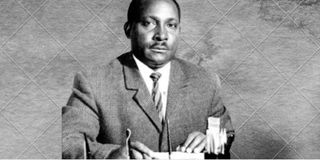
When former Provincial Commissioner John Godhard Mburu died in 1981, his name remained buried in the paper trail of a transaction involving 135 acres of prime land in Karen.
One of the letters forwarding the purchase money had been copied to him. But when the title was eventually issued in 1983, Mburu’s name had disappeared. In its place was a new entity, Muchanga Investments Limited.
Four decades later, Mburu’s family has lost its claim to the property, now valued at more than Sh8 billion. In a landmark verdict delivered on July 31, 2026, the Court of Appeal declared that the land belongs to Muchanga, a company whose directors included the late Nairobi lawyer Horatius Da Gama Rose, former Vice-President Moody Awori and Awori’s wife, Ruth.
Yet the judgment leaves a historical mystery unresolved: if Mburu was not the purchaser, why did his name appear in correspondence concerning the payment for the property? And how did a transaction initiated before Muchanga was incorporated ultimately produce a title in the company’s name?
Those questions have driven one of Nairobi’s longest and most complicated land battles. The dispute has drawn in the estate of Arnold Bradley, a colonial settler, Barclays Bank, the influential Da Gama Rose family, Mburu’s widow, former NSSF managing trustee Jos Konzolo and several companies holding competing titles to the same land.
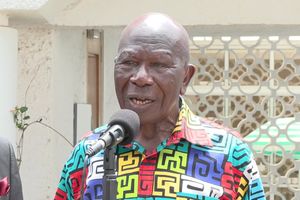
Former NSSF managing trustee Jos Konzolo.
Photo credit: File | Nation Media Group
In March 2025, the Environment and Land Court concluded that none of the claimants had acquired the property lawfully. It cancelled every title and returned the land to the estate of its colonial owner. But on July 31, 2026, the Court of Appeal overturned that decision and declared Muchanga Investments Limited the lawful owner. The unanimous judgment by Justices P.O. Kiage, R. Ngetich and Radido S. Okiyo extinguished the claims of Mburu’s estate and invalidated the titles held by rival companies.
While Muchanga has won, the Court did not settle the question of what happened to J.G. Mburu’s interest in the original transaction. What role did J.G. Mburu play in the original transaction?
The story begins with Arnold Bradley, a colonial settler who owned LR No. 3586/3, measuring approximately 54.39 hectares. The land stood opposite Hillcrest School and was then on the outskirts of Nairobi.
After Bradley died in 1973, Barclays Bank International became executor and trustee of his Kenyan estate, and was empowered to sell the property, settle the estate’s obligations and distribute the proceeds to Bradley’s beneficiaries.
The records indicate that in December 1977, Barclays, through Kaplan & Stratton Advocates, entered into an agreement to sell the Karen property and Francis Da Gama Rose & Company acted for the purchaser. The problem is that the surviving documents did not state clearly who that purchaser was.
On January 18, 1978, Kaplan & Stratton forwarded the duly signed sale agreement to Francis Da Gama Rose’s firm for stamping. On June 30, the Da Gama Rose firm sent the bank’s lawyers a cheque for Sh500,000, paid under one of the clauses of the agreement.
While the letter did not name the purchaser in its text, the letter was copied to “J.G. Mburu.”
On August 15, 1978, Francis Da Gama Rose’s firm forwarded a further Sh625,000, described as the balance of the purchase price. Again, the purchaser was not named.
The presence of Mburu’s name became important because Francis Da Gama Rose was his lawyer. Mburu had served as a powerful provincial administrator during the Jomo Kenyatta era. His widow later maintained that he had purchased the Karen property and entrusted the transaction to Da Gama Rose.
Muchanga Investments was incorporated on April 18, 1978, some four months after the December 1977 sale agreement had been signed. Its directors included Horatius Da Gama Rose, son of Francis, former Vice-President Moody Awori and Awori’s wife, Ruth.
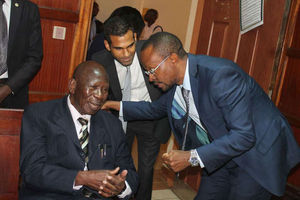
Former Vice President Moody Awori during an interview at his home in Nairobi on April 28, 2017.
Photo credit: File | Nation Media Group
Mburu’s family claimed that the 1977 agreement belonged to Mburu and alleged that his lawyers had custody of the agreement, title and correspondence, and that Muchanga was subsequently inserted into the transaction.
Muchanga offered a different account and maintained that it was the purchaser recognised by Barclays and that the bank eventually transferred the property to it for Sh1.25 million.
A crucial letter appeared on December 7, 1978, where Barclays informed one of the tenants, N.A. Dundas, that the property had been sold and instructed Dundas that from January 1, 1979, he should pay his monthly rent directly to Muchanga Investments.
To Muchanga, the letter proved that Barclays recognised it as the purchaser within months of its incorporation. To the Mburu family, it raised the question of how a transaction in which Mburu’s name had appeared suddenly became Muchanga’s property.
However, the records indicate that the transfer was not registered immediately. On October 1, 1982, Kaplan & Stratton wrote to Francis Da Gama Rose & Company, forwarding an executed transfer and the title deed. The letter complained about the delay by “your client” in completing the purchase. It also said that Barclays had received rent from the property and would offset its expenses against the rental income, leaving no further amount payable by either side.
Muchanga’s transfer was subsequently registered, and it was issued with Certificate of Title IR No. 37285 on February 11, 1983. By then, Mburu was dead.
His widow, Carmelina Ngami Mburu, later began looking for properties that she believed belonged to her husband’s estate. She claimed that the list of assets presented to the Public Trustee after Mburu’s death was incomplete and did not include the Karen property.
Carmelina alleged that her husband had never transferred the property to Muchanga. Neither Francis Da Gama Rose nor his firm, she said, had accounted to the family for the transaction.
Mrs Mburu’s claim suggested that the Karen controversy was not merely another case of multiple titles created at the Lands Registry. It raised the possibility of an advocate using information and documents obtained from a client to acquire the client’s property through a related company.
Muchanga denied the allegations and pointed to its registered transfer, its title and the decades during which it had exercised the rights of an owner. Muchanga also used the property as security for a Sh10.5 million facility advanced by Barclays to Da Gama Rose Investments Limited in 1983. The bank’s acceptance of the land as security strengthened Muchanga’s claim that Barclays recognised its title.
Telesource Limited, associated with former NSSF managing trustee Jos Konzolo, claimed that it had purchased the property through John Mugo Kamau. Konzolo said he and his wife had agreed to buy the land for Sh96 million in 1998, completed payment in 2001 and eventually transferred it to Telesource in 2005.
The problem, as the court found out, was that the title had grave defects. Documents in the Telesource chain purported to show that Arnold Bradley transferred the property to John Mugo Kamau in August 1978. But Bradley had died in 1973 and could not have signed a transfer five years later.
The subsequent transfer to Telesource was registered in 2005, although Mugo had died in 2002. Other irregularities involved registration numbers, stamp-duty records, rent-clearance certificates and companies that supposedly received property before they had been incorporated.
Telesource nevertheless subdivided the land into approximately 196 plots, producing titles numbered LR Nos. 209/3586/202–398. Some of these plots were sold to third parties.
The dispute burst into public view in 2014 when construction began on the property. Police officers were deployed, buyers camped on the land, and politicians traded accusations over who was behind the development.
Muchanga went to court, arguing that unknown companies had grabbed its land and copied its abandoned subdivision plan. It asked the Environment and Land Court to recognise its title and invalidate the Telesource subdivisions.
Mburu’s widow joined the proceedings and laid claim to the property. She died in 2017, but the claim was continued by Joseph Kang’ethe Wanyoike, the administrator of her estate.
In March 2025, Justice Oscar Angote delivered a startling judgment.
After examining the correspondence, he concluded that the 1977 purchaser was probably John Mburu. The June 1978 letter forwarding Sh500,000 had been copied to Mburu, suggesting that he was Francis Da Gama Rose’s client in the transaction.
The judge also noted that the sale agreement predated Muchanga’s incorporation. He found no separate agreement showing that Barclays later agreed to sell the property to Muchanga and no independent proof that Muchanga paid the Sh1.25 million purchase price.
Justice Angote concluded that Francis and Horatius Da Gama Rose had abused their positions of trust and caused the property to be transferred to Muchanga.
But he did not award the land to Mburu’s estate, although there was evidence that Mburu had paid part of the purchase price. This was because his representatives could not produce the sale agreement, a transfer in his name or proof that the entire price had reached Barclays.
The judge therefore declared that Muchanga, Mburu, Telesource and the other companies had all acquired their titles unlawfully. He ordered every title cancelled and directed the Public Trustee to reopen Bradley’s estate, identify his beneficiaries and distribute the property under the succession law.
Muchanga appealed, accusing the trial judge of disregarding the registered transfer and decades of documentary evidence. It also argued that the Environment and Land Court had no authority to reopen Bradley’s estate when no beneficiary had challenged Barclays’ conduct as executor.
The Court of Appeal seemed to agree and treated the registered transfer from Barclays to Muchanga as the central document. The instrument recorded that Muchanga paid the bank Sh1.25 million for the property. Under section 97 of the Evidence Act, the judges held that the document itself was evidence of the transaction and its terms.
The court reinforced the transfer with the December 1978 letter directing the tenant to pay rent to Muchanga, the 1982 letter forwarding the executed transfer, and records demonstrating Muchanga’s continuous possession.
The Court of Appeal also held that the absence of the original sale agreement was not fatal. This was because at the time of the transaction, the law permitted an agreement concerning land to be enforced where the purchaser had taken possession and performed its obligations. The stricter requirement that land-sale agreements be written, signed and witnessed came into force in 2003.
The judges also referred to an earlier Court of Appeal decision involving Safaris Unlimited, Muchanga’s tenant. In that case, decided in 2009, Muchanga had been recognised as the registered owner.
More damaging to the competing claimants was the evidence of an Ethics and Anti-Corruption Commission investigator. After examining the titles and Lands Registry records, the EACC concluded that Muchanga held the authentic title. It recommended the prosecution of those involved in the attempt to transfer the property to Telesource.
The Court of Appeal described the evidence offered by the rival claimants as contradictory and, in some cases, impossible. Documents supposedly signed by Bradley and Mugo after their deaths could not create valid ownership.
As for Mburu, his estate had no registered transfer, no original sale agreement and no conclusive evidence that he paid the full purchase price. Wanyoike also faced a legal-standing problem. He administered Carmelina’s estate, but Carmelina had never obtained authority to administer John Mburu’s estate. The Public Trustee remained the former PC’s legal administrator.
The court consequently set aside Justice Angote’s judgment and granted Muchanga all the principal orders it had sought.
Muchanga was declared the lawful owner. Its title was upheld. Telesource’s title and subdivisions were nullified, and the companies in that ownership chain were permanently restrained from dealing with the property.
The Court of Appeal also held that Justice Angote had exceeded his jurisdiction by inquiring into Barclays’ administration of Bradley’s estate. The case was about land ownership, not the administration of a will. No Bradley beneficiary had previously sued Barclays for mismanaging the estate.
For Muchanga and the Da Gama Rose family, the judgment is a sweeping victory. The judicial finding that Francis and Horatius diverted Mburu’s property has been erased.
For the Mburu family, it closes a claim built upon intriguing but incomplete correspondence. Mburu’s name appeared in the 1978 payment trail, but it never reached the title.
The appellate judges were satisfied that Barclays ultimately transferred the property to Muchanga. Yet they did not fully explain why the original payment letter had been copied to Mburu or how a 1977 agreement predating Muchanga’s existence became the basis of Muchanga’s ownership.
Perhaps Mburu was the original intended purchaser and later withdrew. Perhaps Muchanga replaced him through an arrangement whose documents have disappeared. Or perhaps Mburu’s name appeared because he had some other interest in the transaction.
But in the surviving records of 1978, the Kenyatta-era provincial commissioner remains the missing purchaser—the man whose name appeared while the property was being bought, only to vanish before the title was issued.