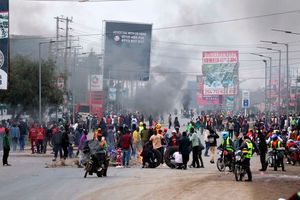
In the days leading up to the transport sector strike over the steep rise in fuel prices, many planning meetings took place behind the scenes. As the clock ticked towards Monday, May 18, when the strike was due to begin, lots of deliberations took place, the stakeholders told the Nation .
The stakeholders’ main concern was mistrust. There was always a lingering fear of being forced into submission if the government found a way to dismantle their unity, said one representative.
Nearly 100 stakeholders from various sub-sectors of the transport economy held numerous meetings in the hope that they would eventually succeed as a whole. However, a combination of threats and incentives dangled in front of the transport alliance in private would deflate their collective power.
The final deliberations on May 17 included representatives from truckers, ride-hailing vehicles, taxis, tour companies, boda bodas and matatus, as well as officials speaking for ‘everyone using diesel’, according to those present.
President Ruto directs Sh10 reduction in diesel prices June/July pricing cycle
There were WhatsApp groups for the grand coordination. But one had only a chosen few and had been created and dubbed ‘high fuel prices’. This was intended as the command centre for directing the course of the alliance.
They were cautious enough to limit membership of this group because there were already concerns about government infiltration. Similar strikes in 2018 and 2024 had been infiltrated and did not take effect as planned.
The plans on the table included withdrawing their services and occupying roads everywhere. The organisers knew they had the numbers. They were also counting on the goodwill of the public, who were feeling the financial pinch of the price hike too.
But, as with crowds, this huge number of officials had divided opinions. Some believed that, since the government had chosen to ignore their pleas even as the deadline approached, they should proceed with their plans without further negotiations.
This group believed that, under pressure to avert the crisis and the public outcry that would follow, the government would be forced to look for them and play by their rules.
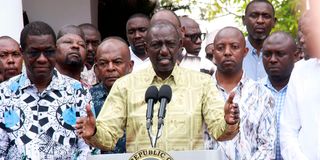
President William Ruto with transport sector stakeholders during a press briefing at State House, Mombasa, on May 22, 2026.
Photo credit: Kevin Odit | Nation Media Group
However, some in this group believed that they needed to reach out to the government. At the final meeting that sealed the fate of the impending strike, this group was outnumbered.
Meanwhile, President William Ruto was being briefed on the situation during his visit to Azerbaijan and Kazakhstan.
“The president instructed me to get the ministers to fix the problem as soon as possible,” said Deputy President Kithure Kindiki .
Without a proper constitution to determine who was actually in charge of the transport sector, and with the group operating solely on goodwill, any suspicion of betrayal would have ruined the plans. Everything was going according to plan and there were no signs of failure, until Dennis Itumbi, the government’s head of special programmes and digital economy, called.
The initial plan was to hold the strike for seven consecutive days. Transport stakeholders were confident that, given the sector’s significance to the economy, the government would reach out to them by the third day, as Peter Murima, the chairperson of the Motorists Association of Kenya (MAK), explained.
Once the strike began, they expected the government to give in to their demands, which included reducing the price of diesel by about Sh46 per litre, as well as addressing other sector-specific issues affecting their businesses.
The members, Matatu Owners Association (MOA) chairperson Albert Karakacha, told the Nation earlier in the week, would not be intimidated and that their grievances must be addressed.
Among their demands was fuel liberalisation to end direct State-controlled pricing of fuel in the market, disbandment of the Energy and Petroleum Regulatory Authority (Epra), fuel subsidies and an end to the ‘sanctioned’ bribes for traffic police officers.
Mr Karakacha also said that they are depending on the same meeting to resolve the issues with insurance companies and financial institutions, which have been putting pressure on them.
If any meeting between them and the government were to happen, it was not meant to be at the government premises, the alliance had agreed. The decisions of any meetings were to be collective and consultative and with all parties present. But the call from Mr Itumbi scattered the initial plan and left the alliance divided.
Head of Presidential Special Projects and Creative Economy Coordination Dennis Itumbi speaks to journalists at his Nyari offices in Nairobi on December 21,2025.
Photo credit: EVANS HABIL/NATION
Around 6pm on Sunday, May 17 as the final deliberation meeting was winding up, an unlikely invite (from Mr Itumbi) from the State came through one of the members. But the majority, once again, were against it.
“That is the moment we became suspicious — and soon after, everything went from worse to worst,” the MAK representative, Mr Murima, told Nation.
It emerged that as a faction wanted to keep the government at arm’s length, there was a wing that was covertly reaching out to State officials.
A first-round table meeting between government officials and stakeholders in the transport industry held to discuss the high cost of fuel on May 18, happened but was peppered with tension neither side willing to compromise. Energy Cabinet Secretary Opiyo Wandayi and his Transport colleague Davis Chirchir were in the spotlight. It ended in disarray.
“With all due respect,” Kennedy Kaunda of the CEO of East Africa Tour Guides and Drivers Association said, there was no deal, in a dramatic fashion that offered a glimpse of the tension that characterised the closed-door meeting that preceded the press conference. The next on Tuesday ended in a temporary suspension of the strike.
“It was more of a surrender than victory,” Mr Murima said of the Tuesday meeting that saw the alliance suspend the strike for seven days to allow further talks.
“There was no signing of any agreement to whatever was said,” added Mr Murima.
“When we couldn’t reach our ministers…we tried to reach out to Dennis Itumbi and that’s where he came in,” said Mr Kushian Muchiri, the CEO of the federation of public transport sector admitted.
Mr Itumbi, according to Mr Muchiri, said he had contacted the ministers that had eluded the transport stakeholders and had finally agreed to a crisis meeting later that day at Transcom House, the premises that houses the Ministry of Transport.
That request was vetoed by the majority since they were apprehensive that the government wanted to arrest the organisers, hours before the strike commenced.
A second round of meetings with government officials happened on Tuesday. But a section of the transport alliance was never informed nor invited, said Mr Murima of MAK.
That very meeting set ground for the “collaborating wing of the alliance” to meet the Head of State at the coast, after suspending the strike.
Mr Murima said he was among those not invited to the coast talks with President Ruto after expressing scepticism on whether the meeting would meet their demands.
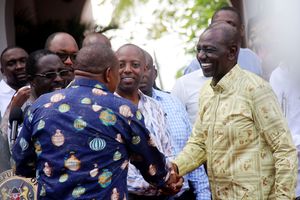
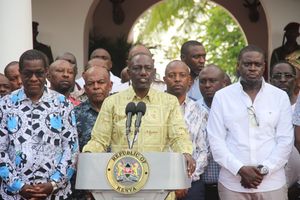
President William Ruto with transport sector stakeholders at State House, Mombasa, on May 22, 2026.
Photo credit: Kevin Odit | Nation Media Group
And on Wednesday morning, they were summoned to State House, Mombasa on short notice.
Insiders present at the meeting, but who spoke on condition of anonymity, intimated to the Nation that much of ground laying was done in Nairobi and whatever happened in Mombasa was just a formality and ceremonial.
The had long been softened. In the end they called off the strike as the President promised to address their demands and reduce the price of fuel by 10 per cent next month.
But a section of the hardline defenders of the initial plan view it as betrayal to their unity and the public. They felt they stood no chance of a proper bargain in the president’s own backyard, the State House.
“We had agreed that no one was to betray the course,” explained Mr Murima. “[Only] A selected few players were invited. Those that can play ball… The government knows those who can play ball.”
The meeting that brokered the temporary truce –and set ground for the Mombasa meeting –also saw attendance of Nairobi Governor Johnson Sakaja, whom the transport stakeholders referred to as the “guarantor”.
That meeting had representatives from the taxi, trucks, matatus, mass mobility, boda bodas among others, according to the Matatu Owners Association chairperson Albert Karakacha, approximating the attendance to about 20 subsector associations.
Matatu Owners Association (MOA) Chairperson Albert Karakacha (centre) spaeks to the media after President William Ruto met with transport stakeholders at the State House, Mombasa on May 22, 2026.
Photo credit: Kevin Odit | Nation Media Group
Asked about the role of the Nairobi governor in the meeting, Mr Karakacha said he was only called to show up for the meeting and found Mr Sakaja already present. Mr Karakacha said that Governor Sakaja previously pleaded with them to suspend the strike until the President, who was out of the country, returned.
Speaking after a consultative meeting with transport stakeholders at State House Mombasa on Friday, President Ruto directed that diesel prices be reduced by Sh10 in the June-July pricing cycle. Against the transport alliance’s demand of a reduction of Sh46, it appears more like a loss on what was their major rallying call.
After talks with transport stakeholders, the government also announced several measures to support the sector including that the Ministry of Transport will engage financial institutions and explore temporary relief measures for transport operators facing financial challenges.
Additionally, the ministry, Dr Ruto said, will work with the Insurance Regulatory Authority to address concerns relating to insurance claims affecting public transport operators.
The President further directed that the Insurance Act and the Auctioneers Act be reviewed within the next three months to create a fairer framework for sector players. He also said the government, through the National Transport and Safety Authority (NTSA), will convene a meeting between digital taxi platforms and drivers to address disputes in the ride-hailing sector, including the introduction of minimum fare regulations.
The President further directed NTSA to support matatu operators in continuing to use artwork and graffiti on their vehicles while maintaining safety standards.