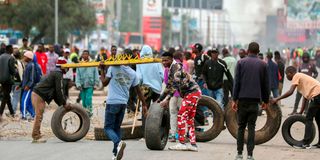
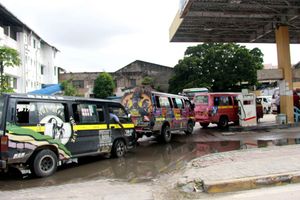
On Monday and Tuesday, government officials and transport sector stakeholders worked together to try to resolve the stalemate over the high cost of fuel , which had brought the country to a standstill.
Stakeholders from the private sector insisted that they would not accept anything less than what they had demanded, including a reduction in fuel prices, the dissolution of the Energy and Petroleum Regulatory Authority (EPRA) for imposing exploitative and unsustainable fuel prices without consultation, restrictions on the adulteration of diesel, which they claimed was damaging their vehicles, and an end to conflicts with boda-boda operators.
While President William Ruto was away on an official visit, he ordered a meeting to be convened by the Interior Cabinet Secretary, Kipchumba Murkomen; the Energy Cabinet Secretary, Opiyo Wandayi; and the National Treasury Cabinet Secretary, John Mbadi. Nairobi Governor Johnson Sakaja was also present. The aim of the meeting was to end the strike.
Stranded passengers along Thika Road during protests against the rising fuel prices on May 18, 2026.
Photo credit: Evans Habil | Nation Media Group
The economy had been badly affected for two days, with Albert Karakacha, the national chairperson of the Matatu Owners Association (MOA), saying that the sector had lost more than Sh500 million since the strike started.
Wilfred Bosire, secretary-general of the Mass Mobility Operator Association, said that the government had told them it would be impossible to reduce the cost of diesel by Sh49.29.
Instead, the government reduced the price of diesel by Sh10.06 and increased the price of kerosene by Sh38.60 per litre in an attempt to prevent diesel adulteration.
Matatu stakeholders described this as insufficient but agreed to call off the strike for one week. However, they said that they would withdraw their vehicles from the roads if the government does not address their issues.
“We really tried to push for this but the government said that they will not go beyond the Sh10, which has been announced because of the economy. We decided to give it a try and meet on Tuesday next week for another discussion and see if we can have another reduction,” Mr Bosire said in an interview with the Nation after the close-door meeting with the government officials.
He said that while the government has lowered the price of diesel, the cost of maintaining their vehicles remains high due to the increasing cost of spare parts.
“We withdrew our vehicles because we could not sustain the operation cost and loan repayment. We wanted the government to understand that,” Mr Bosire said. He added that they had raised the issue of loan default and the confiscation of vehicles by financial institutions.
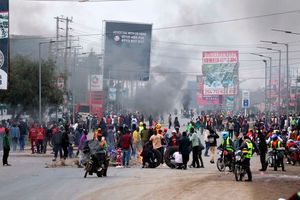
Traffic flowing along Thika road in Nairobi after matatu operators withdrew their vehicles to protest over the rising fuel prices on May 18, 2026.
Photo credit: Evans Habil | Nation Media Group
Nairobi Governor Johnson Sakaja, who has been named by the matatu sector stakeholders as their guarantor in the ongoing talks, pleaded with financial institutions to consider granting temporary amnesty and flexibility to investors in the public transport sector, saying many operators are struggling under the current economic pressure.
“We shall reach out officially to financial institutions. We are in extraordinary times. The crisis we are in is global; let us not take it out of our people. This issue of property being seized and auctioned is not good. We can talk with them on some level of amnesty for some time because people are really struggling. We shall sit at the highest level to resolve this,” he said.
The governor said that Kenyans have been affected by the strike. Learning had also been disrupted on both days.
According to Mr Karakacha, the strike has only been suspended for one week, after which officials would communicate the way forward.
President Ruto is widely expected to break the impasse during the next meeting. He will have returned from his official visit to Azerbaijan and Kazakhstan.
CS Murkomen said the government uses the Petroleum Development Levy to stabilise fuel prices. Despite such interventions, the prices are still remained high.
“The government adjusted the price of kerosene to bridge the gap in prices between the two commodities to deter adulteration of diesel by unscrupulous dealers. Understandably, the public sector transport stakeholders are still agitating for a further reduction,” he said.
“We agreed that there was need for further negotiations between the government and the stakeholders. That the strike is suspended for one week to give room for the negotiations.”
Mr Murkomen added that public sector transport stakeholders had condemned the incidences of violence and destruction witnessed on Monday and disassociated themselves from the chaos.
Elsewhere, United Democratic Alliance (UDA) Secretary-General Hassan Omar said that the steps taken so far indicate that the Kenya Kwanza government is prioritises people.
“We are happy with the warning by Interior Cabinet Secretary Kipchumba Murkomen. He has warned those setting ablaze vehicles and those destroying properties…you are setting ablaze buildings, what have the owners done to you? You steal from commuters who have not wronged you,” he said.
Mr Omar added that some politicians, including former deputy president Rigathi Gachagua, are using the fuel issue to sabotage the Kenya Kwanza administration.