The ongoing fuel crisis in the country once again threatens to expose President William Ruto’s administration to public anger and political instability, barely two years after the June 2024 youth-led political siege.
As the country faced total paralysis following the nationwide protests by the transport sector on Monday and Tuesday, the government desperately sought to end the crisis through a series of meetings and concessions.
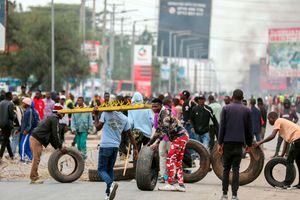
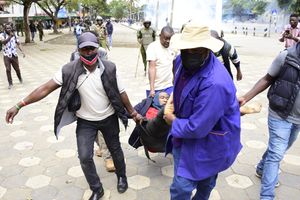
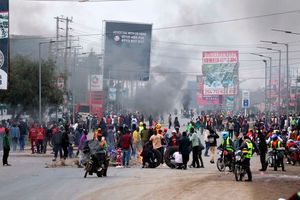
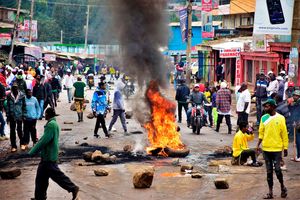
Within the government circles, fears were already mounting that the standoff over high fuel prices could spiral and give momentum to another tax protest similar to the one witnessed in 2024. The Monday strike morphed into street protests characterised by destruction, looting, blockage of major roads, and deaths from gunshots.
In the 2024 siege, President Ruto was forced to dissolve his Cabinet as well as reject the Finance Bill, 2024, following a deadly nationwide protest that culminated in a historic invasion of Parliament. Already, there are threats by the opposition to hold another anniversary for the 2024 protests.
Observers note that failure by the government to offer tangible relief measures could turn the fuel prices into one of the biggest political challenges facing President Ruto.
For critics, the high fuel prices are due to multiple taxes and levies imposed on petroleum products by the government.
The United Opposition, led by the Democracy for the Citizens Party (DCP) party leader Rigathi Gachagua have also questioned the Government-to-Government fuel importation framework for the high prices.
Several matutus parked at a petrol station in Kitengela, Kajiado County on May 19, 2026 following a nationwide strike by transport operators over rising fuel prices.
Photo credit: Billy Ogada | Nation Media Group
Proposed additional taxes in the Finance Bill, 2026, currently undergoing public participation, are also seen as a possible catalyst to rally the public back to the streets. Fuel price increases have often triggered demonstrations and political mobilisation in the country.
On Monday, the government desperately sought to end the strike by the Matatu Owners Association (MOA).
But even after hours of talks led by Energy Cabinet Secretary Opiyo Wandayi and his Roads and Transport counterpart Davis Chirchir, the negotiations spectacularly collapsed, with the two sides clashing openly on a live broadcast. They would find a common ground the next day, suspending the strike for a period of one week to pave the way for further negotiations.
In the collapsed talks, the government agreed to reduce diesel prices by Sh10, while Kerosene went up by Sh38 to minimise the risk of fuel adulteration arising from the price difference.
The strike action was triggered by the June 14, 2026 announcement by the Energy and Petroleum Regulatory Authority (Epra) of an upward review of petroleum prices for the month of May to June 14, 2026 cycle. In the pricing cycle, Epra raised the cost of diesel by Sh46.29 per litre while prices of super petrol increased by Sh16.65 per litre.
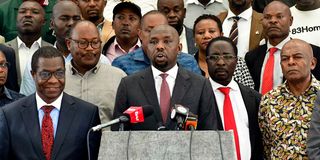
The Tuesday talks held at Harambee House were led by Mr Wandayi and Interior Cabinet Secretary Kipchumba Murkomen. In the deal, Mr Murkomen announced plans to escalate the negotiations to higher offices within the next seven days.
Energy and Petroleum Cabinet Secretary Opiyo Wandanyi (center) speaks to the media outside Harambee House in Nairobi on May 19, 2026 after stakeholders in the transport sector called off the nationwide matatu strike.
“There was a need for negotiations with the stakeholders at a high level and they will take place within the next one week. The strike to be suspended for one week to provide an avenue for consultations,” said Mr Murkomen.
His remarks suggested that the talks would now be handled by the President, who is currently out of the country. The escalation of the talks to the highest office is a sign that the operators are unwilling to cede ground on some of their demands.
Kiharu MP Ndindi Nyoro, who has since written to Parliament proposing a raft of tax cuts on petroleum products, described Dr Ruto’s decision to travel abroad in the face of a major public crisis as ill-advised.
Kiharu Member of Parliament Ndindi Nyoro during a press briefing on fuel prices at his office in KICC, Nairobi on May 15, 2026.
Photo credit: Bonface Bogita | Nation Media Group
“He should have not travelled to Azerbaijan. Sometimes when you are in power, you may take a lot for granted. It is the wrong time for that trip to Azerbaijan. We have much more pressing issues in the country,” Mr Nyoro said.
He said it was unacceptable that even after the 2024 siege, the Kenya Kwanza administration was still making the same mistakes that took Kenyans to the streets.
“I call upon the government now that the proposals (tax cuts) we are making are reasonable,” he said.
Rig Owners Association Chairperson Cornelius Chepsoi (center), Federation of Public Transport Sector CEO Kushian Muchiri (left) and Matatu Owners Association President Albert Karakacha address journalists in Nairobi on May 17, 2026.
Photo credit: Lucy Wanjiru | Nation Media Group
Rig Owners Association Chairperson Cornelius Chepsoi said the government has to find creative ways of raising revenue, instead of the frequent price increments on petroleum products.
“There is no more elasticity, Kenyans have gotten to the maximum, and they cannot take any other price adjustment,” said Mr Chepsoi.
Mr Chepsoi, who attended the Monday night meeting, said they had demanded a Sh46 cut from diesel, with the government making an initial offer of Sh8, before making it Sh10.
With fuel prices affecting every sector of the economy, the matatu sector seems to have been dealt the long end of the stick in the planned talks. In its attempt to end the crisis from spiralling and being exploited for political mobilisation, Dr Ruto’s administration could cede more ground in its attempt to address the fuel crisis.
Rioters in Kiratina, Nakuru County take to their heels after anti-riot police engage them in running battles. They blocked the Nakuru-Nairobi Highway as matatu strike entered day-two.
Photo credit: Boniface Mwangi | Nation Media Group
Though largely as a result of the ongoing geopolitical tensions and conflicts in the Gulf nations, the high fuel prices have since offered fodder for 2027 politics.
“We are witnessing a clear scheme where a section of the political class is making incendiary statements to fan intolerance and ethnic bigotry and profiling and intimidating those of different political opinion especially those who support the government,” said the CS.
He described politicisation of the matter as the lowest form of politics and the ‘most-wicked manifestation of self-interest.’
Cabinet Secretary for Interior and National Administration Kipchumba Murkomen (second), flanked by his Principal Secretary Raymond Omollo (left) and Inspector General of the National Police Service Douglas Kanja Kirocho, speaks to the media in Nairobi on May 18, 2026.
Photo credit: Dennis Onsongo | Nation Media Group
Former ICT and 2027 presidential candidate Eliud Owalo said heavy taxation remains one of the biggest contributors to high fuel prices in the country.
He gave examples of the neighbouring countries where diesel retail at Sh199 in Uganda, Sh189.49 in Tanzania, Sh225 in Rwanda, Sh192 in South Africa and Sh148 in Ghana.
Similarly, he cited super petrol prices which are at Sh200.50 in Uganda, Sh190.19 in Tanzania and Sh111.76 in Ethiopia.
“A substantial portion of the pump price, estimated at more than Sh80 per litre, consists of government taxes, levies, and regulatory charges,” said Mr Owalo.
He also said that the G-to-G fuel import arrangement, initially introduced to stabilise supply and lower prices, had failed to deliver meaningful relief to consumers.
Mr Owalo noted that the skyrocketing fuel prices present a serious national economic crisis driven by a dangerous combination of global shocks, excessive domestic taxation, and structural inefficiencies within the fuel import system.
“Addressing this crisis requires decisive, bold, and comprehensive action from the government,” he added.