The Judiciary has rejected the Law Society of Kenya's (LSK) planned nationwide court boycott, insisting all courts will remain open on Wednesday while urging lawyers to pursue judicial accountability concerns through dialogue and constitutional complaint mechanisms instead.
Through spokesperson Paul Ndemo, the Judiciary on Monday said the planned boycott of court proceedings was "not an appropriate or proportionate response" to the LSK’s concerns against some judges and judicial officers.
Mr Ndemo said the intended boycott would "primarily prejudice litigants and other court users whose matters are scheduled for hearing and determination."
He was reacting to LSK’s announcement that advocates would on Wednesday stage a one-day nationwide boycott of court proceedings before indefinitely refusing to appear before select judges.
The targeted judicial officers are those who have obtained court orders blocking the Judicial Service Commission (JSC) or the Ethics and Anti-Corruption Commission (EACC) from investigating or processing complaints against them over alleged misconduct.
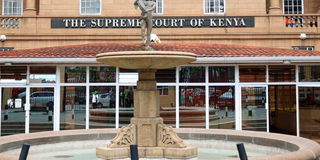
Six Supreme Court judges, including Chief Justice Martha Koome, are among the judicial officers with orders blocking JSC proceedings. A number other judges of the High Court also have orders shielding them from JSC proceedings.
The planned boycott is part of a wider campaign within the profession demanding tougher action against alleged corruption, judicial misconduct and delays in the administration of justice.
However, Mr Ndemo assured the public that "all courts throughout the Republic will remain open and will continue hearing and determining matters as scheduled on Wednesday, July 22, 2026."
The Judiciary acknowledged the LSK as "an indispensable partner in the administration of justice" but said the two institutions had already held at least five consultative meetings over the past two years and were implementing agreed resolutions.
Mr Ndemo said another consultative meeting involving the Judicial Service Commission (JSC), the LSK council and representatives of the Senior Counsel Bar was scheduled for July 31.
He also defended judicial independence, saying "threats or directives purporting to require Judges and Judicial Officers to hear, determine or decide matters in a particular manner violate judicial independence."
He added that judges "are subject only to the Constitution and the law and shall not be subject to the control or direction of any person or authority."
Responding to criticism over judicial accountability, the Judiciary said the JSC and the Office of the Judiciary Ombudsman remained available to receive complaints against judges, judicial officers and staff before undertaking investigations and disciplinary action where warranted.
It said every complaint must follow due process, adding: "Public accusations, however serious, cannot substitute for a fair investigation or displace the constitutional and statutory procedures established for addressing complaints."
The Judiciary also sought to counter claims of declining court performance by publishing fresh operational data.
It said courts received 621,425 new cases and resolved 647,686 during the 2024/25 financial year, delivering a 104 per cent case clearance rate, reducing pending cases by three per cent and cutting the backlog by 30 per cent despite a 20 per cent increase in filings.
"The attainment of a 104 per cent Case Clearance Rate is an important institutional milestone," Mr Ndemo said.
It said the biggest causes of adjournments were witnesses failing to attend proceedings, parties being absent, advocates failing to appear and courts being engaged in other official duties.
“Available evidence demonstrates that delays within the justice system arise from several points in the justice chain and cannot fairly be attributed to any single institution. Reducing delays requires a shared response involving all justice-sector stakeholders,” said Mr Ndemo.
The Judiciary also acknowledged disruptions affecting electronic filing services but said it continued investing in stronger digital infrastructure while providing alternative filing arrangements whenever outages occurred.
The Judiciary urged the Law Society to reconsider the boycott and instead pursue its concerns through "structured engagement already underway" and constitutional procedures for reviewing judicial decisions and investigating complaints.