Kenya is stepping up preparations to build its first nuclear power plant, with the government targeting a groundbreaking in March 2027 for the Sh500 billion project in Siaya County.
The proposed plant is planned for Lenya village, which the Nuclear Power and Energy Agency (NuPEA) has identified as the preferred site following extensive screening and assessment of potential locations.
The project has already been allocated Sh80 million in the 2026/27 financial year for “Nuclear Power Plant Siting,” including technical and engineering studies according to estimates tabled before the National Assembly.
President William Ruto announced Kenya’s nuclear power programme on March 25, 2026, during the International Conference on Nuclear Energy held in Nairobi.
But as the country moves closer to its first nuclear power project, questions are emerging over Kenya’s preparedness on public safety, environmental protection, community benefits, financing and regulatory capacity.
These concerns were raised when legislators intensified scrutiny of the proposed project during a Senate Energy Committee session with the agency’s officials.
The committee, then chaired by Siaya Senator Oburu Oginga, questioned the progress of site characterisation and engineering studies in Siaya and the feasibility of the proposed construction timeline.
Legislators noted that site characterisation alone could take nearly a year, raising questions about whether the projected March 2027 start date was realistic.
Site characterisation refers to the comprehensive process of gathering, analysing and evaluating data regarding the physical, geological and environmental conditions of a specific location.
NuPEA chief executive Justus Wabuyabo told the committee that Lenya village was identified as the preferred site after extensive screening and regional assessments of potential locations.
He said both the preferred and alternative sites would undergo detailed characterisation before any approvals for licensing and construction could be issued.
The agency listed several milestones that must be achieved before construction can begin including land acquisition, completion of environmental and social impact assessments, financing arrangements, vendor selection, licensing documentation and institutional preparedness involving relevant government agencies.
Kakamega Senator Boni Khalwale questioned how the project would be financed, asking whether the money would come from the Exchequer or through strategic partnerships.
He also sought details on the legal mechanisms the agency had put in place to manage liability and risks, the number of people likely to be displaced, the amount of land required and the framework for compensation and resettlement.
Senator Khalwale also raised concerns over emergency preparedness and whether the project would support Siaya County in establishing a Level Five hospital and developing other social infrastructure.
National Assembly Public Accounts Committee member and Rarieda MP Paul Otiende Amollo during a committee session at Bunge Tower, Nairobi, on Tuesday, June 16, 2026.
Photo credit: Dennis Onsongo | Nation Media Group
Rarieda MP Otiende Amollo, who was attending the committee as a friend of the committee, called for the agency to address scientific and environmental concerns surrounding nuclear power.
He said he was yet to establish the exact location of the proposed plant and insisted that environmental safeguards must be prioritised because Lake Victoria supports millions of livelihoods across the region.
Mr Amollo said compensation for affected residents was important but argued that resettlement also required careful consideration because many communities in the region are organised around clans whose social structures could be disrupted by relocation.
He also questioned the direct benefits that Siaya residents would derive from hosting the project, including whether a portion of the electricity generated would be reserved for the county.
The MP further questioned the extent of public participation arguing that a project of such magnitude required comprehensive engagement with residents.
He said such engagement had “never been undertaken” and that he had participated in only one meeting, which he described as an initial engagement.
“Historically, nuclear power has not been associated with very good results. The scientific concerns need to be answered satisfactorily,” Mr Amollo said.
Mr Wabuyabo assured the legislators that advances in nuclear technology had significantly strengthened safety measures.
“Today, a nuclear plant cannot leak because of the safeguards put in place,” he said.
He said Kenya had made progress towards ratifying four international nuclear safety conventions approved by the Cabinet on June 30, 2026and that the agency was awaiting consideration by the National Assembly.
Mr Wabuyabo said nuclear power plant operators globally continuously improve safety and operational standards by sharing knowledge and experience through international forums.
On geological safety, NuPEA said the screening process had eliminated sites considered vulnerable to earthquakes and volcanic activity, leaving only technically suitable locations for further assessment.
The agency also committed to protecting Lake Victoria saying comprehensive Environmental and Social Impact Assessments would be conducted before licensing.
The assessments will cover radiological safety, fisheries, aquatic ecosystems, thermal effects and potential transboundary impacts involving Uganda and Tanzania.
On land acquisition and displacement, Mr Wabuyabo said nuclear power plants require relatively small parcels of land compared with some other energy sources.
He cited a 2,000 megawatt facility, saying it would occupy significantly less land than hydropower projects of comparable capacity.
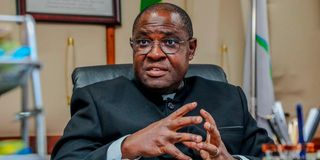
Nuclear Power and Energy Agency CEO Justus Wabuyabo.
Photo credit: Lucy Wanjiru | Nation Media Group
The agency said KenGen would implement an approved resettlement and compensation framework to protect the rights of project affected persons, with no household to be displaced without prior, fair and prompt compensation in accordance with the Constitution and Kenyan law.
The committee was also told that although a nuclear power plant can have a lifespan of about 100 years, the initial investment could be recovered in approximately 20 years, allowing the country to benefit from relatively affordable electricity for decades thereafter.
The proposed Sh500 billion plant is expected to create between 5,000 and 12,000 jobs during construction.
NuPEA said local employment, skills development and the participation of Siaya businesses would be prioritised in the project’s supply chain.
The legislators also sought clarity on the respective mandates of NuPEA and KenGen, urging the agency to prioritise key milestones and avoid costly technical studies before establishing the suitability of the selected land.
The committee was informed that NuPEA is responsible for coordinating Kenya’s nuclear power programme, while KenGen will own, develop, construct and operate the plant.
Licensing and regulatory oversight will fall under the Kenya Nuclear Regulatory Authority (KNRA), which will serve as the independent regulator.
Senator James Lomenen acknowledged the high capital cost of nuclear power plants and proposed that community leaders be taken on study tours to countries with operational nuclear facilities in Europe, Asia and America.
He said such visits would help leaders understand how nuclear technology operates and its impact on surrounding communities.
Senator Oburu reaffirmed Parliament’s commitment to ensuring the safety of the project but also urged Kenyans to focus on the opportunities presented by nuclear energy.
“Although nuclear power is cheaper, our concern is about safety to avoid accidents caused by nuclear reactors. Let us not emphasise the negatives but focus on the positive attributes of nuclear power,” said the ODM leader.
The agency said it would facilitate scientific tours for opinion leaders and community representatives to countries operating nuclear power plants as part of efforts to improve public understanding and build confidence in the technology.