A motorist who was fined Sh200,000 or three years in prison after being convicted of careless driving has successfully overturned the conviction after the High Court ruled that the offence no longer exists under Kenyan law.
A judgment delivered by the High Court in Isiolo quashed the conviction of Daniel Mwangi Munyaka and ordered that the Sh200,000 fine he had paid be refunded immediately.
The case stemmed from a traffic accident that occurred on March 29, 2018, along the Murang’a-Sagana Road near Nokras Hotel in Murang’a Town.
According to the charge sheet, Mr Munyaka, while driving a Toyota Premio car, allegedly left his lane, swerved to the right and collided with a Toyota Hiace van belonging to Nyena Sacco, causing damage to the vehicle.
He was subsequently charged with careless driving, contrary to Section 49(1) of the Traffic Act.
Following a full trial before the Murang’a Chief Magistrate’s Court, he was convicted and sentenced to pay a fine of Sh200,000 or serve a three-year prison sentence in default. Dissatisfied with the outcome, he appealed against both the conviction and sentence.
In his appeal, Mr Munyaka argued that the prosecution had failed to prove the offence beyond reasonable doubt and that the evidence presented during the trial was insufficient and contradictory.
He also complained that the trial court had displayed bias and imposed an excessive sentence without adequately considering his mitigation.
However, the central issue that ultimately determined the appeal was whether the offence for which he had been charged actually existed in law.
The appellant argued that Section 49(1) of the Traffic Act no longer created an offence known as “careless driving” and that both the charge and conviction were therefore invalid. He maintained that the prosecution never sought to amend the charge sheet despite the legal defect.
Significantly, the State conceded the appeal and agreed that the charge sheet was fatally defective.
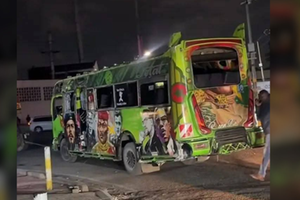
How dangerous 'manyoka' matatu stunt left five people dead, many injured
The judge noted that the law currently criminalises “driving without due care and attention” or driving without reasonable consideration for other road users.
The judge observed that prior to December 2012, the offence under the section had indeed been described as careless driving.
However, amendments introduced through the Traffic (Amendment) (No. 2) Act of 2012 removed the term “careless driving” and replaced it with “driving without due care and attention.” The amendments took effect on December 1, 2012.
Since Mr Munyaka was charged in May 2018, nearly six years after the amendment came into force, the court found that the offence cited in the charge sheet no longer existed in Kenyan law.
“I agree with both parties therefore that at the time the appellant was charged on 02/5/2018 there was no such offence as ‘careless driving’ known to the Traffic Act,” the judge held.
The court further found that prosecuting and convicting the appellant for a non-existent offence violated Article 50(2)(n) of the Constitution, which guarantees that a person cannot be convicted for an act or omission that was not an offence under Kenyan law at the time it was committed.
The judge ruled that the constitutional violation rendered both the proceedings and conviction void.
The judge also considered whether the defect could be salvaged under Section 382 of the Criminal Procedure Code, which allows courts to overlook certain procedural errors that do not occasion a miscarriage of justice.
However, he concluded that constitutional violations cannot be cured through that provision.
“The principle of the law governing charge sheet is that an accused should be charged with an offence known in law,” the court observed.
Having found the charge incurably defective, the judge declared the entire trial a nullity.
“The charge was incurably defective, the proceedings were a nullity and the conviction therefore had no foundation,” the judge ruled.
The court consequently allowed the appeal, quashed the conviction, set aside the sentence and directed that the Sh200,000 fine paid by Mr Munyaka be refunded.