The National Assembly witnessed a tense and at times sharply divided debate on the Finance Bill, 2026, as MPs weighed contentious tax proposals that exposed underlying political alignments and public concerns over the cost of living.
MPs debate the Finance Bill 2026 in Parliament
The Bill was passed in line with recommendations of the National Assembly Departmental Committee on Finance and National Planning, chaired by Molo MP Kuria Kimani. Its report shaped the amendments adopted by the House.
After the removal of what MPs termed punitive provisions, the Bill is expected to raise about Sh98.5 billion in additional revenue to finance the Sh4.82 trillion budget for the 2026/27 financial year. The National Treasury had initially projected Sh120 billion from the Bill, leaving a wider financing gap that could increase government borrowing to cover the Sh1.2 trillion deficit. The Kenya Revenue Authority is expected to collect about Sh3.6 trillion during the year.
Outside Parliament, economists, bankers and industry players opposed some of the proposals, warning they would push up the cost of goods and services and deepen pressure on households already strained by high living costs.
MPs also approved a tax exemption for investments of at least Sh2 billion, aimed at boosting local manufacturing and positioning Kenya as a regional industrial hub. However, some lawmakers cautioned that the incentive could disproportionately benefit foreign investors with deeper access to capital.
The House rejected a Treasury proposal to impose excise duty on imported mobile phones at the point of activation, and also voted down a plan to raise the excise rate on imported phones from 10 per cent to 25 per cent.
However, MPs backed higher taxes on imported sugar to protect local farmers, a move that could push up consumer prices given the country’s production shortfall.
Kenya produces between 650,000 and 850,000 tonnes of sugar annually against a consumption demand of 1.15 million to 1.175 million tonnes. The deficit is met through imports of between 370,000 and 510,000 tonnes each year.
Separately, MPs approved changes to the filing of tax returns, setting the deadline at four months after the end of the financial year.
Individuals and businesses will now have until October 31 to file returns following the June 30 close of the financial year.
In another significant policy shift, MPs rejected proposals to reclassify several essential goods and services from VAT zero-rated to VAT-exempt status. The affected items included the transportation of sugarcane from farms to mills, raw materials used in animal feed production, locally assembled mobile phones, and renewable energy products such as electric motorcycles, buses and bicycles, as well as solar panels and lithium-ion batteries.
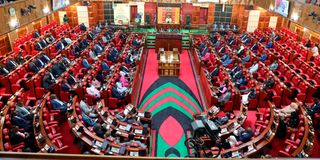
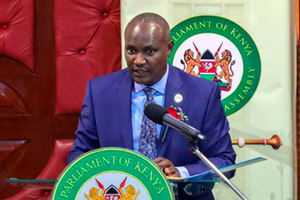
Members of the National Assembly follow proceedings during the presentation of the FY 2026/27 Budget Highlights by Cabinet Secretary for the National Treasury and Economic Planning John Mbadi at Parliament Buildings, Nairobi, on June 11, 2026.
Photo credit: File | Nation Media Group
The committee warned that the proposed changes would reverse gains made under the Finance Act, 2023, which was designed to support local manufacturing and lower the cost of essential goods.
“Reversing this position would increase production costs, discourage investment and undermine predictability in the tax system,” the committee said in its report.
The House Finance Committee, in its report, argued that shifting selected goods and services from zero-rated to VAT-exempt status would deny businesses the ability to recover input VAT. It noted that the additional costs would likely be passed on to consumers through higher prices, including for mobile phones.
The committee retained the zero-rated status of sugarcane transportation from farms to milling factories, saying the measure supports the government’s efforts to revive the sugar industry. “Maintaining the zero-rated status of sugarcane transportation supports the government’s agenda of revitalising the sugar industry by allowing farmers to recover input VAT and avoid additional costs,” the committee’s report on the Bill states.
It warned that exempting the service would shift the VAT burden to farmers, raise transportation costs, reduce investment in farm inputs and potentially discourage sugarcane production.
The committee also recommended deleting a proposal to move electric bicycles, electric buses, solar batteries and lithium-ion batteries from the zero-rated to the exempt category, following concerns raised by KPMG in a memorandum.
“The amendment may increase the cost of environmentally friendly transport and energy products, thereby discouraging the adoption of sustainable energy solutions and undermining Kenya’s green economy agenda,” the report states.
The recommendation aligns with President William Ruto’s push for green energy, which could be undermined by increasing the tax burden on such products.
The committee further acknowledged concerns raised by the Pharmaceutical Society of Kenya (PSK) over the implications of shifting products from zero-rated to exempt status. However, it said further data from the National Treasury and industry stakeholders was needed to assess the cost of implementing the proposal, its impact on the pharmaceutical sector and its effect on revenue collection.
“Rationalising VAT exemptions on selected inputs or raw materials used in the local manufacture of animal feeds and pharmaceuticals would increase production costs. Therefore, the committee recommended deletion of the proposal,” the report states.
The debate exposed sharp divisions among MPs as they weighed the need to shield local industries against the risk of pushing up the cost of living for consumers.
In a move aimed at protecting local sugar millers and farmers from cheaper imports, lawmakers approved a proposal to raise the import duty on sugar to Sh40 per kilogramme from the current Sh7.50. However, the proposal drew resistance from some MPs, who warned that consumers could end up bearing the burden of the higher levy.
Embakasi East MP Babu Owino and Kathiani MP Robert Mbui argued that the country still relies heavily on imported sugar to meet local demand and that increasing the duty could drive up retail prices.
“Local consumers are likely to be hit hard because we solely depend on imported sugar to bridge the local deficit,” said Mr Owino.
Mr Mbui supported the concerns but noted that protecting local producers should go hand in hand with addressing the structural challenges that make Kenyan sugar less competitive. “As you protect local farmers by imposing a higher duty, you also need to address the factors that make our products uncompetitive,” said Mr Mbui, citing the high cost of electricity and production as major constraints facing manufacturers.
On mobile phones, MPs backed the committee’s recommendation to retain the current excise duty framework, under which the tax is charged at the point of importation or when locally manufactured devices leave the factory. The committee rejected a proposal to shift the tax point to the activation stage, arguing that the change would complicate compliance, delay revenue collection and create uncertainty for consumers and industry players.
A proposal to allow the Kenya Revenue Authority (KRA) to collect disputed taxes pending determination by the appeals tribunal was withdrawn after MPs strongly opposed it. The amendment, moved by Finance Committee chairperson Kimani Kuria, faced stiff resistance on the floor, with the “nays” prevailing during a voice vote. Although supporting MPs pushed for a division to formally record votes, Majority Leader Kimani Ichung’wah intervened, urging that the matter required further consultation. The division was consequently dropped, and no formal vote was taken.