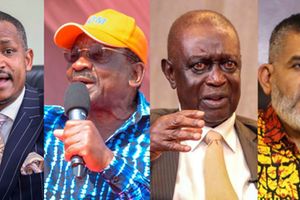

Founding ODM National officials Henry Kosgei (Chairman) and Prof Anyang’ Nyong’o (Secretary-General) have revived memories of one of Kenya’s most dramatic political ruptures — how ODM-Kenya slipped from Raila Odinga and William Ruto’s camp on the eve of the 2007 elections.
Their recollections reveal how the hijack by Kalonzo Musyoka’s team forced the movement to fall back on an earlier ODM certificate held by lawyer Mugambi Imanyara.
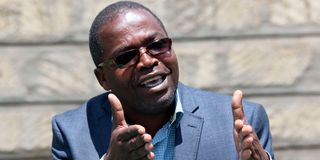
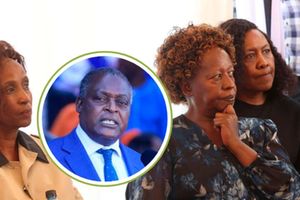
Mr Mugambi Imanyara.
Speaking at the ODM Founders’ Dinner in Mombasa, Mr Kosgei gave an animated, emotional, and sometimes humorous recollection of a movement struggling to find its footing after the 2005 referendum victory, only to be ambushed by internal sabotage, state pushback, and ambitions that threatened to scatter Kenya’s most iconic opposition force.
The night also featured a narration from ODM’s pioneering Secretary-General, Prof Anyang’ Nyong’o, who situated ODM’s emergence within a broader national struggle against authoritarianism, political manipulation and betrayal.
Together, the two testimonies painted the fullest picture yet of how ODM survived its most perilous birth pangs.
Mr Kosgei began with the moment that gave birth to the Orange movement: the Electoral Commission of Kenya’s assignment of referendum symbols in 2005.
“We went to the ECK and Kivuitu had an Orange and a Banana. We grabbed the Orange,” he told the cheering room.
That Orange, adopted by Raila Odinga, Kalonzo Musyoka, William Ruto, Musalia Mudavadi and others, became the rallying symbol of the NO campaign against the Wako Draft. But the victory that followed triggered immediate political retribution.
“The Kibaki government persecuted us after the 2002 election, particularly those of us from the Rift Valley,” Kosgei recalled.
“We were kicked out left, right and centre.”
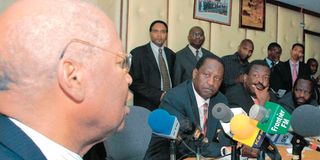
Samuel Kivuitu Chairman of Electoral Commission of Kenya (left) responds to ODM presidential candidate Raila Odinga (centre) and his running mate Musalia Mudavadi when they visited to raise complaints
The Orange coalition, largely made up of the LDP faction of NARC, was fired from Cabinet almost overnight.
But rather than retreat, Odinga’s team resolved to transform the referendum movement into a political party.
Mr Kosgei narrated how the team met in Machakos, at a place he referred to as Mwachabungu, where they agreed to form a party. All four presidential hopefuls—Raila, Kalonzo, Mudavadi and Ruto—wanted a shot at the presidency, so they agreed that the chairmanship would go to a neutral figure.
“Julius (Sunkuli) asked me whether I wanted to be chairman… then Kajwang’ came and tried to convince me while I was already convinced,” Mr Kosgei joked, drawing laughter as he remembered the late senators’ dramatic persuasion.
The leaders then retreated to Naivasha for deeper discussions. A major disagreement erupted over membership.
“Uhuru and Gideon were still in Kanu,” Kosgei explained.
“We agreed on corporate membership. Raila objected. He wanted individual membership.”
They settled on a compromise allowing both categories — a decision that would haunt them later.
Rushed to reserve ODM name
When the team returned to Nairobi to register the party, they met their first major shock, Mr Kosgei explained.
“We found that a “mischievous character”, Mugambi Imanyara, had registered our party.”
Unknown to them, Imanyara had reserved the ODM name immediately after the referendum.
“I am now informed that it is Oburu who asked Najib Balala to make that declaration in Kisumu — that the Orange would become a party. That is how Imanyara rushed and reserved the name.”
With ODM taken, the team settled for ODM-Kenya. But even this was blocked initially.
“The government refused to register us,” Mr Kosgei said, crediting Janet Ongera’s behind-the-scenes manoeuvres for finally unlocking the registration.
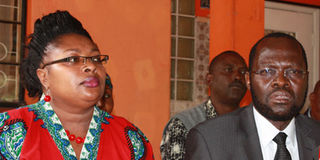
Janet Ongera and Anyang' Nyongo' at a past event.
Even after registration, ODM leaders could not assume official party positions; they risked losing their parliamentary seats. To avoid this, they appointed temporary officials led by lawyer Daniel Maanzo, now Makueni senator and Mr Musyoka’s confidant.
It was a decision that would soon explode in their faces.
“Maanzo later ran away with the party,” Mr Kosgei recounted, to gasps from the audience.
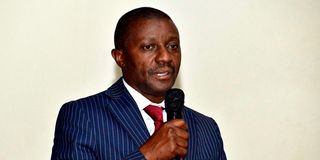
Makueni Senator Daniel Maanzo.
Stranded and party-less
The provisional officials being the only legally recognised signatories took control of ODM-Kenya and handed it to Mr Musyoka’s camp.
“We remained party-less,” Mr Kosgei said bluntly.
“We were stranded.”
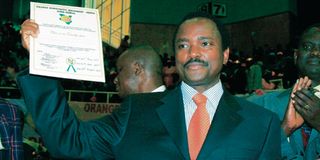
Then ODM-Kenya Presidential aspirant Kalonzo Musyoka displays his party nomination certificate shortly after the presidential nominations at Kasarani Sports Centre in August 2007.
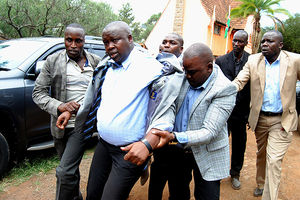
Violence and State hostility only worsened matters. At a planned rally at Uhuru Park, Mr Kosgei said, he was teargassed for the first time in his life.
With ODM-Kenya hijacked, the Raila-Ruto team had only one option left — return to Mr Imanyara who still held the original ODM certificate.
“We went looking for Imanyara and asked him what he wanted,” Mr Kosgei said, allowing the room to draw its own conclusions.
It was Imanyara’s certificate, previously mocked, ignored, and dismissed, that now became the legal foundation of the ODM party that entered the 2007 elections.
Mr Kosgei emphasised that political loyalty, across ethnic and personal lines, held the party together.
“Ruto remained steadfast with Raila during the crisis over ODM-Kenya. He did not leave,” he reminded the audience.
Nyong’o's ODM story
In his address, Prof Nyong’o placed the ODM story in broader national context.
“ODM@20 is not just a story of a party but of a people who refused to surrender their destiny,” he began.
He said ODM was formally registered in 2005, emerging from the NO campaign against a constitution he described as “a legal camouflage designed to sustain the old reactionary order.”
The contrast between the Bomas Draft, “a people’s proposal”, and the Kilifi Draft — “a privilege for a few” — became the moral foundation of ODM’s formation.
“ODM was birthed in a nation suppressed by presidential authoritarianism,” Prof Nyong’o said.
Prof Nyong’o said their collective resolve and the sacrifices of thousands of grassroots supporters made ODM the country’s most resilient political movement.
Twenty years later, ODM remains one of Kenya’s most durable political brands, despite splits, especially following Mr Odinga’s demise last month.
Follow our WhatsApp channel for breaking news updates and more stories like this.