Documents submitted to Parliament by the Independent Electoral and Boundaries Commission (IEBC), chaired by Erastus Ethekon, show that the commission has requested Sh74.8 billion over the three-year electoral cycle. However, it has been allocated Sh41.3 billion, leaving a deficit that officials warn could undermine preparations for a credible election.
The National Assembly Committee on Justice and Legal Affairs (JLAC) said the funding gap severely threatens the commission’s ability to discharge its constitutional mandate.
The documents show that payment of election officials is among the areas likely to be affected, requiring Sh7.63 billion. The commission has also accumulated Sh5.75 billion in pending bills, largely legal fees arising from previous elections.
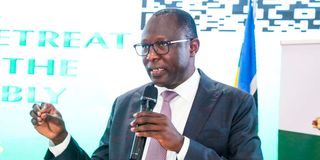
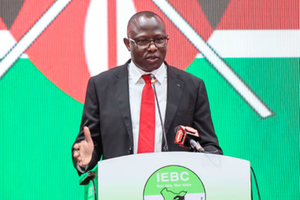
Photo credit: Nation Media Group
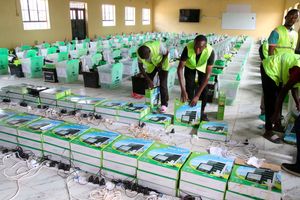
JLAC also questioned some of the commission’s spending priorities, particularly its plan to spend Sh9.2 billion on new Kenya Integrated Election Management System (Kiems) kits.
“Why is the IEBC insisting on Sh9.2 billion for the purchase of new Kiems kits when MPs have not been given results of an audit to confirm if the existing ones are all obsolete?” posed Rarieda MP Dr Otiende Amollo, a member of JLAC.
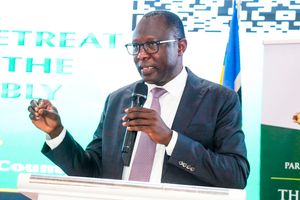
National Assembly Public Accounts Committee member and Rarieda MP Paul Otiende Amollo during a committee session at Bunge Tower, Nairobi, on Tuesday, June 16, 2026.
Photo credit: Dennis Onsongo | Nation Media Group
The committee wants the IEBC Fund operationalised as provided by law to strengthen the commission’s financial independence and reduce reliance on discretionary disbursements from the National Treasury.
National Treasury Cabinet Secretary John Mbadi did not respond to inquiries on the need to adequately finance the IEBC. He has previously criticised the high cost of elections, saying the commission must be more efficient in managing public funds.
Technology upgrades are among the key drivers of the rising costs. The IEBC requires at least Sh10.7 billion to acquire new Kiems kits and replace obsolete equipment.
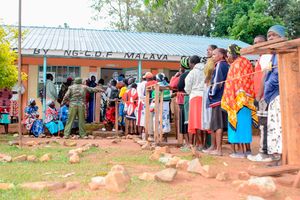
The commission also plans to expand polling infrastructure from the 46,229 stations used in the August 2022 General Election to 55,393 to accommodate an expected 28.5 million registered voters in 2027.
MPs have expressed frustration over shifting cost projections, which have risen from Sh57 billion to Sh61 billion, Sh63.9 billion and eventually Sh74.8 billion.
The House Committee on Constitutional Implementation Oversight Committee (CIOC) warned that the funding gap threatens the commission’s ability to discharge its constitutional mandate effectively and urged the Treasury to address the deficit.
CIOC also called for a clear front-loading schedule for releasing funds to ensure timely implementation of electoral activities.
The commission has warned that failure to settle historical pending bills could further constrain operations through legal disputes, increased legal fees and the withdrawal of suppliers.
The IEBC had initially requested Sh61.74 billion for the 2027 election over three financial years. It proposed that Sh15.3 billion be front-loaded in 2025/26 to finance pre-election activities, mainly voter registration and acquisition of election technology.
The Kiems kits were procured in 2017, while 14,000 additional kits were purchased in 2022. The commission argues that technological obsolescence means older equipment will need replacement to ensure the credibility of the 2027 election.
Elections management expert Koki Muli, however, suggested reducing the number of polling stations rather than expanding them.