A gathering of more than 5,000 Kalenjin elders and leaders at State Lodge Eldoret has offered a glimpse into President William Ruto’s 2027 re-election strategy as he moves to consolidate support in his traditional stronghold, rallying the community behind the United Democratic Alliance (UDA) and containing internal rivalries that could undermine efforts to present a united political front.
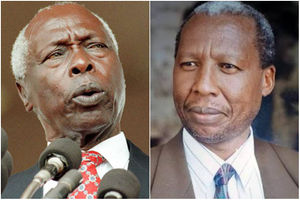
The President appears to be drawing on a familiar political playbook associated with the late Daniel arap Moi, who relied on community elders and regional networks to consolidate and maintain support in his Rift Valley stronghold during his 24 years in power.
For President Ruto, the challenge is to harness those networks to rally the Kalenjin community behind his re-election bid while managing competing political ambitions and the contest for UDA nominations ahead of the 2027 General Election.
The Monday, October 19 meeting, held a day before the Mashujaa Day celebrations, brought together elders from across Kalenjin sub-tribes, alongside senior government officials and elected leaders, for discussions that touched on political unity, development and the community’s priorities.
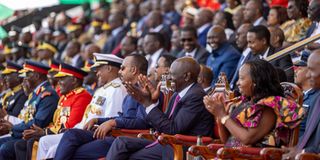
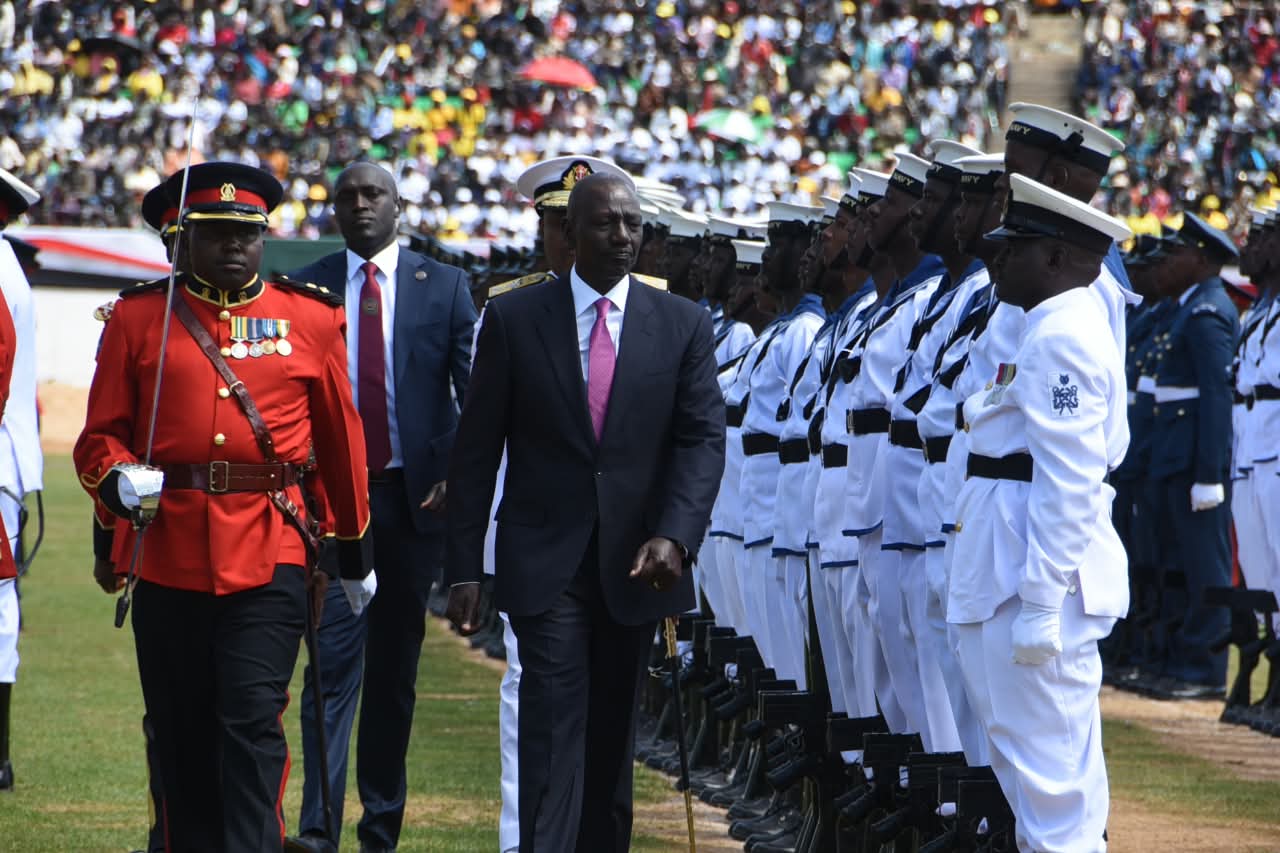
President William Ruto delivers his speech when presided over the 63rd Mashujaa Day celebrations at Kipchoge Keino Stadium in Eldoret City, Uasin Gishu County on October 20, 2026.
Photo credit: PCS
At the heart of the gathering was a message that the President’s political backyard should remain united behind him as he prepares to seek a second term. The appeal underscored the challenge facing him of maintaining a common political front amid emerging competing political interests in his region.
Sources said the elders declared Dr Ruto their preferred presidential candidate in 2027 and called on the community to rally behind his ruling UDA, warning that political divisions could weaken its influence and undermine his development priorities.
The endorsement of elders, however, does not by itself establish that the wider electorate shares their position. Nor does the public declaration of unity eliminate competition among politicians seeking nominations, resources or influence.
According to Tugen Myoot Council of Elders chairman Rev Zacharia Chirchir, who was in attendance, the meeting was the first gathering of Kalenjin elders with Ruto since he took office in 2022.
He said the President had urged them to unite the community, promote peace and guide its political choices ahead of the next General Election.
“As a community, there is no question about who will be the next president because we have pledged to support him. We stand united,” he said in Kabarnet on Wednesday.
Also in attendance were Cabinet Secretary Kipchumba Murkomen, Head of Public Service Felix Koskei, governors, senators and Members of Parliament from the region.
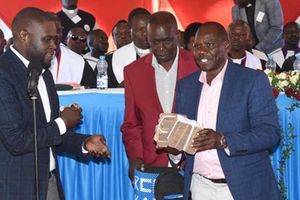
President William Ruto (second from left), Housing Cabinet Secretary Alice Wahome (third from left) and other officials during the opening of the Pioneer Affordable Housing Project in Eldoret City, Uasin Gishu County, on October 18, 2026.
Photo credit: Jared Nyataya | Nation Media Group
The meeting provided the President with a platform to seek support for a second term, explain his administration’s development record and urge the community to remain politically united.
President Ruto outlined his administration’s record in housing, healthcare, education and road infrastructure, pledging equitable distribution of resources across the country.
His new slogan, “Usawa ni Sawa”, also featured in the elders’ show of support, reinforcing the administration’s message of fairness and equal treatment.
For Dr Ruto, the challenge is to translate the language of equitable development into tangible results that residents can see.
In the North Rift, where agriculture is central to livelihoods and insecurity, unemployment and infrastructure remain important concerns, the administration’s development record will be part of the wider conversation as the 2027 elections approach.
A call to close ranks behind UDA
The gathering brought into focus the challenge of sustaining support for the President amid competing political interests, calls for accountability over public spending and expectations that the Kenya Kwanza administration should translate its development promises into tangible benefits for residents.
The elders called for political unity behind Mr Ruto and his ruling party, warning that competing interests could undermine the community’s influence in national politics.
Speaking in Kabarnet, Rev Zacharia Chirchir, who attended the meeting, said the community had settled on supporting the President for another term. He urged members of the community to embrace UDA rather than create rival political centres within the ruling party, arguing that a common position would strengthen their ability to influence decisions affecting the region.
The appeal comes as politicians across the North Rift position themselves for the next election, with aspirants seeking support from influential leaders and the President’s backing. The competition for seats and party nominations could test the unity being promoted by the elders and the President, particularly where local political ambitions collide.
Rev Chirchir said other politicians had a constitutional right to seek the presidency but maintained that the Kalenjin community should demonstrate unity by supporting Dr Ruto.
He also defended the President’s right to seek a second term, citing former presidents Mwai Kibaki and Uhuru Kenyatta, both of whom served two terms. He criticised calls for Dr Ruto to serve only one term, arguing that political competition should not be driven by tribal considerations.
The elders urged the community to encourage voter registration and civic education, promote peaceful campaigns and guide voters to assess candidates on their records and development plans.
The Moi playbook and its limits
The reliance on elders as political intermediaries recalls a feature of Mr Moi’s leadership, when networks of community leaders helped mobilise support and communicate political messages within the Rift Valley.
While the political environment has changed considerably since the Moi era, the engagement of elders offers President Ruto a platform to reinforce ties with his home region while seeking to present his administration’s development agenda as a reason for continued support and encourage political cohesion at the grassroots.
A video shared on social media captured one elder pledging support for another term, citing the President’s record in agriculture, land matters and other sectors.
“We know what you have done for us in agriculture, land matters and other sectors, and we shall rally behind you for another term,” the elder said.
In his remarks at the meeting, President Ruto emphasised agriculture as a means of improving household incomes and narrowing economic disparities.
“We need to use agriculture as a tool to put more money in the pockets of Kenyans. Currently, we have a huge gap between the rich and the poor, and that is why we need a government that can establish a balance,” he said.
Agriculture is central to the North Rift economy, where maize, wheat, dairy farming and related value chains support households and businesses. Government support for farm inputs and increased agricultural production has been presented by the administration as part of its efforts to improve food security, raise farmers’ incomes and ease the cost of living.
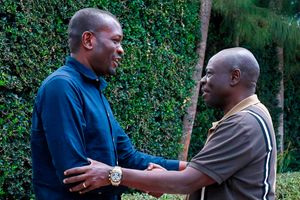
President William Ruto and Kanu chairman Gideon Moi after a meeting at State House, Nairobi.
Photo credit: PCS
The unity appeal also comes amid speculation over the relationship between Mr Ruto and Kanu chairman Gideon Moi, whose political position in Baringo has drawn attention since he withdrew from the senatorial by-election in October 2025.
Mr Moi stepped aside after meeting Mr Ruto at State House a day before filing his nomination papers. The decision disappointed some Kanu supporters and prompted speculation about a possible political understanding between the two leaders and the future relationship between Kanu and UDA.
Mr Ruto later visited Mr Moi at his Kabarak residence and addressed Kanu grassroots leaders. The President said he had personally asked Mr Moi to withdraw from the contest, while Mr Moi cited discussions between them and outstanding development projects in Baringo.
The episode remains part of the wider discussion about political alignments in the region, but the elders have not confirmed a fallout between the two leaders.
“I have not met either of them, so I cannot comment on whether Gideon Moi was short-changed or whether there is a fallout,” he said.
Development expectations behind the endorsement
Beyond politics, the elders presented a memorandum outlining priorities affecting the community and its constituent groups. Insecurity, unemployment and development featured among the concerns raised.
They thanked the President for security operations that they said had improved conditions in parts of the North Rift affected by banditry, livestock theft and displacement.
“We had to thank him for restoring sanity in the banditry-prone villages in the North Rift region that had been marred by insecurity for more than five decades. For the first time in many years, we have experienced peace,” Rev Chirchir said.
The security concerns remain significant in communities that have experienced years of violence and livestock theft. However, unemployment and other socio-economic challenges remain unresolved, placing expectations on the administration to translate security gains and development promises into lasting improvements.
In Baringo, the elders cited the revival of Kabarnet Stadium and plans for Kabarnet University among the projects they want addressed. They also asked the President to consider establishing a fund to support the council’s activities, including community engagement, dispute resolution and peacebuilding.
A warning over political conduct
The unity message extended to the conduct of political meetings, with Rev Chirchir condemning the heckling of leaders at public rallies.
During Mr Ruto’s recent tour of Baringo, Baringo Central MP Joshua Kandie was heckled after the President handed him a microphone at a rally in Kabarnet. Governor Benjamin Cheboi was also heckled in Eldama Ravine.
“The President left without anyone airing the needs of the people of Baringo Central. The same thing happened in Eldama Ravine when Governor Benjamin Cheboi was silenced by hecklers,” Rev Chirchir said.
He urged young people not to allow themselves to be used to disrupt political meetings, warning that such incidents could fuel hostility and prevent residents from raising their concerns.
The elders also invoked the memory of the violence that followed the disputed 2007 General Election as a warning against political intolerance in the run-up to 2027.
“In 2007, we found ourselves in the middle of serious post-election violence, and the situation was beyond control. This time, we want to ensure there is peace during the electioneering period and after the elections,” Rev Chirchir said.
The elders’ role, he added, should include guiding political choices, encouraging peaceful campaigns and helping voters make informed decisions.