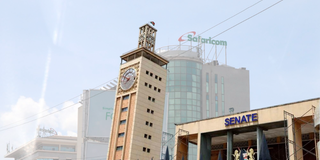
Two National Assembly committees will on Monday, January 12, 2026, start taking views from the public regarding the government's move to sell 15 percent of its shares in the giant mobile telecoms company Safaricom.
According to the schedule seen by the Nation, the Finance and National Planning Committee, and the team on Public Debt and Privatisation will hold an internal meeting on Monday to prepare for the process before meeting with public entities on Tuesday.
This process, which will continue until January 21, will take place in Kiambu County and is expected to involve all stakeholders in providing their views on the government's proposal.
On Wednesday morning, Safaricom PLC will appear before lawmakers from 9:30 to 11 am, followed by the Institute of Certified Public Accountants of Kenya (ICPAK), who will meet with the legislators from 11:30 to 1 pm.
Jamii Telecommunications Ltd, the Safaricom Dealers Association, the Safaricom Foundation, Airtel Kenya, the Technology Service Providers of Kenya, Telkom Kenya, and Mwananchi (Zuku) will also give their views on the sale between 2 pm and 6 pm, concluding the first day of the exercise.
On Thursday, the Kenya Bankers Association, the Kenya Association of Air Operators, the Petroleum Institute of East Africa, the Kenya Private Sector Alliance (KEPSA), the Kenya National Chamber of Commerce, the Digital Financial Services Association of Kenya, the Fund Managers Association of Kenya, the Association of Kenya Devices, and the Federation of Kenya Employers (FKE) will have the opportunity to present their views on the matter to MPs.
The Law Society of Kenya, the Institute of Economic Affairs, the Association of Stockbrokers of Kenya and Westminster Consulting, among others, are scheduled to appear before the joint committee on January 16, 2026.
The Kenya Human Rights Commission, Amnesty International, Bunge la Mwananchi, Katiba Institute and the Central Organisation of Trade Unions, among others, will also appear before the committee on January 19, 2026.
The joint committee will then meet with other stakeholders before retreating to draft its report, which is expected to be presented when the House resumes its sittings on February 10, 2026.
National Assembly Speaker Moses Wetang’ula allowed the two committees to start their meetings earlier than usual, before the regular sittings resume, to give them time to consider the government's Sessional Paper on the partial divestiture of Safaricom.
“This earlier resumption of their sittings shall allow the committees to conduct extensive public participation to obtain the views of the affected stakeholders, noting that Safaricom PLC is a Government-linked company that is listed in the Nairobi Stock Exchange (NSE). The committees are urged to expeditiously submit their report to the House for consideration at the conclusion of the public hearings and stakeholders’ consultations,” Mr Wetang’ula said.
The government is selling 15 per cent of its 35 per cent stake at Safaricom to Vodacom, which currently holds 40 per cent.
The united opposition has threatened to challenge the divestment in court, arguing that there was no public participation and that the move also threatens Kenya’s national wealth.
National Treasury Cabinet Secretary John Mbadi has defended the government’s plan to sell 15 percent Safaricom stake for Sh204.3 billion, dismissing concerns over valuation and positioning as critical infrastructure financing.
“This is the right direction that this country needs to take. We need some bold decisions where we are not in a very comfortable position in terms of the economy and something needs to be done,” Mr Mbadi said in an interview last month.
Mr Mbadi said the proceeds from the partial sale would go towards the National Infrastructure Fund and the Sovereign Wealth Fund to finance public projects nationwide.
The fund aims to shift infrastructure financing away from debt by pooling proceeds from the privatisation of State-owned assets, in an attempt to reduce reliance on external borrowing and tax increases.