Heckling is fast emerging as a potent tool in the arsenal of politicians across the country, deployed to silence critics as leaders jostle to retain power or unseat rivals.
What was once an occasional disruption has in recent months hardened into a calculated strategy, gaining momentum as the nation edges towards the 2027 General Election.
At its core lies a simple, disquieting formula where groups are mobilised and paid to heckle relentlessly whenever targeted leaders attempt to speak. In the chaos, arguments falter and the public is denied the chance to listen, to weigh and to judge.
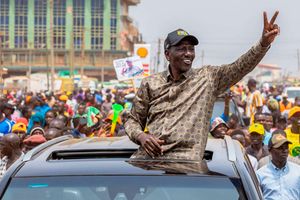
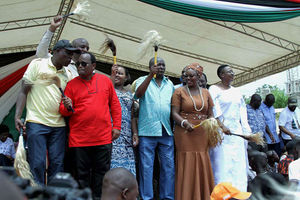
President William Ruto, Siaya Governor James Orengo, Enegry CS Opiyo Wandayi and other senior government officials during the breaking ground for the construction of the Sh1 billion Usenge Pier in Bondo Constituency, Siaya County.
Photo credit: PCS
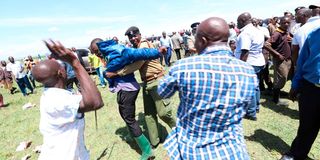
This tactic was starkly illustrated on March 24, 2026 in Siaya when Governor James Orengo found himself drowned out as he hosted President William Ruto at Usenge Beach. He was shouted down and forced to cut shorty his speech as he tried to engage the President.
“I ask you to come to Siaya again,” Mr Orengo said.
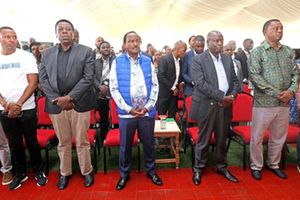
Siaya Woman Representative Christine Ombaka encountered a similar ordeal on February 21, 2026 at Aindi Grounds, where a rally organised by Orange Democratic Movement turned turbulent. The event, attended by party leader Oburu Oginga and national chairperson Gladys Wanga, had begun in attentive silence.
But as soon as Dr Ombaka rose to speak after introduction by Bondo Member of Parliament (MP) Gideon Ochanda, the mood shifted.
“Siaya power,” she managed, repeating the phrase as boos surged and hands waved in rejection as her voice was drowned out.
Efforts to restore order proved futile. Alego Usonga MP Samuel Atandi’s pleas for calm were ignored and it was only when National Assembly Minority Leader Junet Mohamed intervened that some semblance of control returned.
Across regions, this pattern of disruption varies. In some places, men are enlisted as hecklers while elsewhere, women take centre stage. In Homa Bay, groups of women armed with piercing voices are often deployed to silence dissent. Some wield vuvuzelas and whistles, blowing with unyielding force.
Their allegiance, however, is fluid. When the politician believed to have sponsored them steps forward, the tumult softens into praise, chants of “two term” or declarations that a leader “is working” ring out.
Meticulously organised, these groups often sit together at strategic vantage points ensuring maximum impact with minimal interference. They travel in numbers sometimes hiring school buses and may don matching attire, often in party colours, blending seamlessly into the crowd while remaining unmistakably coordinated.
However, beneath this theatre lies a growing unease. This rise of planned heckling has stirred concern among leaders who fear its corrosive effect on democratic engagement. Homa Bay Woman Representative Joyce Osogo has been particularly vocal, warning that such practices risk doing more harm than good.
“We are in a democratic space but it does not mean that if you want to compete with me you pay women to make noise wherever we are,” Dr Osogo said.
She criticised politicians who deploy such tactics arguing that it undermines the very essence of democracy. To her, the use of hired disruptors, often women and youth, reduces political engagement to spectacle, stripping it of substance and dignity.
“Paying women to make noise is a waste of time. Be objective. Heckling just shows how blank your brain is,” she added, urging leaders to compete on policies and strategic vision rather than noise and intimidation.
“Youths should not be used negatively. We don’t want to shed blood because of the election. We don’t want people to be chopped off because of politics,” she said.
Her concerns echo deeper historical anxieties. In Kisii, former Cabinet Minister Simeon Nyachae was long associated with Chinkororo, an outlawed vigilante group originally formed to defend against cattle raiding but later linked to political intimidation. Such precedents serve as stark reminders of how easily political mobilisation can slip into coercion.
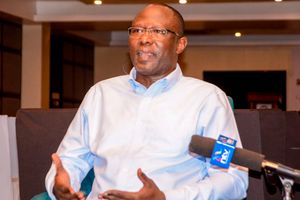
Homa Bay Woman Representative Joyce Osogo at an event in the county on April 14, 2023. She is calling for women to be equally included in President Ruto's blue economy plans.
Photo credit: George Odiwuor | nation Media Group
Dr Osogo has called on President William Ruto and the Independent Electoral and Boundaries Commission (IEBC) to act decisively, urging the enforcement of laws such as the Election Offences Act, which prohibits the use of force or coercion during electoral periods.
Beyond enforcement, she advocates collaboration among leaders and a renewed focus on development.
“I work on a ten-point agenda… My hashtag is work and development. I am development-oriented,” she said.