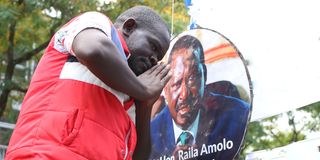
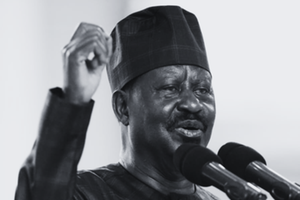
When the world bid farewell to former Prime Minister Raila Odinga on October 19, 2025, it signalled a new era in Kenya’s political arena.
The pain was evident not only within the Odinga family and among his supporters, but also among his political allies, a majority of whom had won elective positions by riding on his back, while others had known no mentor other than Raila throughout their political lives.
While some have chosen to remain in ODM and the coalition Raila built, others have chosen new political paths, insisting that they are the true custodians of his legacy.
Raila’s death left behind a diverse group of political figures who, in different ways, benefited from his influence, electoral machinery, political goodwill or ability to build alliances across Kenya’s political divide.
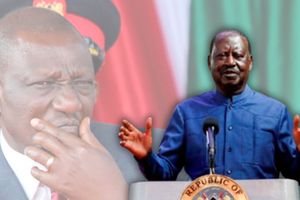
Among those who could now find themselves navigating a more uncertain political landscape are Suna East MP Junet Mohamed, who famously joked that he would become chairman of Raila’s political orphans, and President William Ruto, who acknowledged the late opposition leader’s stature even as their political paths shifted from rivalry to cooperation.
Azimio presidential candidate Raila Odinga endorses the candidature of Homa Bay Woman Representative Gladys Wanga who is vying for the governor seat at Agoro Sare High School in Homa Bay County on July 3,2022
Photo credit: George Odiwuor | Nation Media Group
Former President Uhuru Kenyatta, who worked with Raila in the Azimio coalition, and his elder brother, Oburu Oginga, who has taken over the ODM leadership, also feature prominently in the complicated politics of succession.
Within ODM, the loss is particularly significant for leaders whose political fortunes have been closely tied to Raila’s leadership and the party’s nationwide network.
They include governors Anyang’ Nyong’o (Kisumu), Gladys Wanga (Homa Bay), James Orengo (Siaya), Ochillo Ayacko (Migori) and Simba Arati (Kisii); former ODM Secretary-General Edwin Sifuna; ODM National Treasurer Timothy Bosire; and Cabinet Secretaries Hassan Joho (Mining), Wycliffe Oparanya (Co-operatives), John Mbadi (Treasury) and Opiyo Wandayi (Energy). Also in this group is Wiper leader Kalonzo Musyoka, who worked with Raila in the 2013, 2017 and 2022 elections.
Although the political positions and relationships these figures had with Raila differed, his influence helped shape the party structures and alliances through which many built their careers.
His absence now raises questions about who can command the same loyalty, reconcile competing interests and maintain the political cohesion he often provided.
The ripple effects could extend beyond ODM to leaders whose electoral strategies depended, in part, on Raila’s support or the coalitions he helped assemble.
Political analysts say Nairobi Governor Johnson Sakaja, for instance, faces the challenge of navigating a changed political landscape as he eyes re-election, while numerous MPs and other elected leaders who benefited from ODM’s mobilisation and coalition arrangements must reassess their political footing ahead of the 2027 General Election.
Yet being described as a “Raila orphan” does not mean that all these politicians are politically stranded. Some retain independent support bases, while others hold positions that give them room to negotiate new alliances. The real test, according to pundits, will be whether they can sustain their influence without the political heavyweight whose presence often brought disparate interests under one umbrella.
The political journeys, survival and fate of Raila’s orphans have for years been largely shaped by Raila himself. As the family mourned their loved one and supporters struggled to come to terms with the loss of a man who fought for reforms and democratic space, some political elites were already preoccupied with what would happen to their careers in 2027.
For them, the absence of the torchbearer now puts their political futures in jeopardy, forcing them to devise strategies to remain relevant or risk political oblivion before the next General Election.
Suna East MP and National Assembly Minority Leader Junet Mohamed.
Photo credit: Sila Kiplagat | Nation Media Group
While many Raila supporters and members of the public have identified several politicians as his political orphans, it was Suna East MP Junet Mohamed’s remarks at Raila’s burial that clearly illustrated the number of people affected by his death.
Speaking as mourners gathered to pay their last respects to Raila, the Suna East MP dismissed social media claims that his political career was finished following the death of his longtime political mentor.
He joked that he would gather other people who felt politically orphaned by Raila’s death and become their chairman.
“I have seen on social media, people ridiculing me, that my career is finished and that I am a political orphan. But I have realised that many who have paid tribute here are all orphans. I will therefore collect all of them so that I become Chairman of all Raila political orphans,” said Mr Mohamed.
He added that Raila had been everything to them: a leader and a father who knew when to fight and when to lay down his arms.
For Mr Mohamed, the Orange Democratic Movement leader had taken him from nowhere and thrust him into the political arena, and he attributed all his achievements to him.
He was often blamed for giving the former opposition leader poor advice because of their close relationship. He was also among those trusted to accompany Raila to Harambee House, where the March 2018 handshake with former President Uhuru Kenyatta took place.
He was among the key figures accused of bungling Raila’s 2022 presidential bid, with critics claiming that he mismanaged polling agents. Raila, however, occasionally came to his defence.
“Baba made me the Mayor of Migori at only 25 years, MP for many years and minority leader in the National Assembly. I am saddened because people know how close we were with Baba, my father. He referred to me as the black sheep of ODM because on numerous occasions I would take all the bullets on his behalf,” said Mr Mohamed.
Having served as MP for Suna East for three terms, Mr Mohamed is among those whose political fortunes many believe were boosted by their closeness to Raila. However, he is not the only one who will have to go back to the drawing board before 2027.
He added: “I thought I was alone, but the way I have seen people shed tears while mourning Baba has given me some strength and a ray of hope. I was sad and devastated that it was only me, but now I am glad we are many.”
Indeed, the number is large. Some were within Raila’s inner circle, some are in the Executive, while others were his adversaries who used him as a bogeyman, especially in the Mt Kenya region, to gain political mileage.
Perhaps the biggest “orphans” are President William Ruto and former President Uhuru Kenyatta. Not only did the ODM leader go from foe to friend, but he also came to their aid during some of Kenya’s most difficult political moments, helping their administrations avert potential crises.
From left: Wiper leader Kalonzo Musyoka, Raila Odinga, and former President Uhuru Kenyatta during an Interdenominational prayer service for victims of police brutality at SKM Center in Karen on July 28, 2023.
Photo credit: File | Nation Media Umoja
President Ruto, who referred to Raila as his political teacher, mentor and adviser, confirmed during Raila’s funeral service last year that he had been badly affected by his death. However, in a recent interview with Nation, he said he was fortunate that the opposition remained “incoherent” and lacked the capacity to dislodge him from power in 2027.
“The past few days, I have seen and heard through the media that Raila’s death is a big blow to me. I can confirm that it is true, it is a major blow for me,” President Ruto said in Bondo during Raila’s burial on October 19, 2025.
For Mr Kenyatta, Raila was a key ally in confronting President Ruto when he felt the country was headed in the wrong direction.
Mr Kenyatta noted that the ODM leader was the only charismatic leader who could mobilise his supporters to rally behind a cause. Beyond politics, the two were close friends and family friends who “took uji together”, according to Mr Kenyatta.
During Mr Musyoka’s Nyanza tour last month, he recalled his 15-year political partnership with Raila, a union he will miss in the years to come.
“We have been on the road, one way or the other, on my part, 15 political years, three political seasons, because I realised this brother had a clear message and I bought into that. And we have work to do, because Raila’s legacy is now getting compromised.”
He went on: “The people of Bondo, you must know that even if Raila is dead, then Uncle Steve is still here. I have been a true friend of the Luo community and not only the Luos but the entire country. I want to announce here, we shall not allow Ruto to finish Raila’s dream.”
Then there is Dr Oburu Oginga, Raila’s elder brother, who succeeded him as ODM party leader.
ODM party leader Oburu Oginga makes his remarks during the broad-based Government retreat at Lake Naivasha Resort in Naivasha, Nakuru County on August 10, 2026.
Photo credit: Boniface Mwangi | Nation Media Group
Dr Oginga has emphasised how close he was to his late brother, saying: “In fact we were like twins. And consulted a lot on both political and family matters.”
For Mr Sakaja, who analysts say was saved from impeachment several times by Raila, the late ODM leader’s death could have significant political consequences. Mr Sakaja is seeking to secure his political future, including through efforts to join ODM.
For the many politicians who secured their positions through ODM nominations, there may no longer be a political heavyweight to endorse them or help them secure direct tickets.
In the last election, many were given direct tickets, sparing them the arduous process of campaigning and the associated financial costs.
This time, however, analysts say the task may prove far more difficult.