The November 27 by-elections were marred by violence, voter bribery, overt political interference, and widespread breaches of ballot secrecy, according to a final report released yesterday by the Elections Observation Group (Elog).
In its assessment, the domestic observer mission praised the Independent Electoral and Boundaries Commission (IEBC) for largely smooth technical operations on polling day but delivered a stinging indictment of the broader electoral environment, accusing the commission and state actors of failing to prevent conditions that “undermined the integrity” of the polls.
“The IEBC demonstrated technical competence, but the broader electoral environment was compromised well before voters ever reached the polling stations,” Elog chairperson Victor Nyongesa said.
“Credible elections require both technical soundness and integrity from all actors, and in this case, that integrity was badly eroded.”
Elog documented clashes between rival political supporters across several constituencies, including Kasipul, Malava, Mbeere North, Nairobi, and Machakos during the campaign period.
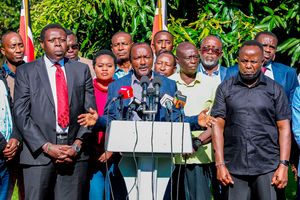
Elections Observation Group (Elog) Head of Secretariat Mulle Musau (centre), Communications Officer Karen Wambui (left) and Chairperson Victor Nyongesa.
Photo credit: Wilfred Nyangaresi|Nation Media Group
In Kariobangi North, observers were themselves harassed when an unruly crowd barricaded their vehicle and demanded money. The group criticised security agencies for failing to intervene decisively.
“These violations create voter apathy and suppress turnout. What is most troubling is that security officers did not act with the decisiveness required to safeguard the vote,” Mr Nyongesa said.
Long-term observers reported widespread distribution of relief goods, blankets, and other items—acts Elog classified as voter bribery. The organisation warned that the scale and openness of these inducements called into question the fairness of the campaign.
The report also flagged the visible involvement of high-ranking national and county officials in campaign activities, including the launch of government development projects in Baringo days before the vote.
According to Elog, the presence of senior state actors risked “tilting the playing field” and intimidating voters.
“When public officials and state resources are deployed in partisan ways, the electoral field ceases to be level. The law demands neutrality, and that neutrality was violated,” Mr Nyongesa said.
A policeman keep guard at Kanyuambora Primary School polling centre during the Mbeere North by-election on November 27, 2025.
Photo credit: Joseph Kanyi | Nation Media Group
Nearly half of all disinformation flagged by Elog’s media monitors targeted political parties and candidates, ranging from fake opinion polls to fabricated press statements.
Another 36 per cent targeted the IEBC directly, including misleading claims about voter registration and polling station changes. The monitors identified fake polls, forged documents, and manipulated images as the most common tactics.
Despite 181 registered candidates across the 22 electoral areas, Elog said participation of women, youth, and marginalised groups remained below required thresholds, a trend it described as “deeply concerning.”
While polling stations were generally well-prepared, the mission reported serious procedural violations. In 15.2 per cent of stations observed, voters were seen photographing ballot papers.
In others, assisted voting was so widespread that some presiding officers assisted nearly 90 per cent of voters—an anomaly Elog said risked exposing voter choices.
Observers also reported unauthorised individuals, including political “super agents” and plainclothes officers later identified as members of the Directorate of Criminal Investigations, inside polling stations.
“No unauthorised person, including DCI officers, should be inside a polling station. Access is strictly regulated by law. Violating that regulation exposes the process to manipulation and intimidation,” the official said.
Elog also sharply criticised the electoral commission for what it called an “alarming” lack of communication before, during, and after the by-elections, saying the IEBC “punched below its weight” despite isolated actions, such as disqualifying offending candidates in Kasipul.
The group also questioned whether a coherent security plan existed at all, saying enforcement was inconsistent and, at times, partisan.