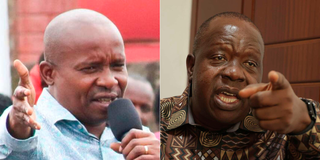
A fierce political duel has erupted between Deputy President Kithure Kindiki and former Interior Cabinet Secretary Fred Matiang'i over the controversial Ruaraka land saga, with both leaders trading sharp accusations that signal an early battle line ahead of the 2027 presidential race.
What began as sharp criticism at a United Democratic Alliance (UDA) aspirants’ forum at State House, Nairobi, has morphed into a broader duel over accountability, leadership and the legacy of the previous administration.
Speaking on February 4, Prof Kindiki accused Dr Matiang’i, the Jubilee presidential aspirant, of being part of a regime that left behind deep-rooted challenges in key sectors, particularly education.
In an address punctuated by cheers from party loyalists, the Deputy President dismissed the former CS’s criticism of the Kenya Kwanza administration as misplaced and hypocritical.
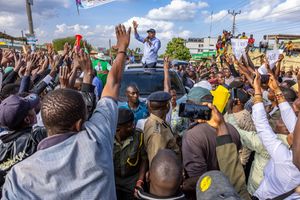
Deputy President Prof Kithure Kindiki addresses residents of Kiptangwanyi in Gilgil, Nakuru County on October 29, 2025.
Photo credit: Boniface Mwangi | Nation Media Group
“I want to tell those talking about education, I want to repeat the point the party leader said recently: we are trying to sort out the mess you created in the education sector. We shall put up a billboard saying… ‘Men at work. Don’t disturb us; we are fixing the problems that you left in the education sector,’” Prof Kindiki said.
According to the Deputy President, most of the problems currently facing the education sector—including challenges associated with the Competency-Based Curriculum (CBC), teacher shortages and classroom deficits—were manufactured during Dr Matiang’i’s tenure as Education Cabinet Secretary under former President Uhuru Kenyatta .
But it was Prof Kindiki’s reference to the Ruaraka land saga that drew the loudest applause during his address to the UDA delegates.
“The only track record when they were in office is selling land belonging to a school at Ruaraka. We know who sold the land; they should leave us alone. We shall shame them,” declared Prof Kindiki, in what many interpreted as a direct warning to the former CS.
The Ruaraka land saga centres on a disputed parcel of land on which two public schools—Drive-In Primary School and Ruaraka High School—stand.
During Dr Matiang’i’s tenure as Education CS, the government paid Sh1.5 billion as compensation to private developers who claimed ownership of the land. The payout triggered public outrage, investigations by parliamentary committees, and scrutiny from anti-corruption agencies over whether due process had been followed.
In response to Prof Kindiki’s latest broadside in an exclusive interview with Daily Nation, the former CS insisted that allegations of fraud should be pursued through legal channels rather than political rallies.
“If I know someone stole, I go to the DCI and say, here is the evidence—arrest him. I do not shout from a political platform,” he said in a recent interview. “If there was fraud, the law is clear. Recover the land. Recover the payment.”
His rebuttal underscores a broader argument that has become central to his presidential campaign; that Kenya’s crisis is not a shortage of laws or institutions, but a failure of leadership and management.
Now mounting a sustained bid for the presidency on a Jubilee Party ticket, Dr Matiang’i has framed his candidacy as a rescue mission for a country he says is crippled not by lack of resources, but by poor leadership.
“Kenya’s problem is not money. It is not climate change. It is not people or anything else,” he said. “Kenya’s problem is leadership.”
For nearly a decade, Dr Matiang’i served in key dockets—ICT, Education and Interior—under President Kenyatta. His tenure was marked by headline-grabbing reforms: overseeing digital migration in broadcasting, leading a crackdown on examination cheating, tightening betting regulation, and spearheading a multi-agency security framework.
Supporters credit him with restoring order and predictability in public administration. Critics, however, recall what they describe as an era of firmness that sometimes veered into heavy-handedness.
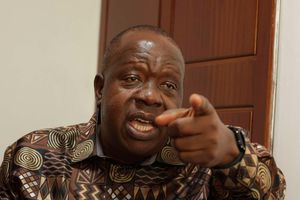
Jubilee Party deputy leader Fred Matiang'i during an interview at office in Nairobi on February 12, 2026.
Photo credit: Evans Habil | Nation Media Group
“Decisiveness and democratic practice are not mutually exclusive,” he said. “Being firm is standing with the truth.”
The Ruaraka saga is not the only controversy that has resurfaced as he campaigns. On claims linking him to the River Yala killings during his tenure as Interior CS, Dr Matiang’i has rejected personal responsibility, arguing that security decisions were made collectively within the National Security Council.
“I sat in the National Security Council with the then Deputy President William Ruto for ten straight years,” he said, referring to President William Ruto.
“If you go by ranking, he should actually be the one to answer that question, not even me.”
“I am the one asking for a public inquiry. I am ready to go and say what I know,” he said, dismissing the allegations as “political dishonesty.”
For Prof Kindiki and the Kenya Kwanza leadership, however, the focus remains on what they term as legacy issues inherited from the previous administration. The Deputy President has repeatedly argued that the current government is grappling with structural challenges left unresolved by its predecessors.
“What surprises us is that the people lecturing us about education, during their tenure, all those problems were manufactured when they were in office,” he said at the UDA forum. “The issues of curriculum, teacher shortage, and no classroom – all these problems were manufactured when they were in office.”
The remarks signal an increasingly combative political season, with both sides digging into their records to frame the narrative ahead of 2027.
Dr Matiang’i, for his part, insists that his record speaks louder than rhetoric.
Uhuru Kenyatta’s influence
“I have gone to ministries where people told me examination cheating was impossible to stop. I just went to work,” he said. “When I was in the security sector, people said we had no fuel, no capacity. Together with colleagues, we built a multi-agency program. Kenyans slowly started building confidence in the security sector.”
He recounts being sued 11 times over reforms he implemented, from digital migration to regulatory overhauls. Each time, he says, the courts upheld his decisions.
“I did not write new laws. I implemented existing laws,” he said. “When people disagreed, I told them: let’s meet in court. Eleven times they went. Eleven times the court said I was right.”
To him, that record demonstrates both decisiveness and respect for the rule of law.
“I am not asking Kenyans to elect me to revise the Constitution. We have sufficient laws. I am asking to be elected to work within the existing framework.”
As Jubilee’s presidential candidate, Dr Matiang’i must also navigate claims that his candidacy is an extension of former President Kenyatta’s influence. He dismisses this as political gossip.
“Uhuru retired from the presidency. What is he bidding for?” he asked. “We are practicing multi-party democracy. Parties present candidates. I happen to be the one Jubilee is presenting.”
Within the broader United Opposition framework, he says Jubilee is open to discussions aimed at fronting a single presidential candidate but is preparing independently.
“Parties are made to converse, campaign and seek to acquire power,” he said. “We are preparing for a presidential election. We are not chancing on other people’s goodwill.”
He has also downplayed the entry of former Chief Justice David Maraga into the race on a United Green Movement Party ticket.
“I can’t pass judgment on someone else’s interest in the service of the country. I have no more rights than they do. I am a citizen like they are. It is their absolute right to do whatever they want to do, whatever the Constitution allows them to do. They have a right to offer themselves,” he said.
At the heart of Dr Matiang’i’s campaign is a critique of what he calls Kenya’s “politics of entertainment”—a culture he argues has overshadowed effective governance.
“The last six decades of our independence, we have done more politics than focused on our country,” he said. “We are not competing against ourselves. We are competing against the world.”
He has accused President Ruto of citing countries such as Singapore and Malaysia as development models while engaging in endless political maneuvering at home.
“Those countries were managed,” he said. “Leadership that is keen and focused on effective management and delivery of services—that is what Kenya needs.”
On corruption, he says; “My children will not be engaged in public tenders. I will not do business with the government.” “Nothing beats exemplary leadership. You cannot tell people to stop doing what you do every day.”
While Dr Kindiki has threatened to “expose” and “shame” the former CS over Ruaraka land saga, Dr Matiang’i maintains that the matter should be resolved through legal processes if evidence exists.
“If there was fraud, the law is clear. Recover the land. Recover the payment,” he said.