As the race toward the 2027 General Election gathers momentum, President William Ruto is placing his biggest political bets on two mega infrastructure projects traversing Kenya's western corridor — the Sh110 billion Rironi-Mau Summit Highway and the more than Sh500 billion Naivasha-Kisumu-Malaba Standard Gauge Railway (SGR) extension.
Coming at a time when the Kenya Kwanza administration is battling economic discontent, political realignments and an energised opposition led by former Deputy President Rigathi Gachagua, the projects are increasingly being viewed not only as transformative development undertakings but also as strategic political investments aimed at consolidating support across the vote-rich Rift Valley, Western and Nyanza regions.
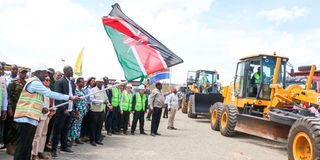
President William Ruto addresses residents of Mau Summit in Nakuru County where he made his third launch of the dualling of the Rironi-Mau Summit highway on November 28, 2025.
Photo credit: Boniface Mwangi | Nation Media Group
For President Ruto, whose re-election prospects will largely depend on maintaining his Rift Valley base while making inroads into opposition strongholds, analysts say that the two projects offer an opportunity to campaign on tangible development achievements rather than political promises.
“The significance of the regions targeted by the projects cannot be overstated,” argues political analyst Dismas Mokua.
According to Independent Electoral and Boundaries Commission (IEBC) data from the 2022 General Election, counties in the former Rift Valley Province, stretching from Turkana, West Pokot, Samburu, Trans Nzoia, Uasin Gishu, Elgeyo-Marakwet, Nandi, Baringo, Laikipia, Nakuru, Narok, Kajiado, Kericho and Bomet, accounted for 5.35 million registered voters, representing about 24 per cent of Kenya's 22.1 million voters then.
The region remains President Ruto's traditional political base and it is expected to play a decisive role in his re-election bid.
Beyond the Rift Valley, the projects extend into Western and Nyanza regions, two key areas that voted for the late ODM leader Raila Odinga in the last election but have increasingly emerged as battlegrounds ahead of the 2027 General Election.
The four counties that make up the core of Western Kenya—Kakamega, Bungoma, Busia and Vihiga—had a combined 2.22 million registered voters in 2022.
The region has recently become the focus of intense political activity, with both the Kenya Kwanza administration and the Rigathi Gachagua-Kalonzo Musyoka-led United Opposition seeking to win over voters.
Meanwhile, the six counties of the former Nyanza Province—Kisumu, Siaya, Homa Bay, Migori, Kisii and Nyamira—recorded 3.27 million registered voters.
Combined, Rift Valley, Western and Nyanza boast approximately 10.84 million voters, nearly half of Kenya's entire electorate.
The ongoing dualing of the Rironi-Mau Summit highway at Kikopey in Gilgil, Nakuru County on December 18, 2025.
Photo credit: Boniface Mwangi | Nation Media Group
The sheer size of this voting bloc underscores why the Rironi-Mau Summit Highway and SGR extension have become central pillars of Dr Ruto's political messaging as he seeks a second term in office.
With Mr Gachagua and opposition leaders recently conducting political tours across Western Kenya in an attempt to loosen Dr Ruto's grip on the region, the scramble for the area's votes has intensified.
“The President and his allies appear determined to counter the opposition narrative through high-impact infrastructure projects whose benefits are expected to be visible before Kenyans return to the ballot,” adds Mr Mokua.
The first pillar of that strategy is the Rironi-Mau Summit Highway, a project that successive administrations discussed for decades but failed to implement.
President William Ruto launches the dualling of 175km Rironi-Mau Summit road at Mau Summit in Nakuru County on November 28, 2025.
Photo credit: Boniface Mwangi | Nation Media Group
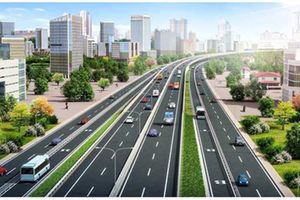
Last November, President Ruto officially launched Phase One of the Nairobi-Nakuru-Mau Summit highway expansion, a 139-kilometre section stretching from Nairobi to Gilgil and Naivasha.
The road, being implemented through a Public Private Partnership between China Road and Bridge Corporation and the National Social Security Fund, is expected to transform one of East Africa's busiest transport corridors.
Launching the project, the Head of State framed it as more than a transport initiative.
"This road is more than a highway; it is a gateway to prosperity, unity and transformation," he declared.
The President argued that the project would unlock markets, ease movement of goods and passengers, improve safety and strengthen Kenya's role as the gateway to Eastern and Central Africa.
The road directly serves constituencies across Kiambu, Nakuru, Baringo, Kericho, Nandi, Kakamega, Bungoma and Busia, areas that collectively hold millions of voters and form the primary transport route linking Nairobi to Western Kenya and Uganda.
On Monday, Deputy President Kithure Kindiki sought to market the project as a symbol of Kenya Kwanza's development credentials.
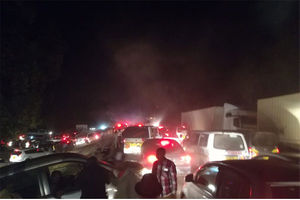
Speaking after an inspection tour of the project, Prof Kindiki said the expanded highway would eliminate notorious traffic jams and deadly accidents that have characterized the route for decades.
"Soon this expansive carriageway will sort out the frustrating traffic snarl-ups, the fatal road accidents and the disappointment of lost travel time. It will open our economy, expand opportunities, save human life and enhance trade within Kenya and Eastern and Central Africa," the DP said.
Deputy President Kithure Kindiki.
Photo credit: File | Nation Media Group
Prof Kindiki further credited the project's implementation to President Ruto's determination. He said that while discussions about expanding the road date back to the 1980s, the current administration took action and began the construction.
The second and perhaps even more politically consequential undertaking is the Naivasha-Kisumu-Malaba SGR extension.
The railway project, which had stalled for nearly six years because of funding challenges, was revived by the President Ruto’s administration and officially launched earlier this year.
The railway will stretch more than 370 kilometres from Naivasha through Narok, Bomet, Kericho, Kisumu, Siaya, Kakamega and Busia before reaching the Uganda border at Malaba.
The corridor cuts through counties that have historically voted overwhelmingly for the opposition ODM under the late Raila.
At the launch ceremony, the President openly linked the railway to economic transformation in Western Kenya.
"The SGR extension will position Kenya as the regional trade and logistics hub, linking Uganda, Rwanda, Burundi, South Sudan and the Democratic Republic of Congo to the Port of Mombasa while unlocking the economic potential of Western Kenya," he said.
President William Ruto launches the landmark construction of the Naivasha-Kisumu-Malaba Standard Gauge Railway line in Narok on Thursday, March 19, 2026.
Photo credit: PCS
He argued that the railway would connect Nairobi's industrial corridor with the agricultural heartland of Narok, Kericho and Bomet before reaching Kisumu, which he described as a commercial gateway to the Great Lakes region.
Beyond the economic arguments, political observers note that the symbolism surrounding the project may be just as important as the infrastructure itself.
For decades, many residents of Nyanza have complained that major national infrastructure projects disproportionately benefited other regions.
The arrival of the SGR in Kisumu, coupled with the ongoing modernisation of the Port of Kisumu, allows President Ruto to present himself as a leader willing to invest in regions that have traditionally opposed him politically, says ODM leader Dr Oburu Oginga.
Mr Mudavadi described the SGR as a strategic regional project that would deepen East African integration, reduce transport costs and strengthen economic ties among member states.
His endorsement provided an important political boost for President Ruto in a region where support cannot be taken for granted.
He welcomed the railway extension as a long-awaited investment in Nyanza, saying it would strengthen Kisumu's position as a transport and logistics hub while stimulating trade and economic growth throughout the Lake Region.
“Dr Oginga’s support for the flagship government project in Kisumu offered a powerful political message. It suggested that despite persistent political competition, sections of the ODM establishment are willing to work with the government on development matters,” says advocate Chris Omore.
For president Ruto, Mr Omore adds, that cooperation helps reinforce the narrative emerging from his working relationship with ODM Party—a relationship that has significantly altered Kenya's political landscape.
The President has repeatedly emphasised that the railway is not simply about transport but about securing Kenya's place as the logistical backbone of East and Central Africa. "This project is about the future of trade in the Great Lakes region," he said.
According to government figures, cargo throughput at the Port of Mombasa reached 7.37 million tonnes in the first half of 2025, with nearly 70 percent destined for Uganda.
By reducing freight costs and cutting transit times from Mombasa to Uganda and beyond, the government argues that the SGR will increase competitiveness and stimulate economic growth across the western corridor.
Mr Omore argues that infrastructure has historically played an important role in shaping voter perceptions, particularly when projects are visible and directly affect livelihoods.
"The challenge for any incumbent is converting infrastructure spending into political capital," he says. "If voters can see roads being built, railway stations coming up and jobs being created before 2027, then those projects become campaign assets."
Critics argue that infrastructure projects often take years to produce economic benefits and that voters may be more concerned with the cost of living, unemployment and taxation than mega construction projects.
Still, the administration appears keenly aware of the political value of delivering visible milestones before campaigning begins in earnest.
President Ruto recently announced that the Rironi-Naivasha section of the highway would be completed earlier than anticipated, with portions expected to be ready by August, while the entire stretch could be delivered ahead of schedule.
Similarly, the SGR extension is expected to be substantially advanced by mid-2027, ahead of the August poll.