For many years, motorists and travellers using the Nairobi–Nakuru–Eldoret highway have endured torturous traffic jams—sometimes lasting more than 10 hours.
It is common for travellers to spend nights along various stopping points such as St Mary’s, Gilgil Weighbridge, Delamere Naivasha and between Salgaa and Nakuru City.
The busy highway, which cuts through Nakuru City, is especially prone to gridlocks during school opening and closing seasons, and festive periods.
Heavy traffic jam along the Naivasha-Nakuru highway. It was occasioned by a Friday night accident near Gilgil town.
Photo credit: Macharia Mwangi | Nation Media Group
Many road users have repeatedly blamed the Kenya National Highways Authority (Kenha) for congestion along the critical transport artery linking Nairobi to Western Kenya and the neighbouring countries of Uganda, Rwanda and the Democratic Republic of Congo.
However, the long-standing nightmare could soon come to an end.
President William Ruto is scheduled to officially launch the dualling of the 175-kilometre Rironi–Nakuru–Mau Summit highway on Friday, November 28.
Kenya National Highways Authority (Kenha) officials, led by Corridor B Director Kibet Terigin, Presidential Protocol team, together with CRBC and Shandong road contractors inspect project launching sites for the dualling of the Rironi - Mau Summit (A8) road on November 26, 2025, ahead of the official launch by President William Ruto on Friday.
Photo credit: Boniface Mwangi | Nation Media Group
“President William Ruto has confirmed he will be in Nakuru this Friday to launch the construction of the Rironi–Nakuru–Mau Summit highway. This will mark a huge breakthrough for one of the most congested stretches of the Northern Corridor,” said Nakuru Governor Susan Kihika.
The upgrade will boost trade, ease movement end congestion and put to rest years of agonising delays and frequent fatal accidents.
After years of waiting, the multi-billion-shilling project will finally kick off, offering hope of relief for motorists and businesses long affected by traffic disruption along the corridor.
The State has split the project into two contracts which will be undertaken by two firms. President Ruto is expected to break ground for both the Rironi–Mai Mahiu–Naivasha and Rironi–Naivasha–Nakuru–Mau Summit dualling segments.
The A8 section stretches 174.9km from Rironi Interchange to the Mau Summit turn-off through Nakuru City, while the A8 South section runs 58km from Rironi to Naivasha via Mai Mahiu.
In his recent State of the Nation address, President Ruto announced that China Road and Bridge Corporation (CRBC), a subsidiary of China Communications Construction Company, had been awarded the contract.
News of the launch has sparked excitement among travellers, transporters and business owners. Nakuru City Manager Gitau Thabanja attributes frequent jams to the low capacity of the existing two-lane highway and outdated design.
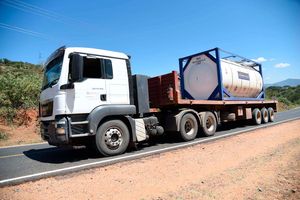
“Accidents involving heavy commercial trucks worsen congestion along the route used to transport goods to Western Kenya and neighbouring countries,” he said.
Mr Thabanja noted that new interchanges at Kunste, Njoro, Eveready Kibunja and other points will ease movement within Nakuru City and significantly cut waiting time.
The highway has long been associated with deadly accidents in notorious black spots, making the upgrade a critical safety intervention.
Businessman James Kariuki says traffic jams have for years increased fuel consumption, delayed deliveries and pushed up operating expenses.
“Traffic jams stall businesses and cause huge losses. Last December, I lost goods worth Sh100,000 after a truck was stuck at Gilgil Weighbridge,” he said.
Governance expert Dr Peter Mbae estimates that the economy loses billions annually in wasted time, fuel and productivity. A 2012 IBM study revealed that Kenya loses Sh50 million every day due to time lost in traffic on the Nairobi–Nakuru route.
According to Kenha, which will oversee the upgrade, the construction will include widening the existing two-way single carriageway into a four-lane carriageway from Rironi to Naivasha and six lanes from Naivasha to Nakuru City, to ease congestion and enhance connectivity across the corridor that links Nairobi to Western Kenya.
The stretch from Nakuru to Mau Summit will have two or three lanes, with a barrier to enhance lane discipline.
Trucks parked in Mau Summit on the Eldoret-Nakuru road on June 25, 2021. The political undercurrents during procurement for the construction of the highway were so strong that evaluation became marred by controversy and claims of infiltration by connected middlemen.
Photo credit: File | Nation Media Group
The project will also contain infrastructural improvements, including upgrade of existing interchanges and construction of new ones, reinforcement of embankments and construction of retaining walls where necessary as well as installation of street lighting and high mast lighting.
The upgrade will further involve installation of wildlife and livestock crossing points, provision of bus bays,shelters and truck lay-byes as well as construction of underpasses and overpasses.
The upgraded highway will bring relief to motorists within Nakuru City and those traveling to Western Kenya.
A cabinet meeting in March had also agreed that the upgrade of the road was to begin on June 1, 2025, and be completed in 24 months.
Traders go about their business on the Nakuru-Nairobi road reserve at Heaven Gates on November 26, 2025. President William Ruto is set to launch the dualling of the highway on Friday.
Photo credit: Boniface Mwangi |Nation Media Group
However, the construction has been delayed on what government said were key stages of the project, that must be followed, according to the Public Private Partnership (PPP)Act and the law.
The highway is one of the largest Public Private Partnership (PPP) projects in Eastern Africa. Although users will pay toll fees, Kenha says alternative routes will be available for those who opt out.
The PPP committee has selected CRBC and the National Social Security Fund Consortium as the preferred project proponents after cancelling an earlier Sh160 billion deal with French contractors on affordability grounds.
In September, Kenha held public participation sessions ahead of implementation.
"Users of the road will be required to pay toll fees determined through an approved tariff framework, with rates regulated of ensure affordability, transparency and sustainability, while enabling the Private Partner to recover investment and maintenance costs during the concession periods. However, alternative roads will be identified from Rironi to Mau -Summit for use by the public, who may not want to pay and use the road," stated Mr Luka Kimeli, the acting director-general for Kenha.
During a recent tour of Nakuru, President Ruto revealed the project will cost between Sh170 billion and Sh200 billion, higher than the initial estimate.
“Construction of the Nairobi–Nakuru–Mau Summit highway will begin in November 2025,” he confirmed, adding that government plans to extend the upgrade to Kericho, Kisumu, Malaba and Eldoret.
The highway currently carries an estimated 20,000 vehicles daily, a figure projected to grow by 4 percent annually. A World Bank–funded feasibility study conducted in 2015 and updated in 2021 recommended expansion to match rising traffic demand.
The upgrade is expected to transform movement along the Northern Corridor, improve cargo transport efficiency and stimulate economic growth in major towns along the route.