The Cabinet has approved billions of shillings to complete some ongoing infrastructure projects with eyes on the elections next year.
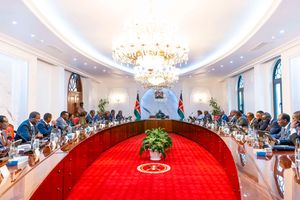
In a Tuesday Cabinet meeting chaired by President William Ruto, the country’s top decision-making organ endorsed major strategic investments to strengthen public services and accelerate economic growth.
Politically, the move by the Cabinet is seen as part of the Kenya Kwanza administration’s efforts to demonstrate achievements before voters go to the polls on August 10, 2027. Completed projects have the potential to influence voter perceptions.
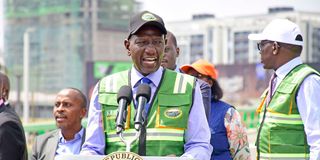
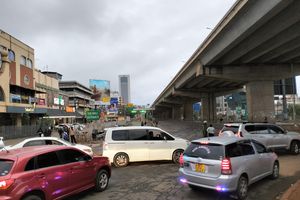
President William Ruto (centre) with Cabinet Secretary for Transport Davis Chirchir (right), Spanish Ambassador to Kenya Jaime Alejandro Moreno Bau (second right), Nairobi Governor Johnson Sakaja (second left), Dagoretti South MP John Kiharie during the official commissioning of the Ngong Road–Naivasha Road Junction Flyover on June 29, 2026.
Photo credit: Billy Ogada | Nation Media Group
A review of the Kenya Kwanza manifesto shows that some of the pre-election promises have been broken while others have been abandoned altogether. Some have, however, been fulfilled.
President Ruto rode to power on lofty promises and by projecting himself as the champion of the majority poor. He promised to create jobs for millions of unemployed youth and prioritise the needs of low-income earners.
The administration has touted achievements in the housing programme, provision of subsidised fertiliser and introduction of a new healthcare system, among other pet projects.
Some of the priority allocations by the Cabinet include Sh26 billion for the Judicial Performance Improvement Project Phase II, Sh16.6 billion to complete the Mwache multipurpose dam and additional funding for the 67km Modogashe-Samatar and 76km Rhamu-Mandera sections of the 750km Isiolo-Mandera corridor.
The Cabinet also approved Sh4.5 billion for the Mother and Child Lifeline Initiative implemented in partnership with Amsons Group to build 10 Level 4 and Level 5 mother and child hospitals in 10 counties.
It also endorsed Sh5.8 billion for the Leather Value Chain Development Support Project designed to revive leather manufacturing. The project also seeks to expand value addition, create up to 120,000 jobs and unlock the sector’s estimated Sh120 billion potential.
With the polls barely 13 months away, the approvals and additional funding seek to demonstrate that campaign promises are being fulfilled.
Critics have, however, questioned the timing and whether they will be fully implemented by the time of the polls.
Construction workers at Mwache Multipurpose Dam Project in Samburu, Kwale County on May 30, 2025.
Photo credit: File | Nation Media Group
In the Cabinet dispatch, the government said that completion of the Mwache multipurpose dam project in Kwale will unlock one of Kenya’s largest water infrastructure investments. Once complete, the Cabinet said, the dam will supply 186,000 cubic metres of water daily to Mombasa and Kwale counties, easing chronic water shortages.
On the Modogashe-Samatar and Rhamu-Mandera projects, the Cabinet said it will improve connectivity, trade and access to essential services across Northern Kenya. The project will also strengthen regional integration in the Horn of Africa, it said.
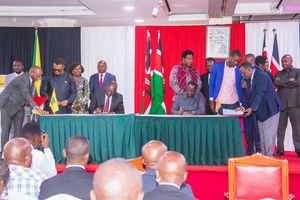
Further, the Cabinet endorsed petroleum cooperation agreements with Rwanda and South Sudan, in what it termed a major vote of confidence in Kenya’s government-to-government fuel import framework.
The Cabinet said the agreements will enable both countries to import bulk refined petroleum products through Kenya’s infrastructure, thus increasing fuel transit through the Port of Mombasa, the Kenya Pipeline Company network and the Northern Corridor.
This, it said, will boost regional energy integration, generating additional revenues from transport, storage and logistics services.
In healthcare, the Cabinet endorsed the Kenya-United States Health Cooperation Framework to sustain collaboration in combating HIV, malaria, tuberculosis and emerging infectious diseases, while strengthening the transition to a more self-reliant health system.
“The framework will support disease surveillance, laboratories, digital health systems, medical supplies and the gradual integration of more than 13,000 US-supported frontline health workers into Kenya’s public health workforce,” it said.
The Cabinet also adopted the National Cotton, Textile and Apparels Policy to revitalise cotton farming, expand textile manufacturing, attract private investment and boost Kenya’s competitiveness in regional and global markets.