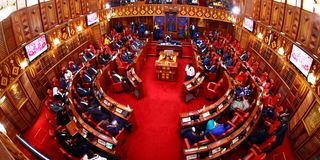
A proposal by senators to expand the mandate of the Senate has sharply divided opinion, with critics warning that the far-reaching changes could raise constitutional and legal challenges.
The Constitution of Kenya (Amendment) Bill, 2025, co-sponsored by Majority Leader Aaron Cheruiyot and Minority Leader Stewart Madzayo, seeks to significantly strengthen the Senate’s legislative and oversight powers.
Kericho Senator Aaron Cheruiyot.
It was first read in the Senate on August 7, 2025, before being referred to the Justice and Legal Affairs Committee. The Bill is scheduled for second reading on November 6, 2025.
The committee, chaired by Bomet Senator Hillary Sigei, will, in the meantime, hold hearings across all 47 counties to rally support. Senators argue that the Bill would elevate the House to the stature of a true upper chamber, comparable to the US Senate.
If passed, the Bill would allow the Senate to approve the national budget, vet constitutional office holders and veto decisions by the National Assembly.
It also proposes giving senators power to originate legislation, approve or reject the appointment of State officers, and participate in their removal from office.
Currently, the Senate’s mandate is largely restricted to county matters, with most Kenyans viewing it as underpowered. The proposed changes would grant both Houses equal authority to initiate Bills, with allocation measures beginning in the Senate and appropriation Bills originating in the National Assembly. Both would be subject to amendment and possible veto by the initiating House.
Kilifi Senator Stewart Madzayo.
Photo credit: File | Nation Media Group
The Bill further seeks to amend Article 115 of the Constitution to require both Speakers of Parliament to jointly submit Bills for presidential assent. It also proposes changes to Article 109, allowing any House to introduce legislation, save for money Bills that must originate in the National Assembly. However, the County Assemblies Forum (CAF), an umbrella body of MCAs, has opposed plans to extend Senate oversight to county revenue. Chairperson Seth Kamanza warned that the proposal risks undermining county assemblies’ authority.
“Without robust inter-chamber cooperation and political goodwill, these changes could paralyse law-making, particularly in budget cycles, and undermine Parliament’s efficiency,” he said.
Law Society of Kenya President Faith Odhiambo.
Photo credit: Lucy Wanjiru | Nation Media Group
The Law Society of Kenya (LSK), in contrast, welcomed the amendments, saying they would end recurring disputes between the two Houses. LSK President Faith Odhiambo said the reforms would allow most Bills to originate in either House, promote legislative balance, and expand the Senate’s role in budget-making.
“The amendments, if enacted, have the potential to resolve long-standing jurisdictional disputes,” Ms Odhiambo said. But she warned that reliance on super-majority vetoes could cause legislative deadlock and urged the creation of a mandatory mediation process to avert stalemates.
The Commission on Revenue Allocation (CRA) opposed several provisions, warning of duplication and bureaucratic overlap. CRA chief executive Roble Nuno said extending vetting powers to both Houses could slow down government appointments.
“This Bill expands the Senate’s mandate in legislation, oversight and appointments. This may create unnecessary bureaucracy and duplication of roles,” he said.
The Institute of Economic Affairs (IEA) also raised concerns, noting that, while the Bill addresses gaps in the current framework, it risks creating new conflicts. IEA argued that overlapping mandates could weaken institutional independence, escalate costs, and fuel stalemates.
The think tank cautioned against removing the Speaker’s concurrence mechanism under Article 110 without replacing it with a robust dispute-resolution process. “Retain Article 110 but amend it to eliminate past ambiguities,” IEA said. “A revised version should clearly define county-related Bills and establish a transparent mediation process between the two Speakers.”