More than 37 million Tanzanians head to the polls today to decide the future of President Samia Suluhu Hassan. Though this is her first presidential race, she is defending the seat she inherited from John Pombe Magufuli, who died in March 2021.
While the election is historic—Tanzania could elect its first female president—it is also clouded by competing narratives, especially regarding the fairness of the campaign and the integrity of the electoral process.
Justice (Rtd) Jacobs C.M. Mwambegele, Chairman of the Independent National Electoral Commission of Tanzania (INEC), struck an optimistic tone yesterday, urging voters to turn out and lauding the mature campaigns. “I commend all Tanzanians for the maturity shown throughout the campaign period. To a large extent, campaigns were conducted peacefully, and where minor hitches occurred, local teams addressed them successfully,” he said in a message to voters. However, opposition groups and rights watchdogs contend that peaceful campaigns do not necessarily guarantee fairness.
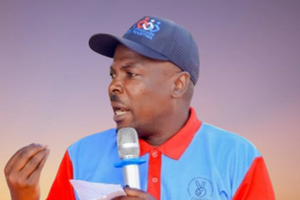
Chadema party Deputy Chairperson John Heche.
Photo credit: Pool
“For weeks, I’ve been in total isolation. Fellow inmates sentenced to death were removed; I’ve been left completely alone,” Lissu said. “This is a blatant violation of human rights and breaches the UN Standard Minimum Rules for the Treatment of Prisoners.”
Activists argue that such treatment of opposition figures undermines the credibility of the election. On Tuesday, human rights advocates in Nairobi distanced themselves from the process, accusing the Tanzanian government of silencing dissent and blocking international observers.
Tanzania invited observers from the African Union, East African Community, and Southern Africa Development Community, all who sent delegates.
Western embassies in Dar es Salaam indicated they would monitor the polls. However, activists led by Martha Karua of the People’s Liberation Party (PLP) in Kenya claimed the outcome was predetermined.
“Tanzania doesn’t have an election—it has a crackdown disguised as democracy. Injustice anywhere is a threat to justice everywhere,” Karua said. She had previously been deported from Dar es Salaam while attending Lissu’s trial.
Activists also claimed international media had been barred from entering Tanzania and local licenses revoked.
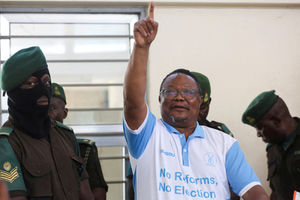
Tanzanian opposition leader and former presidential candidate of CHADEMA party Tundu Lissu gestures to his supporters as he arrives at the Kisutu Resident Magistrate Court in Dar es Salaam, Tanzania May 19, 2025.
“Samia Suluhu is preparing for her coronation. Her only opposition is her shadow. All major challengers have been detained or disqualified by INEC,” Karua added.
Pressure has mounted on Tanzania to uphold human rights and ensure free and fair elections. The Vatican, US Senate, civil society groups, and international observers have voiced concern over rising political repression and violence ahead of today’s vote.
Between April and October 2025, three Catholic priests—Fr Charles Kitima, Fr Jordan Kibiki, and Fr Camillus Nikata—were attacked or disappeared under suspicious circumstances. In each case, police issued statements portraying the clergy as morally compromised: one allegedly drunk, another faking abduction, and the third abandoned by a lover.
Following the brutal attack on Fr Kitima on April 30, Bishop Wolfgang Pisa, President of the Tanzania Episcopal Conference (TEC), questioned the police narrative that Kitima had been drinking at the time.
“There is no bar at the site—it’s a restaurant,” Pisa said. “The claim that he was drinking from 7 to 10pm is misleading.”
Supporters of Othman Masoud, Tanzanian opposition party ACT Wazalendo's presidential candidate, attend his final campaign rally ahead of the upcoming general elections, at the Kibanda Maiti ground in Zanzibar, Unguja, Tanzania October 26, 2025.
Photo credit: Reuters
Though police launched an investigation and promised legal action, Bishop Pisa expressed disappointment at the lack of progress.
“We strongly condemn this evil act aimed at ending Fr Kitima’s life. In a country governed by law, the perpetrators should have been apprehended by now,” Pisa said. “Criminal gangs threaten not only citizens but also leaders. TEC is conducting its own investigation and will release a full report.”
“May Tanzania be blessed with strong systems, just laws, and institutions that protect all citizens. Let peace, justice, truth, and democracy prevail,” he concluded.
The attacks on clergy have drawn condemnation from local and international organisations. US Senator Jim Risch, Chair of the Senate Foreign Relations Committee, said:
“Christian clergy in Tanzania are being targeted for speaking out against President Hassan’s regime, which abducts critics, tortures detainees, and jails opponents to silence dissent. This crackdown threatens Tanzania’s stability and risks pushing the country closer to China.”
Human Rights Watch’s World Report 2025 criticised Tanzanian authorities for escalating crackdowns on political opposition, including arbitrary arrests, disappearances, and restrictions on free expression.
Amnesty International echoed these concerns in its May 23 report, “Unopposed, Unchecked, Unjust: ‘Wave of Terror’ Sweeps Tanzania Ahead of 2025.” The report documented enforced disappearances, torture, and extrajudicial killings. Amnesty urged President Samia to publicly support human rights defenders and civil society organisations, ensuring they can operate freely without fear of reprisals.
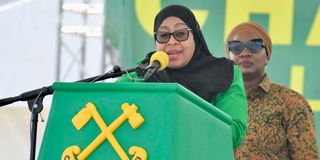
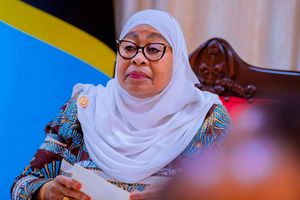
Tanzanian President Samia Suluhu.
Photo credit: Photo I Pool
“We recommend urgent repeal and review of repressive laws like the Media Services Act, Cybercrimes Act, and Public Order Act to align with Tanzania’s constitution and international obligations,” said Tigere Chagutah, Amnesty’s regional director.
“Authorities must end this campaign of repression and drop politically motivated charges against those detained for expressing political or religious views, including opposition leader Lissu.”
In response, government spokesperson Gerson Msigwa denied allegations of torture and enforced disappearances.
“The Government of Tanzania does not condone extrajudicial killings or disappearances. Any reported incident is subject to thorough investigation. The judiciary is independent, and all individuals are guaranteed fair trial rights under domestic and international law,” Msigwa said. He added that: “Tanzania remains committed to democratic governance, the rule of law, and human rights before, during, and after the 2025 elections. We welcome dialogue with stakeholders acting in good faith and urge institutions to verify facts before publishing misleading information.”