The High Court has dismissed a petition by two political allies of former Deputy President Rigathi Gachagua to stop police investigations into allegations that they planned, mobilised or financed the June 2024 Gen-Z protests.
Justice Gregory Mutai ruled that MPs James Gakuya (Embakasi North) and Benjamin Gathiru alias Mejja Donk (Embakasi Central) failed to prove that the investigations violated their constitutional rights or that they had been unlawfully arrested or detained.
The court also rejected their bid to block any future arrest or prosecution in relation to the said protests, saying they had not demonstrated abuse of investigative powers.
“An apprehension of arrest, however sincerely held, is not evidence that an arrest would be unlawful,” Justice Mutai said.
The MPs moved to court after being summoned by the Directorate of Criminal Investigations (DCI) on July 31, 2024, over allegations linked to the anti-government protests.
Former Deputy President Rigathi Gachagua (left) and Embakasi Central MP Benjamin Gathiru alias Major Donk attending a church service at PCEA Mwiki church in Kasarani on April 6, 2025.
Photo credit: Lucy Wanjiru | Nation Media Group
The DCI was investigating allegations that the MPs and other people had helped plan, mobilise or finance violent elements of the protests. The DCI later recommended charges against five people, including the two MPs.
It proposed charges like conspiracy to commit a felony and directed a separate inquiry into money laundering and financial crimes.
The petitioners had earlier secured temporary court protection following an order barring the DCI from arresting or detaining them over the allegations.
The MPs said they were held for one day, interrogated under threats and faced possible arrest and prosecution. They relied on constitutional protections covering equality, security of the person, association and arrested persons.
However, the court found that their evidence did not establish unlawful detention. It noted that Mr Gakuya’s affidavit said they were held incommunicado and interrogated under threats, but did not identify who threatened them, what was said or whether they were prevented from leaving.
A police officer, Martin Munene, in a replying affidavit for the respondents, gave a different account. He said the MPs appeared at DCI offices with advocates, recorded statements voluntarily and attended on dates they had proposed.
The MPs filed no further affidavit to rebut that evidence. Justice Mutai found their attendance consistent with compliance with the summons.
“The petition says that the petitioners honoured DCI summons and visited their premises. That is the language of voluntary attendance, not arrest,” he said.
“There is no evidence that they were arrested, placed in cells, booked, or prevented from leaving,” the judge added.
The MPs also complained about a second summons requiring them to appear on August 1, 2024. Justice Mutai said Section 52 of the National Police Service Act did not limit investigators to one interview where investigations remained active.
“A second summons in an ongoing investigation is not on its own evidence of harassment, nor does the petitioners’ parliamentary schedule exempt them from lawful summons. The unchallenged evidence is that the Directorate allowed them to propose dates that did not interfere with their legislative work. This, in this court’s view, does not constitute harassment,” Justice Mutai said.
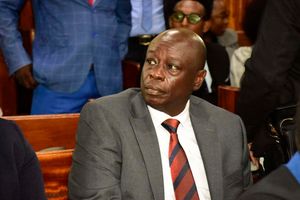
Embakasi North Member of Parliament James Mwangi Gakuya.
Photo credit: Dennis Onsongo | Nation Media Group
The court said that their parliamentary schedule did not exempt them from lawful summons, while investigators had allowed them to propose dates that would not interfere with their legislative work.
On equality, Justice Mutai found that the petitioners had not identified another person or class treated differently from them. They also failed to show that people suspected of similar conduct had been left alone.
“Article 27 (1) of the Constitution guarantees equality before the law. It cannot be read as entitling holders of elective office to be excused from investigative processes that apply to every other person,” he said.
The MPs raised parliamentary privilege in their submissions. Justice Mutai said the claim had not been properly pleaded and could not be introduced through submissions because respondents had no opportunity to answer it with evidence.
“Parliamentary privilege does not shield a member from investigations of conduct outside parliament, such as the alleged planning or funding of violent protests,” Justice Mutai said.
The court rejected the claim that the summons interfered with their freedom of association, finding no evidence that questioning prevented political party participation.
The court said investigations into crime are a constitutional and statutory function of the National Police Service. Section 35 of the National Police Service Act gives the DCI responsibility for investigating serious crime, while Section 52 allows police to summon people believed to have relevant information.
Justice Mutai found no evidence of malice, ulterior purpose, harassment, intimidation or excess of authority. He said the allegations concerned protests accompanied by looting, arson and loss of life.
“The directorate is under constitutional and statutory duty to investigate who planned and financed the violence. Under Article 245(4) of the Constitution of Kenya, 2010, no person may direct the Inspector-General on investigation of any particular offence,” he said.
“The petitioners have shown no abuse of power. They have not shown malice or ulterior purpose or any irregularity in the manner of the investigation,” Justice Mutai said.
He also considered the request for a permanent injunction barring arrest, charging or prosecution. The DPP had stated, without contradiction, that no file had been submitted to him and that he was not seized of the matter.
“No decision to charge exists,” Justice Mutai said. He found that stopping a prosecution that had not been contemplated would require the court to decide a hypothetical question.
Justice Mutai concluded that the MPs had not proved that their constitutional rights had been violated or threatened with violation by the State.