The rejection of new safety regulations for public, private and school motor vehicles by the Senate has slammed the brakes on the Ministry of Transport from proceeding with their implementation
The new regulations were developed by the National Transport and Safety Authority (NTSA) to impose stricter rules as part of the measures to bring sanity to the roads and tame avoidable accidents.
However, the Senate Committee on Delegated Legislation rejected three of the four regulations submitted by NTSA.
The regulations included Traffic (Motor Vehicle Inspection) Rules, 2026 (Legal Notice No. 13 of 2026), National Transport and Safety Authority (Operation of Commercial Vehicles) Regulations, 2026 (Legal Notice No. 14 of 2026) and the Traffic (School Transport) Rules, 2026 (Legal Notice No. 11 of 2026)
While the National Assembly passed all four regulations in May this year and communicated them to the Ministry of Transport for onward implementation, the Senate passed only one and rejected three.
The move now leaves the ministry confused on how to proceed with the implementation of the regulations.
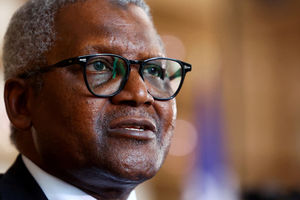
Davis Chirchir.
Photo credit: Dennis Onsongo | Nation Media Group
The only regulation passed by both Houses is the Traffic (Drink-Driving) Rules, 2026 (Legal Notice No.12 of 2026
Following the Sunday accident on the Nairobi-Mombasa highway that killed 24 people, Transport Cabinet Secretary David Chirchir said the ministry would engage the Judiciary, National Assembly and Senate to address implementation challenges relating to the Commercial Vehicle Regulations, Vehicle Inspection Regulations 2026 and School Transport Regulations 2026
However, correspondence seen by the Nation between the National Assembly and the ministry shows that the House passed the regulation on May 15, 2026 and communicated to the ministry its decision.
“At its sitting held on Friday May 15, 2026, the committee on Delegated Legislation considered and satisfied itself that the following the regulations are in accordance with the constitution, the Statutory Instruments Act (Cap2A), section 105B (3), 119(1) and 119(g) of the Traffic Act, (Cap 403) and Section 54 of the National Transport and Safety Authority Act (Cap 404),” reads the letter from the National Assembly.
“This is therefore to convey the committee’s resolutions in accordance with the Statutory Instruments Act (Cap2A) and Standing Order 210 (4) (a) of the National Assembly that the legal notice were approved and acceded to,” further reads the letter.
The letter dated May 21, 2026 was copied to Transport Cabinet Secretary Davis Chirchir, Nashon Kondiwa, Director General, National Transport and Safety Authority and Dr Aurelia Rono, the PS for Parliamentary Affairs
The regulations were tabled before the Senate on June 10, which then adopted the report of the Select Committee on Delegated Legislation on Tuesday, September 8, 2026, and resolved to annul the three statutory instruments.
“Pursuant to Section 18 of the Statutory Instruments Act, the Senate resolves to annul the Traffic (School Transport) Rules, 2026 (Legal Notice No. 11 of 2026; the Traffic (Motor Vehicle Inspection) Rules, 2026 (Legal Notice No. 13 of 2026); and the National Transport and Safety Authority (Operation of Commercial Vehicles) Regulations, 2026 (Legal Notice No. 14 of 2026),” the Senate stated.
The Traffic (School Transport) Rules, 2026 introduced stricter requirements for school buses, including safety equipment such as mechanical signal arms and telematics systems.
The Traffic (Motor Vehicle Inspection) Rules, 2026 provided a framework for vehicle inspections, including mandatory inspection requirements for certain vehicles, particularly those older than four years.
Police officers and officials from the National Transport and Safety Authority inspect vehicles at a roadblock in Lukenya, Machakos County.
Photo credit: File | Nation Media Group
The NTSA (Operation of Commercial Vehicles) Regulations, 2026 were set to introduce rules guiding the licensing, management, and safe operation of commercial vehicles.
The National Transport and Safety Authority (Operation of Commercial Vehicles) Regulations, 2026 are aimed at providing a framework for the regulation, management and safe operation of commercial vehicles.
Regulation 9(6) required commercial vehicles to install a telematics system, while Regulation 9(h) required the vehicles to install an underride protection system by July 1, 2026.
However, the Senate rejected the proposal, saying the authority failed to provide a reasonable transition period for compliance.
“The lack of a proper transition system also risks grounding the sector and may also lead to increased transportation costs therefore raising the cost of goods, which puts additional pressure on Kenyan households and businesses,” reads the Senate report.
On the Traffic (School Transport) Rules, 2026 (Legal Notice No. 11 of 2026), the Senate rejected proposals, saying there is a need for a reasonable transition period.
KeNHA should go to the rescue of suffering motorists on Uhuru Highway and Mombasa Road in Nairobi by erecting reflectors and warning signs to avert accidents.
Photo credit: Pool
The regulations, which were to come into force on July 1, 2026, provided for the installation of reflectorised and stop mechanical signal arms on school transport vehicles, and Rule 14, which provides for the installation of telematic systems and passenger-facing cameras which monitor, collect, and analyse vehicle data, shall come into operation on 1st July, 2026.
“The implementation of the Rules is likely to be very expensive for schools, particularly retrofitting the existing vehicles to meet the requirements of the Rules,” reads the report.
On the Traffic (Motor Vehicle Inspection) Rules, 2026 (Legal Notice No. 13 of 2026), which generally required annual inspection of all motor vehicles from July 1, 2026, the Senate said it was not possible to have all motorists comply without causing disruptions.
“Currently, the NTSA operated facilities do not have additional capacity to accommodate inspection of private motor vehicles, and the private motor vehicle inspection centres are yet to be established. This exposes vehicle owners and drivers to uncertainty and possible harassment by enforcement agencies,” reads the Senate report.