A prolonged “come-we-stay” relationship can amount to a marriage where a couple has lived together for years and conducted themselves as husband and wife, a Nairobi High Court has ruled.
Upholding a magistrate’s finding that a couple who lived together for 12 years were presumed married, the court said living together does not automatically create a marriage, but conduct can support that presumption where conditions are met.
The couple, codenamed Mr JHN and Ms JNK, began living together in 2003, had two children and later separated in 2023.
The court said the entire 20-year relationship could not support a presumed marriage because the man was still legally married to another woman until March 2010.
The court agreed that the relevant period began in 2011, after Mr JHN’s earlier marriage ended, and found that the 12 years until 2023 amounted to “a period of long cohabitation”. Witnesses said that during the duration of the disputed affair they consistently presented themselves as husband and wife.
In 2024, the man moved to court seeking divorce and a declaration that their cohabitation had led to a presumption of marriage.
The couple had two children, born in 2006 and 2011. The woman, JNK, appealed after Milimani Chief Magistrate Court declared that the parties were presumed married and dissolved the marriage on grounds of cruelty.
Ms JNK was aggrieved with that finding, arguing that their relationship was an interdependent partnership rather than a marriage and challenged the evidence used to establish a presumed union.
The man, JHN, maintained that they lived together continuously from 2003 to 2023, but accepted that the relevant period was after his divorce in the previous union.
The High Court found evidence that the parties had behaved in ways consistent with marriage. The man said he paid dowry in 2011 at the woman’s parents’ home in Naivasha under Kikuyu customary practice, although the woman and her witnesses denied this.
The court also considered the woman’s inclusion in the man’s employer medical cover as a spouse. Employer letters showed she used the cover as a spouse.
Four witnesses testified that the couple consistently presented themselves publicly as husband and wife at social events in Nairobi.
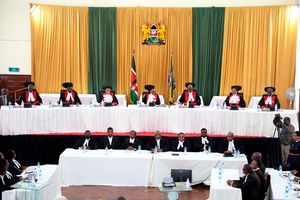
The Milimani Law Courts in Nairobi.
Photo credit: File | Nation Media Group
The judge said the witnesses gave “detailed interactions with a high level of familiarity with the parties” and accepted their evidence as independent proof that the couple held themselves out as married.
“Whereas the appellant contends that she did not consent to her inclusion in the cover, the letters from the respondent’s employer corroborate that she utilised the medical cover during the period of cohabitation in her capacity as the respondent’s spouse,” the court said.
The witnesses’ accounts included detailed descriptions of various social functions they attended together, both in Nairobi and at the man’s rural home. This included an event hosted by the parties at their residence for the man’s daughter.
“I am persuaded that their testimonies constitute independent evidence that the parties had held themselves out to the outside world as a married couple,” said the judge after reviewing the evidence tendered on whether the parties presented themselves to the public as husband and wife.
The court, however, stressed that there is no automatic rule that a relationship becomes a marriage after years. The court applied the Supreme Court’s 2023 test requiring long cohabitation, legal capacity to marry, intention to marry, consent and conduct showing the couple presented themselves as married.
The person alleging the marriage must prove the presumption on a balance of probabilities. Evidence rebutting it must be “strong, distinct, satisfactory and conclusive”.
“I find that the presumption of marriage applies to the parties (Mr JHN and Ms JNK ) in these circumstances and conclude that they were married,” said the judge while partially allowing the appeal.
“I also affirm the conclusion that 12 years constitutes a period of long cohabitation. The long cohabitation was corroborated by the witnesses who testified in both the appellant’s and the respondent’s cases.”
On cruelty, the judge found that the evidence did not establish that she had been cruel to the man. The trial court had found both parties cruel.
The appellate judge noted that the man mainly said he left the home because he feared for his life, but had not provided cogent evidence supporting his cruelty allegation.
By contrast, the woman had presented “compelling evidence of cruelty directed towards her by the respondent”. She presented evidence of protection orders being issued in her favour, and of escalation of domestic violence complaints to the police against the respondent.
The judge upheld the divorce, saying the severity of the conflict made restoring the relationship unlikely. “I affirm the dissolution of the marriage,” the court said.
The case also had a property dispute alongside the divorce proceedings. In August 2024, the court issued interim orders stopping the woman from selling, leasing, mortgaging, charging or transferring three properties in Ruaka, Kiambu County, and a Toyota Prado.
The court also directed rental income from a commercial property in Ruaka into a joint account pending determination of a matrimonial cause.