The government will receive 60 percent of excess profits from the Rironi–Mau Summit toll road in a move aimed at limiting the Chinese firm’s potential for excessive earnings during the 30-year concession period.
The National Treasury has revealed the owners of the road will transfer to the State 60 percent of earnings above the agreed 16 percent of the internal rate of return (IRR) on equity, according to Treasury documents seen by the Sunday Nation.
The arrangement will allow part of the toll fees to be reinvested into the maintenance and upgrading of the 236-kilometre highway, while also enabling the State to earn from the project’s proceeds during the concession period.
A consortium of China Road and Bridge Corporation (CRBC) and the National Social Security Fund (NSSF) is building 81 kilometers from Nairobi to Gilgil via Naivasha and a 58 Kilometer stretch from Nairobi to Naivasha through Maai Mahiu.
Another Chinese firm -- Shandong Hi-Speed Road and Bridge International Engineering (SDRBI)—will construct 94 kilometers stretching from Gilgil to Mau Summit.
The government got an additional benefit from its negotiations with the two Chinese firms where it avoided a minimum revenue guarantee (MRG), which would have required that the State compensate the operators if toll collections fall below an agreed level.
The profit cap model allows the State to benefit only from excess collections beyond the agreed threshold, without bearing the risk of underperformance.
NSSF will take a Sh9.59 billion stake in the consortium with CRBC on an ownership split of 40 percent and 60 percent.
The pair is projecting to make an annual dollar return of about 13 percent on their investment via user fees or toll charges.
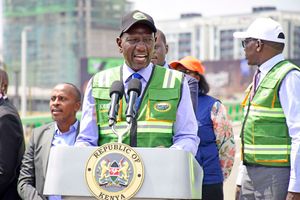
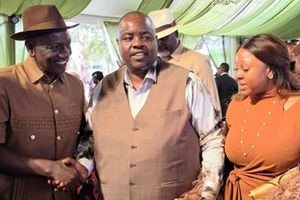
President William Ruto launches the dualling of 175km Rironi-Mau Summit road at Mau Summit in Nakuru County on November 28, 2025.
Photo credit: Boniface Mwangi | Nation Media Group
They will fund their investment through a 25 percent equity injection of Sh23.97 billion and debt of Sh71.89 billion), with the NSSF contributing 40 percent of the equity component.
The profit share model marks a departure from the demand-risk model used for the Nairobi Expressway, where the Chinese operator absorbs losses if traffic volumes fall short of projections, but retains all excess revenue when usage exceeds expectations.
Nairobi Expressway has not made a profit since its launch, with operational costs always exceeding toll revenues, but this will not affect the pre-agreed 27-30 year concession period, as per the demand-risk model.
Motorists, for instance, paid Sh7.16 billion in toll fees in the six months to December 2024, falling short of the Sh9 billion required to cover loan repayments, operations and maintenance, according to the Treasury.
Over those six months, about 12.5 million vehicles passed through the Nairobi Expressway.
Its net loss widened to Sh1.84 billion in the six months to December compared to a Sh1.2 billion loss in the year to June last year.
The Rironi–Mau Summit toll project was launched by President Ruto on November 28, 2025, and construction is currently ongoing.
The contractors will shoulder all risks related to construction costs and timelines, and the State’s role will be limited to land acquisition, regulatory approvals, oversight and compliance.
“This distribution ensures that the party with greater technical and operational capacity absorbs the risk,” the PPP Directorate said in a recent disclosure on the project.
“It also protects taxpayers from long-term financial exposure by anchoring cost control within the private operator’s obligations. Financial penalties exist for underperformance, delayed milestones, and quality failures.”
Despite bearing construction and operational risks, the contractors will not have the freedom to set toll charges.
Instead, tariffs will be determined through a regulatory formula informed by economic conditions, traffic data and operating costs.
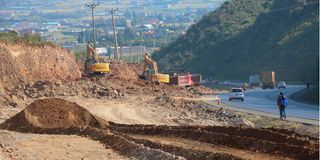
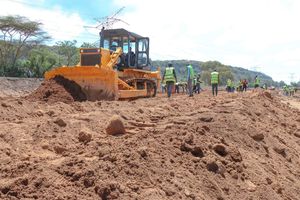
Construction work at a section of the Rironi-Mau Summit road in Naivasha on February 18, 2026.
Photo credit: Boniface Mwangi | Nation Media Group
“The contract defines review intervals, escalation rules, exemption categories, and how revenue may be reinvested into upgrades and maintenance,” the directorate said.
An estimated 40,000 vehicles currently use the highway daily, most of which are expected to become paying customers once tolling begins.
President William Ruto is keen to see the project completed before the next polls, a key selling point to residents of the Rift Valley, Western Kenya and Nyanza, where motorists often endure long traffic snarl-ups, especially during festive seasons.
The road is expected to significantly cut travel time along the corridor, easing congestion on the main artery from Nairobi to Western Kenya and neighbouring Uganda, Rwanda and the Democratic Republic of the Congo.
The Jubilee administration under Retired President Uhuru Kenyatta Kenya had awarded the contract for the construction of the highway to a different consortium led by French firm Vinci SA for 1.3 billion euro (Sh197.9 billion), but the deal was cancelled by his successor and tendered afresh, bringing in the two Chinese firms.