Around September 2002, Ms Doris Njoki (not her real name) and her friends visited a popular entertainment joint in Nanyuki Town, Laikipia County, frequented by British soldiers.
One of the soldiers winked at Ms Njoki, and she responded positively — a moment that marked the beginning of what she believed was a romantic relationship and possibly her gateway to relocating to the United Kingdom.
Excited by the promise of marriage to a British soldier, the then 19-year-old surrendered herself to a man she considered her future husband.
A few weeks into the relationship, Ms Njoki discovered she was pregnant. To her relief, the man who had only introduced himself as Steve reassured her they would marry soon. She later learned that he was French, not British.
But soon, the truth hit hard. The promises of marriage and a future together turned out to be a ploy to prevent her from using any form of contraception.
“I remember during our last meeting, we agreed to meet at our usual joint. But when I arrived in the evening, there was no sign of Steve. I later learnt that he and his colleagues had left that morning for Europe,” she recalled in an interview yesterday at her mud-walled house in Nanyuki’s Majengo Estate.
Without a cellphone and with no way of contacting him, Ms Njoki was devastated. Still, she hoped Steve — the father of her firstborn son — would eventually reach out. But weeks turned into months and then years. She eventually gave up.
Her hopes were further dashed after a recent UK court ruling directing the release of names and last known contacts of 11 foreign soldiers suspected to have fathered children with Kenyan women.
“My name was not included in the suit. My colleagues told me I did not qualify since the father of my child was French. They said the suit only involved British soldiers who are citizens of the United Kingdom,” she said.
According to reports in UK media, the Department for Work and Pensions (DWP) will now be required to disclose the last known contact details of the soldiers.
Some of the children in the lawsuit hope the men will be formally recognised as their legal fathers , a development that could open the door to British citizenship.
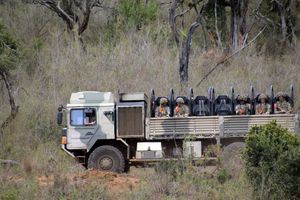
British Army soldiers training at Lolldaiga area in Laikipia County on November 14, 2022.
Photo credit: Joseph Kanyi | Nation Media Group
The British High Commission confirmed the court’s ruling but declined to give further details, citing ongoing litigation.
“While paternity claims against UK Service Personnel are a private life issue, the government cooperates with local child support authorities where there are claims relating to paternity. For this particular case, we won’t comment further while legal proceedings are ongoing,” an official said.
The ruling could pave the way for dozens of children fathered by foreign troops stationed in Kenya under the British Army Training Unit in Kenya (Batuk) to seek legal redress.
Lawyer Rob George KC, representing the children, said DNA evidence showed the men were not Kenyan — and in the area, the only non-Black men present were the soldiers based at the camp.
James Netto, one of the children’s solicitors, added:“For too long, men in the British Army have acted with outrageous, brazen impunity buoyed by the huge power imbalance in their favour and the belief that their actions abroad carry no consequences once they return home. They have been fathering children and simply abandoning them leaving families to struggle in extraordinarily challenging conditions in impoverished parts of rural Kenya.”
Advocate Kepher Ojijo, who took part in the KNHCR Advisory report to the National Assembly on Batuk published in March 2024, explained that there was traceability and identification of the 11 children.
“The only thing that made the 11 children unique is that they had specific identification or a system in which they could likely identify the alleged patterns by evidence. For instance, they had photos of them showing this is their father, they could see how they see the features, you see.
“So, if these photos therefore could be presented to the British Army or the Minister of Defence, it is clear that they can trace these people through their last known address or their last operations at the military, whether they are still on service or they are out,” he told NTV.
“But we also feel that so many other children that are still here were not represented because probably they did not have material evidence to link, but they are also equally suffering or going through the same problem that these others are going through.”
“It’s been 22 years of waiting. We are ridiculed by neighbours who can’t understand why we are poor when I was once ‘married’ to a white man,” she said.
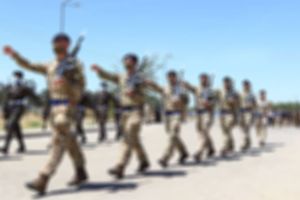
British soldiers march during the official opening of the new Nyati Barracks at the British Army Training Unit Kenya in Nanyuki on January 26, 2021.
Photo credit: File | Nation Media Group
“I have heard from my colleagues that a UK court has ordered the soldiers to support their abandoned children — but not in our case.”
Ms Njoki never married. She now has two other children who are in school, while her firstborn son who sat his Kenya Certificate of Secondary Education examination (KCSE) in 2022 survives on menial jobs in Nairobi.
He had hoped to join a medical training college but his mother could not afford the fees. He was educated with the help of bursaries.
“My son kept asking who his father was and where he lived — pushed by questions from his peers. That’s when I decided he should go to Nairobi. But he has no formal employment,” she said.
Now a mother of three, Ms Njoki earns a living doing laundry work (mama fua), and she sometimes relies on food donations from her neighbours.